In the glass-and-steel heart of Abu Dhabi, the air feels different. It is filtered, chilled, and scented with the subtle musk of wealth that only trillions of dollars can buy. But if you step away from the climate-controlled serenity of the boardrooms and stand on the edge of the Empty Quarter, the heat is a physical weight. It is a reminder that nature—and the crude oil buried beneath it—is a volatile, unforgiving master.
For decades, the United Arab Emirates has played the part of the loyal sibling in the OPEC family. They followed the rules. They cut production when told. They sat through the endless marathons of meetings in Vienna, nodding along while the heavyweights in Riyadh steered the ship. But lately, there is a quiet, vibrating tension in the room. It is the sound of a high-performance engine being forced to idle in traffic.
The UAE has spent billions of dollars to build a massive, sophisticated oil infrastructure. They have the capacity to pump millions more barrels than they are currently allowed. Imagine owning a Ferrari but being legally barred from driving it faster than thirty miles per hour because your neighbor’s minivan can’t keep up. That is the UAE’s reality inside OPEC.
The Friction of the Fifty Year Marriage
The alliance between the UAE and Saudi Arabia is the bedrock of the Middle East’s economic power. It is a partnership built on shared history and shared sand. Yet, a rift is widening. It isn't a loud, public screaming match. It is a series of polite, increasingly cold disagreements about the future of the planet's energy.
Saudi Arabia, led by a desire to keep prices high to fund its own massive internal transformations, wants to keep the taps tight. They want scarcity. Scarcity drives the price of a barrel toward $100. For the Saudis, this is the lifeblood of their "Vision 2030" project.
The UAE sees the horizon differently.
They look at the global shift toward electric vehicles, the rise of renewables, and the tightening grip of carbon taxes. They know that the "Age of Oil" has a shelf life. They aren't worried about the price of oil in 2040; they are worried about whether anyone will be buying it at all. Their strategy is simple and urgent: pump it now. Sell every drop while the world still has a thirst for it. Monetize the reserves today to build the post-oil economy of tomorrow.
When these two worldviews collide, the friction creates heat. A Chinese energy analyst recently warned that if the UAE actually walks out the door, it wouldn't just be a diplomatic spat. it would be a "bigger trouble" than the market is prepared to handle.
The Ghost in the Machine
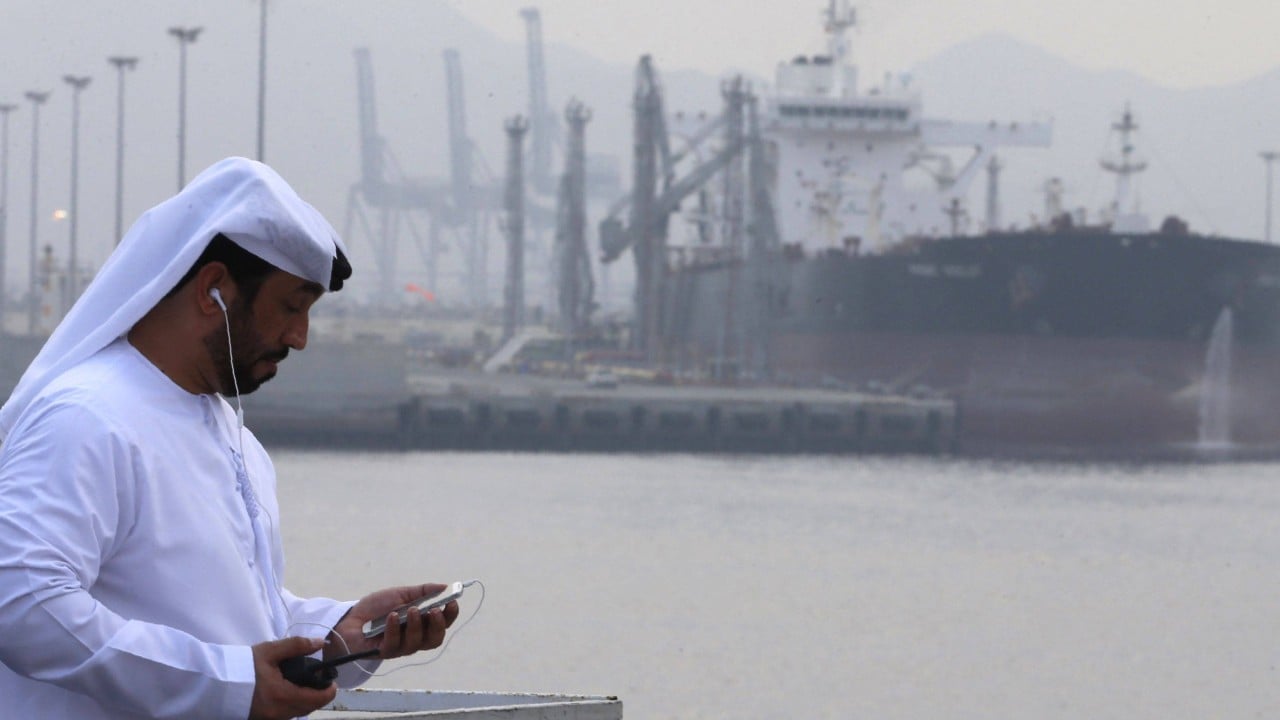
Let’s look at a hypothetical man named Omar. Omar works in logistics for a state-linked firm in Dubai. To him, OPEC is an abstraction, a group of men in suits on a television screen. But OPEC’s decisions dictate whether the port where he works is bustling with tankers or eerily quiet. If the UAE leaves the bloc, Omar’s world changes instantly.
If the UAE exits, they are no longer bound by quotas. They could flood the market with an extra million barrels a day almost overnight.
Simple math tells us what happens next. Supply surges. Prices crater.
For a consumer in Chicago or Berlin, this sounds like a victory. Cheap gas. Lower shipping costs. But for the global economy, it’s a chaotic shock. A price war between the UAE and Saudi Arabia would be a race to the bottom that could destabilize entire nations. Russia, already leaning heavily on oil revenues to fund its geopolitical ambitions, would see its coffers evaporate. Smaller producers in Africa and South America would face total economic collapse.
The UAE knows this. They aren't reckless. But they are tired of being the "swing producer" that always has to sacrifice its own growth for the sake of the group's collective stability.
The Silence of the Experts
In Beijing, observers are watching this play out with a specific kind of dread. China is the world’s largest importer of crude. You might think they would cheer for a price war that brings cheap energy. They don't. China prizes stability above almost everything else.
If the UAE leaves OPEC, the "OPEC+" alliance—which includes Russia—likely dissolves. The mechanism that has managed global oil prices for over sixty years would vanish. We would move from a regulated, cartel-managed market to a "Wild West" scenario.
Price volatility is a poison for long-term planning. How does a manufacturing giant in Guangzhou plan its five-year budget when oil might be $110 one month and $40 the next? It can’t. This is why the Chinese warning carries so much weight. They aren't just predicting a price drop; they are predicting a systemic breakdown of the energy order.
The Invisible Stakes
We often talk about oil as if it’s just a commodity, like wheat or copper. It isn't. Oil is the underlying currency of geopolitics. It is the reason why certain borders stay where they are and why certain leaders stay in power.
The UAE’s potential exit is a signal that the old world is dying. The Gulf states are no longer a monolith. They are becoming competitors. Dubai and Abu Dhabi are positioning themselves as global hubs for finance, tourism, and technology. They want to be the Singapore of the Middle East. To do that, they need to be able to pull their own levers.
There is a psychological toll to this transition. For decades, being part of OPEC meant being part of a powerful, unified front against the West. It was a source of pride. Leaving that behind feels like an admission that the old ways of the desert—the tribal consensus, the slow-moving tradition—are being discarded in favor of a cold, hyper-capitalist survivalism.
The Pressure Cooker
Consider the internal mechanics of a production meeting. Behind closed doors, the delegates from the UAE are increasingly assertive. They point to their new refineries. They point to their offshore rigs. They ask, "Why did we build these if we aren't allowed to use them?"
The response from the rest of the group is usually a plea for "solidarity." But solidarity doesn't pay for a nation's transition to green hydrogen. Solidarity doesn't build a Mars mission.
The UAE is in a race against time. They are sitting on some of the lowest-cost oil on the planet. Even if the price of oil drops significantly, they can still make a profit. Other countries—like Venezuela or even parts of the US shale industry—cannot. By staying in OPEC, the UAE is essentially subsidizing the survival of its less efficient competitors.
It is a classic prisoner’s dilemma. If everyone stays in and plays nice, the price stays high. But if one person "cheats" and leaves, they can grab a massive market share before the roof falls in.
The Fragility of the Status Quo
The danger of the "even bigger trouble" isn't just about dollars and cents. it's about the loss of a safety net. For all its faults, OPEC provides a ceiling and a floor. It prevents the world from spinning into total energy anarchy.
If the UAE walks, the floor falls out.
We would see a world where energy becomes a weapon used with zero restraint. It wouldn't just be about economics; it would be about punishing rivals. The delicate balance of power in the Persian Gulf would shift. If the UAE and Saudi Arabia are no longer partners in oil, are they still partners in security? Are they still partners in regional diplomacy?
The cracks are already visible. You can see them in the way the UAE has moved independently on foreign policy issues, from its normalization of ties with Israel to its engagements in the Horn of Africa. The oil quota is simply the last remaining tether.
The Point of No Return
Every marriage reaches a point where the partners have to decide if the history they share is worth the future they are losing. The UAE is at that crossroads. They have the money, the infrastructure, and the ambition to stand alone.
But standing alone in the Middle East is a dangerous proposition.
The "trouble" the Chinese expert spoke of is the sound of an old system breaking. It is the sound of the desert wind finally blowing through the cracks of a gilded cage. If the UAE leaves, they will be free to pump, free to sell, and free to chase their destiny at full speed. But they will also be responsible for whatever happens when the rest of the world’s economy feels the impact of that sudden, violent acceleration.
The sun sets over the Persian Gulf, casting long, orange shadows across the tankers waiting in the strait. For now, they move at the pace dictated by Vienna. They follow the rules. They wait their turn. But the engines are humming. The captains are checking their watches. The wind is picking up, and the sand is beginning to shift.