A radio crackles in a humid outpost, spitting out a string of digits that haven't changed in thirty years. On the other side of the border, a young soldier grips a rifle, his knuckles white, watching a horizon that feels more like a ticking clock than a landscape. This is where policy meets the dirt. This is where the grand, sweeping statements of foreign ministers are reduced to the sweat on a commander’s brow.
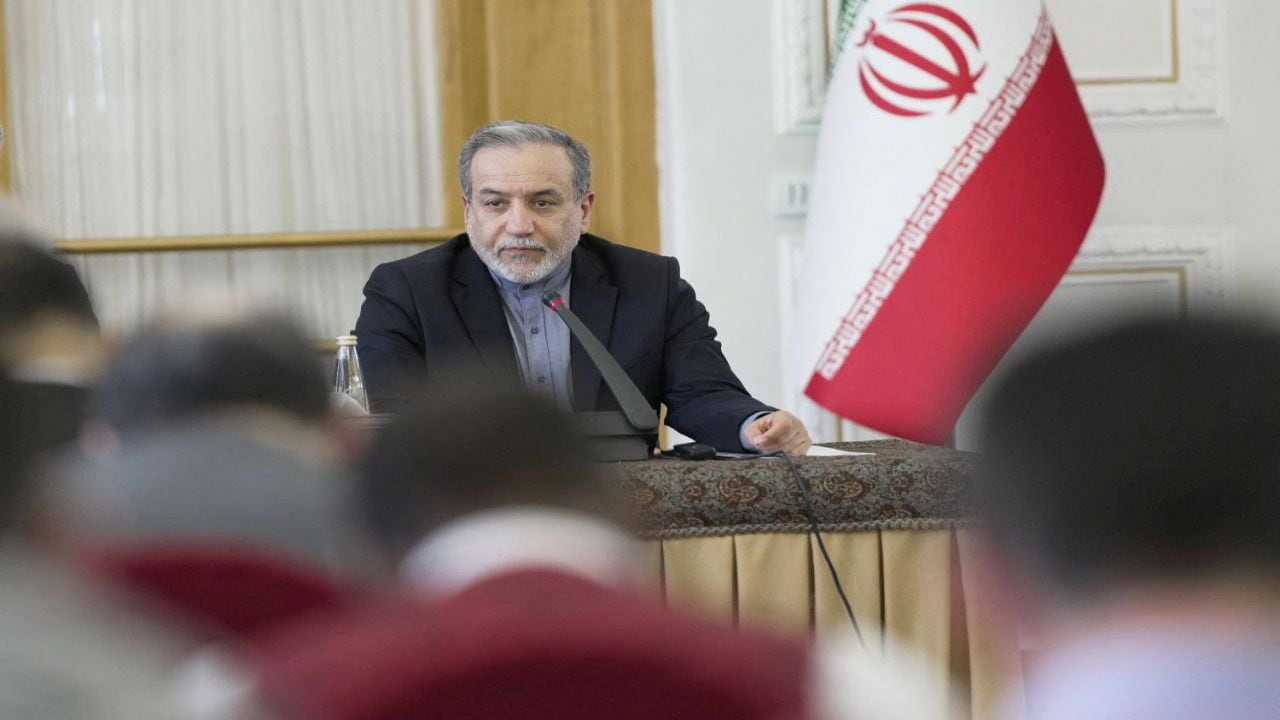
When Iran’s Foreign Minister recently addressed the chaos in Oman, he wasn't just offering a diplomatic shrug. He was describing a terrifying reality of modern conflict: the "independent and isolated" unit. It sounds like military jargon. It isn't. It is the story of men left alone with old orders and new fears, acting on directives that the world has long since outgrown.
Imagine a submarine commander, submerged for weeks, or a border patrol captain in a region where the internet is a rumor and the chain of command is a frayed rope. These are the "autonomous" actors the Iranian government is now pointing to. The message is clear: the central brain didn't pull the trigger. The finger belongs to a ghost in the machine, a unit operating on autopilot because the signal from home never arrived—or was never sent.
The Autopilot Trap
We often think of modern militaries as sleek, interconnected webs where a general in a comfortable chair can see what a private sees through a thermal lens. The reality is far grittier. In volatile zones like the borderlands of Oman, communication isn't a given; it's a luxury. When those lines go dark, a unit doesn't just stop. It reverts.
It reverts to the last thing it was told.
Consider a hypothetical sergeant named Elias. He has been told for months that any movement across a specific ridge is a precursor to invasion. He has been told that if he loses contact with headquarters, his standing orders are to defend that ridge at all costs. Now, the wind picks up. The radio dies. A truck appears in the distance. Elias isn't a rogue agent. He isn't a revolutionary. He is a man following a script written by someone who is currently eating lunch in Tehran or Muscat.
When the Iranian Foreign Minister claims these events were "not intentional," he is admitting to a systemic failure. He is saying that the machinery of state has become so fragmented that its limbs are moving without the brain's consent. This isn't just a political excuse; it’s a confession of a loss of control. It suggests that the "prior directives" mentioned are like old software running on a computer that no one knows how to turn off.
The Fragility of the "Isolated" Unit
To understand why this happens, you have to look at the anatomy of a military directive. These aren't suggestions. They are the bedrock of a soldier’s existence. In an "independent and isolated" state, those directives become the only reality.
- Information Poverty: Without real-time intelligence, the smallest spark looks like a forest fire.
- The Weight of Legacy: If the last order you received was "hostile," every olive branch looks like a hidden blade.
- Psychological Tunnel Vision: When you are cut off, the world shrinks to the thousand yards in front of you.
This isolation creates a dangerous feedback loop. A unit acts on an old order, which triggers a response from the "enemy," which confirms to the unit that their old order was right all along. They aren't trying to start a war. They are trying to survive the one they think they are already in.
The Iranian government’s insistence that these units are acting on "prior directives" is a tactical way to distance the central leadership from the fallout. But it raises a chilling question: if the leadership knows these units are isolated and acting on outdated information, why haven't they been brought back into the fold?
The answer is often more about logistics than intent. We live in an era of electronic warfare where "jamming" isn't just something from a sci-fi movie. It is a daily reality. A unit can be physically ten miles away and digitally a thousand miles gone.
The Human Cost of Deniability
There is a certain cold comfort for a government in being able to say, "We didn't tell them to do that." It provides a "get out of jail free" card in the court of international opinion. But for the people living in the crosshairs—the civilians in Oman, the sailors in the Strait, the families of the soldiers themselves—deniability doesn't mean safety. It means unpredictability.
When a military unit becomes a sovereign entity unto itself, the rules of engagement vanish. Diplomacy is built on the idea that if you talk to the person at the top, the person at the bottom will stop shooting. If that link is broken, the diplomat's words are just vibrations in the air.
We are seeing a shift in the nature of regional friction. It’s no longer just about grand strategies and chess moves. It’s about the "lag" between a decision made in a carpeted office and the action taken in a dusty trench. That lag is where accidents happen. That lag is where "unintentional" tragedies are born.
The Ghost of Standing Orders
The phrase "prior directives" should haunt anyone following Middle Eastern geopolitics. It implies a world where the past is constantly reaching out to strangle the present. These directives are often products of heightened tension, written during moments of crisis. They are designed for the worst-case scenario.
When those orders are left active in the minds of "independent" units during a time of supposed de-escalation, they become time bombs.
The tragedy is that the soldier in the field believes they are being the ultimate patriot by sticking to the plan. They see themselves as the last line of defense, holding the fort when everyone else has gone silent. They don't know that the "plan" was changed three weeks ago in a meeting they weren't invited to. They are operating in a vacuum, and in a vacuum, even a small spark can cause an explosion.
The Iranian Foreign Minister's comments suggest a military structure that is surprisingly decentralized, perhaps by design, perhaps by decay. By labeling these units as "independent," the state admits it has created a monster it can no longer steer with precision. It is a admission that the chain of command has become a series of broken links, held together only by the memory of what was once commanded.
The map of the world is covered in these "isolated" pockets—places where the war hasn't ended because no one told the men with the guns that it was over. These are the grey zones, where "unintentional" is the only word left to describe the bloodshed.
A flare goes up over the Gulf. To a diplomat, it’s a misunderstanding to be smoothed over with a press release. To the man who fired it, it was the only thing he had left to say. He is still waiting for a signal that may never come, standing guard over a directive that the rest of the world has already forgotten.