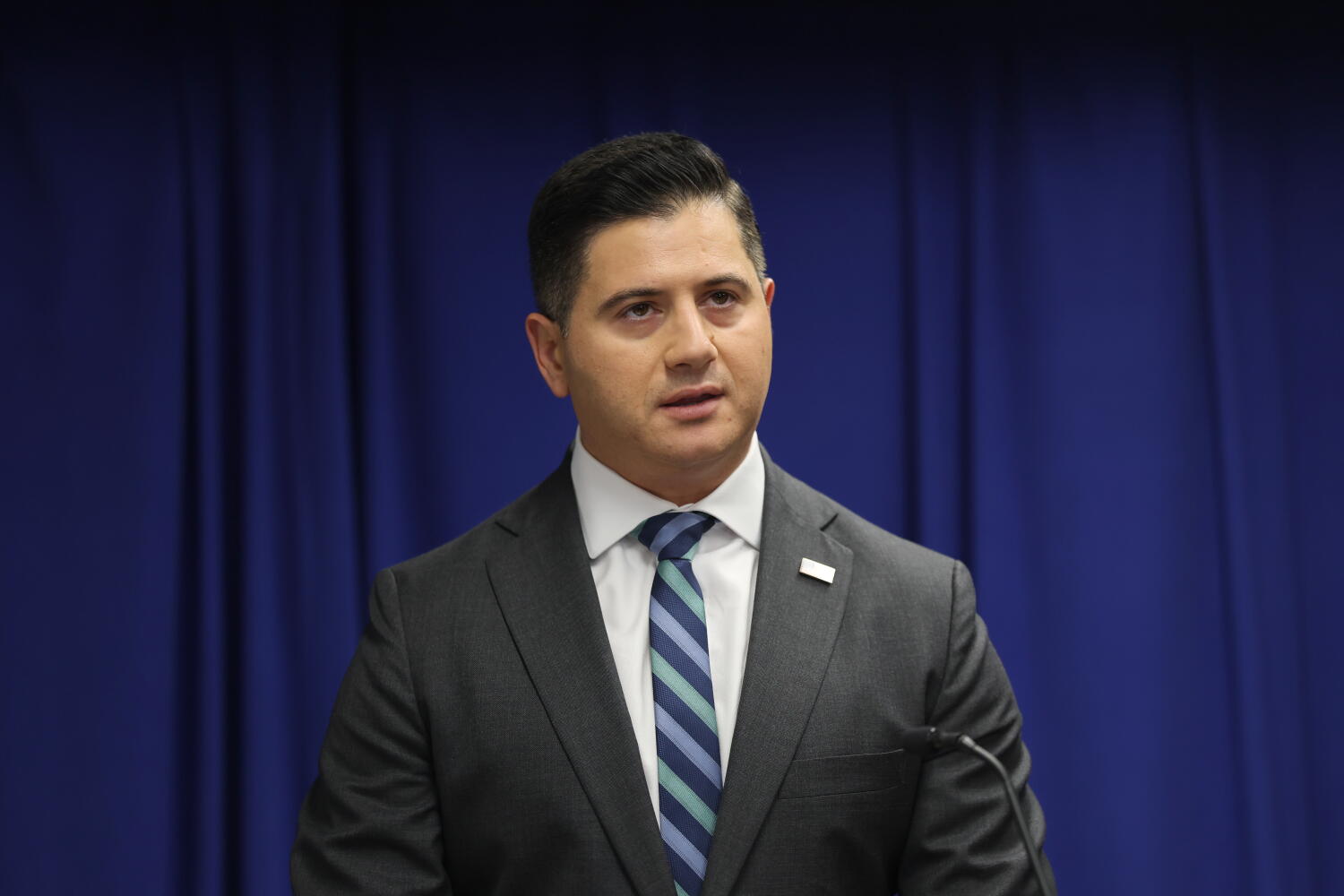
The air inside the university student union smelled of stale coffee, damp wool, and a strange, heavy variety of exhaustion that only finals week or political disillusionment can produce. It was Tuesday night. On the projector screen at the front of the room, a looping video played without sound. A man in a sharp suit stood at a microphone, gesturing with the fierce, practiced urgency that defined an entire era of youth-targeted conservative activism.
That man was Charlie Kirk.
Or rather, he was the memory of him.
Twelve months had passed since the sudden, shocking news of his death shattered the organizational machinery of Turning Point USA and left a gaping hole in the ecosystem of campus politics. For years, young conservatives had looked to him as the charismatic anchor of their rebellion, the man who brought the culture war directly into the belly of the liberal beast with traveling debate stages and viral confrontation. When he died, the immediate panic among movement strategists was absolute. Who replaces the irreplaceable? Who holds the line when the general falls?
Yet, sitting in that auditorium, watching college sophomores stare blankly at his frozen image, a different question hung in the room. Not who replaces him. But whether anyone even wants the job anymore.
Listen. The conventional wisdom in Washington and New York is that political loyalties are ironclad, especially among the young radicals who hitched their wagons to the Trump movement. We are told that Gen Z voters are polarized beyond repair, split neatly into neat red and blue tribes that march in lockstep with their chosen leaders.
It is a lie. Or, at best, a lazy simplification written by people who haven't spoken to an eighteen-year-old voter outside of a staged focus group.
To understand what is happening to young voters a year after the loss of the movement's most prominent campus voice, you have to step away from the national polls and look at the kitchen tables, the group chats, and the quiet spaces where young people are trying to figure out how to pay rent in an economy that feels rigged against them.
Take Marcus. (This is a composite profile based on dozens of interviews with conservative-leaning students across the Midwest.) Marcus is twenty-one. He wears a heavy Carhartt jacket, drives an older truck that bleeds oil in the driveway, and spent his freshman year wearing a red baseball cap like a suit of armor. He thought Charlie Kirk was a prophet. He watched every livestream, memorized the talking points, and genuinely believed that a second Trump administration would instantly unlock a golden age of freedom and economic prosperity.
Then reality set in.
Inflation didn't care about campaign slogans. Housing costs doubled while entry-level wages crawled. And as Marcus watched the political theater play out month after month following Kirk’s passing, a slow, corrosive fatigue set in. The anger that once fueled his activism started to feel exhausting. The endless online outrage began to look less like a solution and more like a distraction from the fact that he still couldn't afford health insurance.
He hasn't turned into a socialist. That is the mistake the left makes, assuming that disillusionment with the right equals an automatic conversion to the progressive agenda. Marcus hasn't crossed party lines.
He has simply checked out.
And that silence, that quiet withdrawal from the machinery of fervent political loyalty, is far more dangerous to Donald Trump's coalition than a loud protest ever could be.
The Architecture of Movement Building Without a Blueprint
When a charismatic figurehead disappears from a movement, the vacuum does not remain empty for long. Nature abhors a vacuum. Politics abhors it even more.
In the wake of Kirk’s death, the sprawling network of campus chapters he built faced an existential crisis. The institutional muscle was still there—millions of dollars in donor backing, a massive database of student contacts, and a well-oiled machine of regional field directors. But the soul of the operation had vanished. Kirk possessed a rare, manic gift for translating complex populist grievances into digestible, viral soundbites that resonated with teenagers who felt alienated by mainstream cultural institutions.
Without him, the organization tried to pivot to a distributed model. They brought in guest speakers. They hosted panels. They pushed out slick social media toolkits designed to replicate the old magic.
It didn't work. Not really.
You cannot manufacture charisma in a boardroom. When a student stands at a campus microphone today, asking a visiting speaker about the future of the conservative movement, the response often feels rehearsed, hollow, and disconnected from the immediate pressures of daily life. The fire has turned to embers.
Consider what happens next in an ecosystem like this. When the leadership can no longer inspire blind devotion, the followers begin to ask difficult questions. They look at the national party's platform and realize that many of the promises made about economic security, free speech, and institutional reform have stalled out in partisan gridlock.
Young voters are uniquely intolerant of unfulfilled promises. They measure politics not by ideological purity, but by utility. Does this system work for me? Can I buy a home? Can I find a job that respects my time and pays enough to live independently?
When the answer to those questions is a resounding no, the emotional attachment to any political leader begins to fray.
The Friction Between Loyalty and Lived Experience
There is a profound psychological weight that comes with supporting a polarizing political figure like Donald Trump, especially on a college campus. It requires a constant defensive posture. It means treating every casual conversation in the dining hall as a potential ideological landmine.
For a long time, Charlie Kirk made that burden feel like a badge of honor. He taught young conservatives to lean into the friction, to wear the hostility of their peers as proof that they were over the target. He provided a community—a digital and physical tribe that made the isolation of being a campus conservative bearable.
When that anchor was cut loose, the isolation returned with a vengeance.
Talk to students at mid-tier state universities in swing states like Pennsylvania, Michigan, and Wisconsin. They will tell you that the performative rage of national politics feels increasingly detached from their actual lives. A twenty-year-old nursing student worrying about clinical rotations does not care about the latest social media dustup involving a congressional subcommittee. A computer science major staring down an automated job market is looking for economic survival, not culture war fodder.
The data backs up this invisible drift. While overall partisan identification among Gen Z remains relatively stable compared to older generations, the intensity of support is shifting. The percentage of young voters who describe themselves as "enthusiastic" about their preferred candidates has dropped significantly across the board.
Trump still retains a core of fiercely loyal young men who find community in his brand of anti-establishment bravado. That demographic bedrock is real. But the sprawling fringe—the persuadable, economically anxious young voters who leaned toward the right because they felt the current system was failing them—are drifting into a state of political apathy.
Apathy is an incumbent's worst enemy, but it is an absolute poison to a populist movement built on the energy of perpetual mobilization.
The Quiet Rebellion of Not Caring
We spend so much time analyzing the loud voices—the podcast clips with millions of views, the viral campus confrontations, the fiery speeches on cable news—that we completely miss the quiet majority who have simply stopped watching.
In the back of that university student union, after the video of Charlie Kirk finished looping, the lights flickered back on. The students didn't stay to debate. They didn't cluster in angry circles to plot the next campus demonstration. They packed their laptops into nylon backpacks, pulled their hoods up against the bitter autumn wind, and walked out into the dark singly or in pairs.
They were talking about rent. They were talking about a upcoming chemistry exam. They were talking about whether they could afford to drive home for Thanksgiving.
The national conversation rolls on, loud and unyielding, fueled by the relentless machinery of elections and media cycles. But down on the ground, among the generation whose votes will supposedly decide the next decade of American power, something fundamental has shifted.
The spell has broken.
The flags are still flying, the hats are still worn, and the speeches are still archived on a thousand hard drives. But the young voters who once treated political loyalty as a religion are beginning to discover something far more complicated.
They are discovering silence. And in politics, silence is the sound of a movement losing its grip on the future.
:max_bytes(150000):strip_icc()/woolly-mammoth-186450409-584ffd493df78c491e57ca5e.jpg)