The air in a high-stakes diplomatic suite doesn’t smell like history. It smells like stale coffee, expensive wool, and the faint, metallic tang of filtered ventilation. In these rooms, men in dark suits trade the lives of millions like chips in a poker game, their voices kept at a low, measured hum to mask the frantic beating of their hearts. Somewhere in Tehran, a mother watches the price of cooking oil climb beyond her reach. Somewhere in Washington, a staffer stares at a satellite feed of a centrifuge spinning in the desert.
The gap between them is vast. It is a silence that has lasted decades, filled only by the echoes of sanctions and the occasional rattle of sabers. But recently, the silence changed.
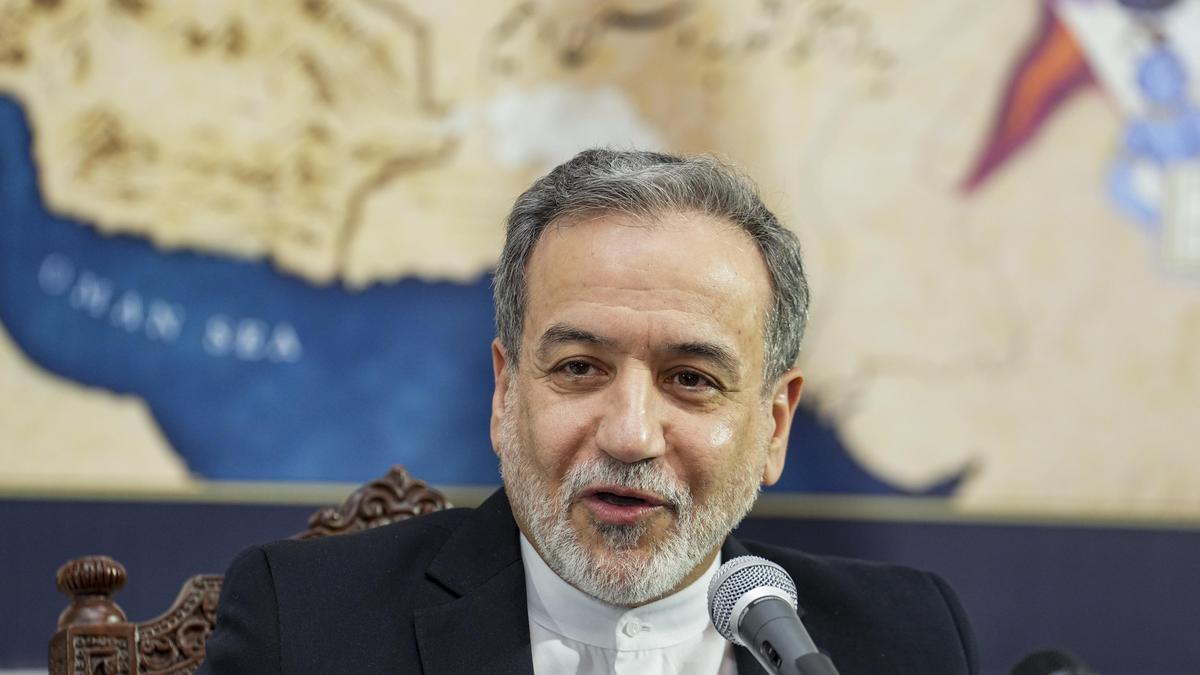
Araghchi, Iran’s Foreign Minister, stepped into the light to signal something unexpected. The United States, he claims, is still willing to talk. The door isn't locked; it’s just heavy. And more importantly, there is a new hand reaching for the handle. China.
The Weight of a Handshake
Diplomacy is often treated as a series of dry press releases, but at its core, it is an exercise in human ego and survival. Think of two neighbors who haven't spoken since a fence dispute in the nineties. They share a water line. If the pipe bursts, both basements flood. They know they need to fix it, but neither wants to be the first to walk across the lawn with a wrench.
The Joint Comprehensive Plan of Action (JCPOA) was that wrench. When the U.S. walked away from the nuclear deal years ago, the pipe didn't just leak; it exploded. Now, the basement is underwater. Araghchi’s recent admissions suggest that the U.S. has sent word through the grapevine—European intermediaries, whispered messages in Muscat—that they are ready to wade into the mess.
They are looking for a "fair and logical" path. In the dialect of diplomacy, "fair" is a flexible word. It means a deal that doesn't get a politician fired back home. For Tehran, fairness means an end to the economic strangulation that has turned the rial into a ghost of its former value. For Washington, it means a hard ceiling on how far those Iranian centrifuges can spin.
The Dragon in the Room
Enter Beijing.
For years, the U.S. and Iran have played a game of chicken. China, however, has been playing a different game entirely. They aren't just observers; they are the biggest buyers of Iranian oil. They are the financiers of infrastructure. When Araghchi mentions that Iran welcomes China’s role in "managing" these talks, he isn't just being polite. He is acknowledging a shift in the gravity of the world.
China’s involvement changes the chemistry of the room. If the U.S. and Iran are the feuding neighbors, China is the wealthy developer who just bought the rest of the block. They want the water pipe fixed because it’s bad for business. They don't care about the decades of grudge-holding; they care about the flow of energy and the stability of the market.
This isn't just about nuclear physics or uranium enrichment levels. It's about a three-way tug-of-war where no one can afford to let go of the rope. If China acts as the mediator, the U.S. has to reckon with a world where it is no longer the only power capable of brokering peace—or enforcing it.
The Cost of the Long Wait
Numbers can be numbing. We hear about "billions in frozen assets" or "60% enrichment levels" and our eyes glaze over. To understand the stakes, you have to look at the grocery store shelves in Isfahan.
Imagine a young father. He is an engineer, educated and capable. Ten years ago, his salary could buy a modest apartment and a car. Today, after years of maximum pressure and sanctions, that same salary barely covers meat for the week. He isn't thinking about the intricacies of the Non-Proliferation Treaty. He is thinking about why the world has decided his children should eat less so that a point can be proven in a city five thousand miles away.
This is the pressure that pushes Araghchi to the microphone. The Iranian government needs a win. They need the valves of the global economy to open, even just a crack.
On the other side, the U.S. faces its own ghost. The specter of another Middle Eastern conflict is the last thing any administration wants. They are stretched thin, eyes fixed on Eastern Europe and the Pacific. A deal with Iran, however imperfect, offers a chance to take one ticking clock off the mantelpiece.
The Muscat Connection
The messages aren't flying directly between D.C. and Tehran. They travel through Oman, a quiet sultanate that has mastered the art of being the world's ear.
In the shaded corridors of Muscat, diplomats exchange "non-papers"—documents without letterheads or signatures, designed so that if they are leaked, everyone can claim they never saw them. This is how the modern world prevents a catastrophe. It’s a delicate, almost absurd dance.
Araghchi notes that these channels remain open. The willingness is there. But willingness is a fragile thing. It can be shattered by a single miscalculation in the Strait of Hormuz or a shift in the political winds of the U.S. Congress.
The Invisible Threshold
The real struggle isn't about the technicalities of how many kilograms of enriched material Iran can keep. It’s about trust, a commodity that is currently trading at zero.
The U.S. remembers the embassy, the proxy wars, the heated rhetoric. Iran remembers the overturned government in the fifties, the shot-down airliner, the shredded treaties. Every time they sit down, they aren't just bringing their current grievances; they are bringing the ghosts of their grandfathers.
China offers a way to bypass some of that history. As a third party with a vested interest in both sides remaining functional, they provide a buffer. They provide a face-saving exit for both parties. Iran can say they didn't bow to "Great Satan"; the U.S. can say they used international pressure to bring Tehran to heel.
But what happens if the talks fail?
The alternative isn't a continuation of the status quo. The status quo is a decaying orbit. Without a deal, the enrichment continues. The sanctions tighten. The young father in Isfahan grows more desperate. The staffer in Washington grows more hawkish. Eventually, the pipe doesn't just leak—it bursts for good.
The Human Toll of Hesitation
We often speak of "leverage" as if it’s a physical weight. In reality, leverage is the suffering of people who have no say in the matter.
When the U.S. signals a willingness to talk, they are acknowledging that the policy of total isolation hasn't achieved its goal. It has punished the population, but the centrifuges kept turning. When Iran signals a willingness to accept Chinese mediation, they are admitting they cannot survive forever behind a wall of sanctions.
There is a window here. It’s small, dusty, and hard to open.
Araghchi’s words are a signal flares sent up in a very dark night. He is telling the world that the actors are in their places. The script is written. The only thing missing is the courage to step onto the stage.
The world doesn't move because of grand ideologies. It moves because people get tired of being cold, tired of being poor, and tired of the constant, low-frequency hum of impending war.
The ghost at the table isn't the nuclear program. It’s the millions of people waiting to see if their lives will be allowed to begin again. They are the ones who pay the price for every "fair and logical" delay. They are the ones who will live in the ruins if the men in the dark suits decide that pride is worth more than peace.
A pen is hovering over a piece of paper in a room you will never enter. The ink is dry, for now.
But the hand is shaking.