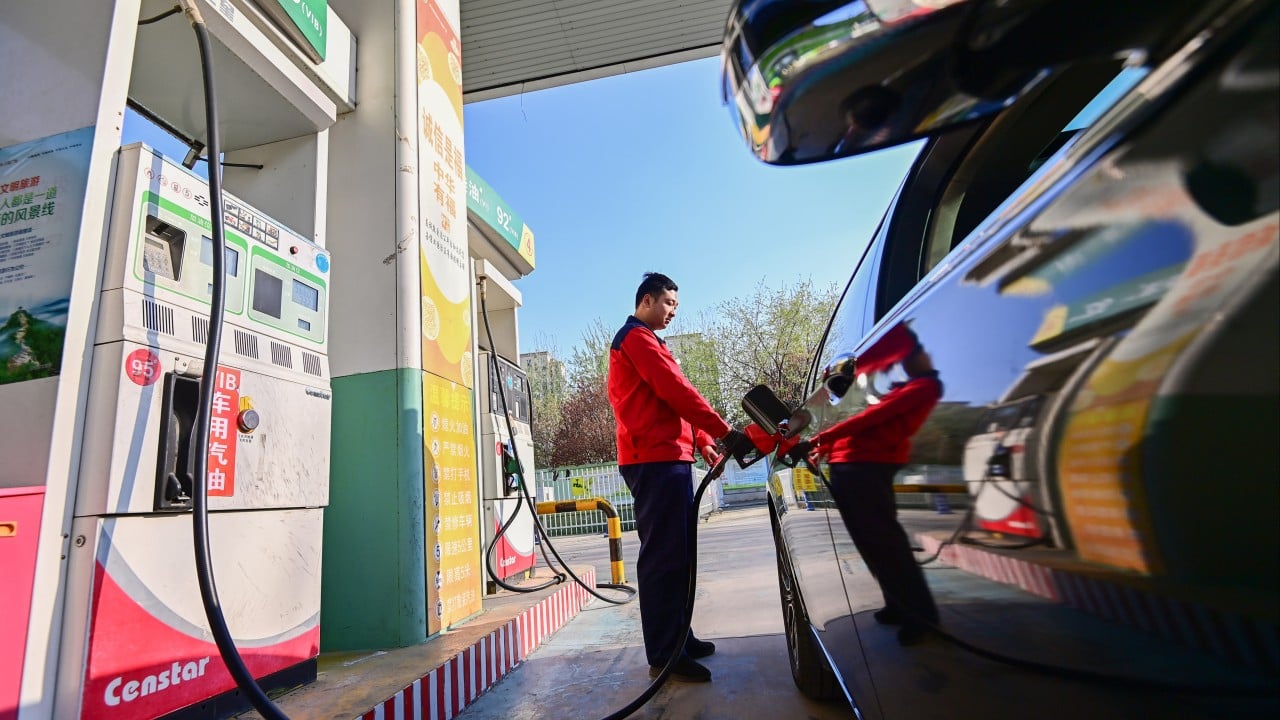
A truck driver in Dongguan doesn't spend much time thinking about the Strait of Hormuz. He thinks about the price of a bowl of noodles and whether he can afford the diesel to get his load of plastic components to the port of Shenzhen. But today, those two thoughts are colliding. The price of the oil powering his engine is climbing, driven by explosions thousands of miles away in the Middle East. Meanwhile, the factory he just left is struggling to raise the price of those plastic components by even a single cent.
This is the pincer movement of a modern economic nightmare. It is a quiet, suffocating pressure that economists call stagflation. To the rest of us, it just feels like being trapped.
The Specter in the Machine
China is currently locked in a battle with a very different monster: deflation. For months, the world’s second-largest economy has watched prices for goods drop. On the surface, cheaper stuff sounds like a win for the consumer. In reality, it is a slow-motion car crash. When prices drop, profits vanish. When profits vanish, wages freeze or disappear. Consumers, sensing that things might be even cheaper next month, stop spending. The gears of the economy begin to rust.
Beijing has been desperately trying to grease those gears, cutting interest rates and pumping liquidity into the system to get people to buy things again. But now, a ghost from the 1970s has returned to haunt the feast.
Stagflation occurs when the cost of living goes up while the economy itself stands still. It is the worst of all possible worlds. Imagine trying to run a race through waist-deep water while someone slowly drains the oxygen from the room. That is what happens when energy costs spike—fueling inflation—at the exact moment a manufacturing giant like China is already gasping for growth.
The Crude Reality of the Middle East
The arithmetic of the modern world is written in oil. Despite the massive push toward electric vehicles and green energy, the global supply chain still runs on the black liquid pulled from beneath the desert sands of the Middle East. China is the world’s largest importer of that oil.
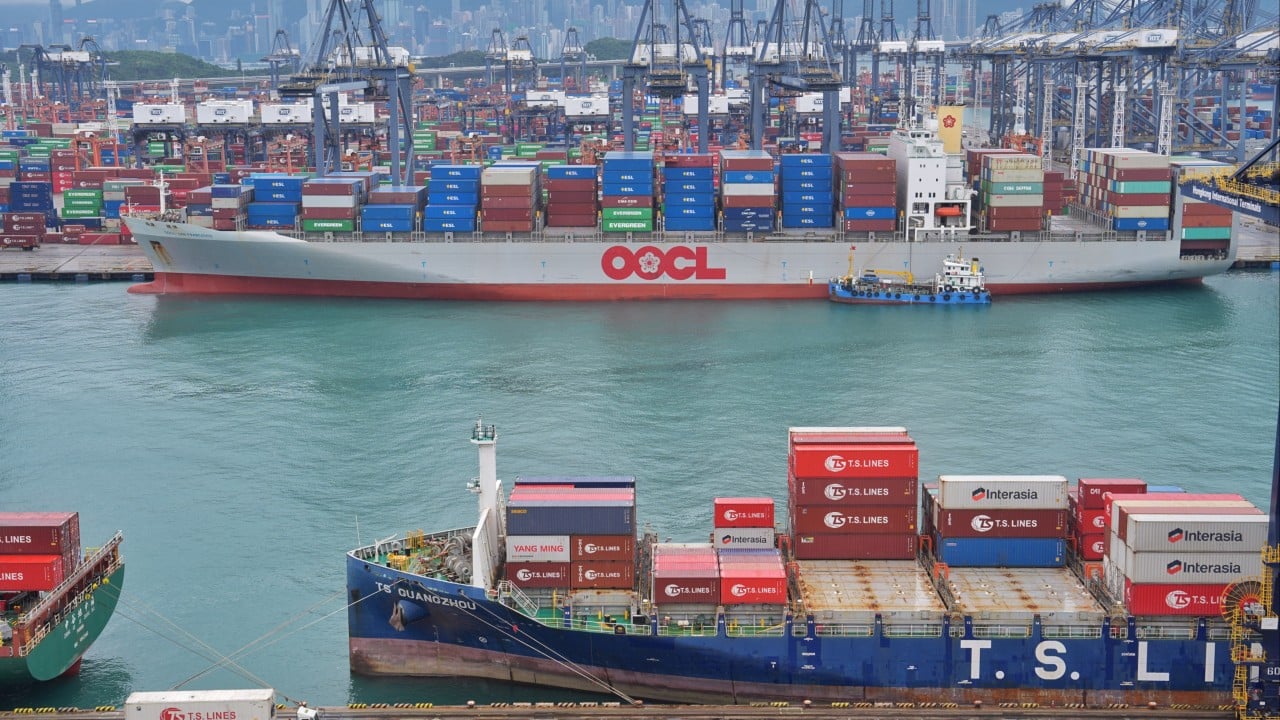
When tensions boil over in the Levant or the Persian Gulf, the risk premium on every barrel of Brent Crude rises. If a tanker cannot pass safely through the Red Sea, the cost of insurance skydives upward. Those costs don't stay at sea. They migrate. They find their way into the price of a plastic toy, a shipping container, and the electricity used to run a massive semiconductor plant in Suzhou.
For a country like the United States, an oil spike is a headache at the gas station. For China, it is a structural threat to the "World's Factory." China’s producers are already operating on razor-thin margins. They are currently slashing prices just to keep their market share in a world that is buying less. They cannot easily pass higher energy costs on to customers in Europe or America who are already grumpy about their own inflation.
Consider a hypothetical textile owner named Mr. Zhang. His electricity bills are rising because the coal and gas that power his local grid are pegged to global energy markets. His raw materials—synthetic fibers derived from petroleum—are getting more expensive. Yet, his buyers in London are demanding a 5% discount. Mr. Zhang is being squeezed from both sides. If he raises prices, he loses the contract. If he keeps them the same, he loses money on every shirt he sews. Eventually, he just turns off the lights.
The Deflationary Trap Meets the Inflationary Spike
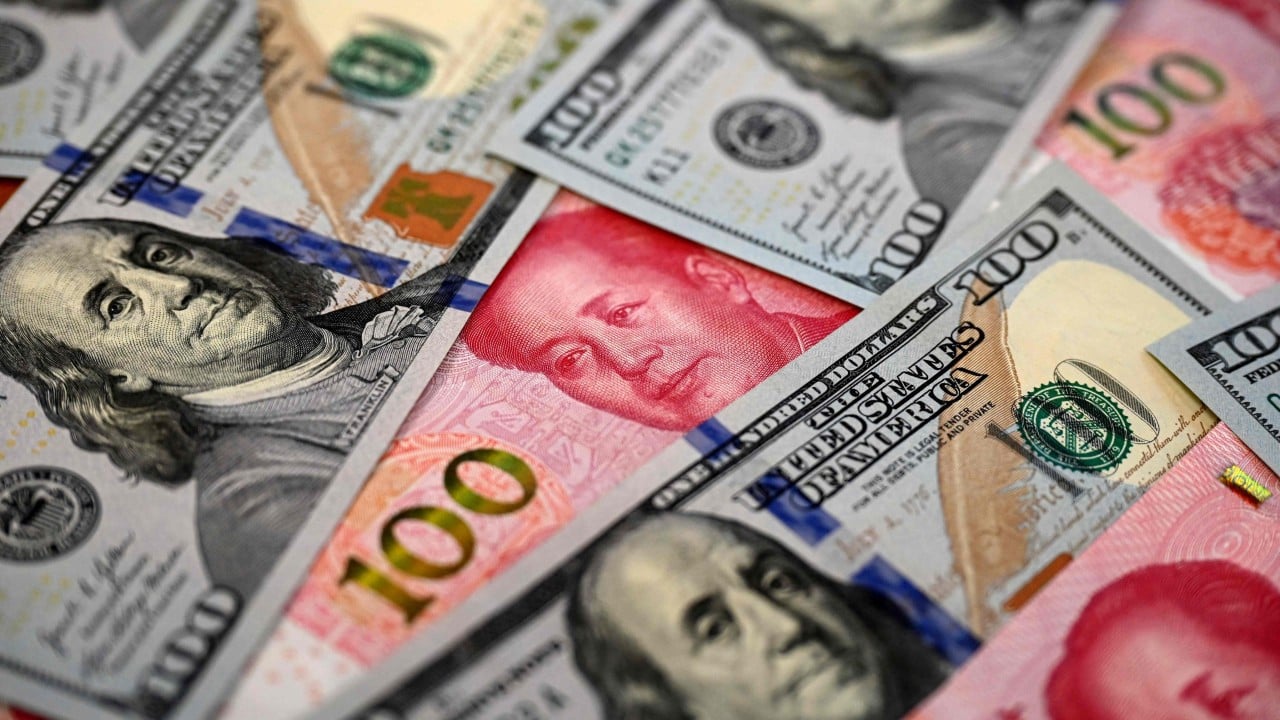
The math of the People’s Bank of China is becoming impossibly complex. Usually, when inflation rises, a central bank raises interest rates to cool things down. But China’s "inner" economy is already too cold. It needs lower rates to encourage borrowing and spending.
If the bank lowers rates to fight the domestic deflation, it risks weakening the Yuan. A weaker Yuan makes those oil imports even more expensive. It’s a feedback loop of misery. The "stag" part of stagflation refers to stagnation—the lack of growth. The "flation" refers to the rising costs of essentials.
When you combine these, you get a society where the things you need (food, fuel, heat) get more expensive, while the things you have (your home’s value, your salary, your savings) lose their worth. It is an invisible tax on existence.
The Human Cost of Macroeconomics
We often talk about these shifts in terms of percentages and basis points. We should talk about them in terms of anxiety.
The fear in the 1970s wasn't just about the price of gas; it was the feeling that the adults in the room had lost control of the steering wheel. That same sense of unease is permeating the global markets today. If China’s engine stalls because of an energy shock it cannot control, the ripples will touch every corner of the planet.
The cheap goods that have kept global inflation relatively low for three decades are a product of China’s massive scale and low costs. If China is forced to import inflation through its oil pipelines, it will eventually have to export that inflation to everyone else. The "China Price" that the world has relied on will evaporate.
The stakes are not just about GDP targets in a government report. They are about whether a young graduate in Shanghai can afford to move out of his parents' apartment, or whether a family in Ohio will pay $20 more for a toaster because a refinery in the Gulf is under threat.
The global economy is a spiderweb. You cannot pluck a single strand in the Middle East without the whole structure vibrating. Right now, those vibrations are turning into a low, discordant hum that sounds remarkably like the decade that defined economic dysfunction.
The Invisible Ceiling
There is a stubborn hope that this is a temporary spike, a brief flicker of volatility before the world returns to "normal." But normal is a moving target.
China’s battle with deflation was already an uphill climb against a demographic cliff and a cooling property market. Adding a global energy crisis to that mix is like asking a hiker to finish a summit trek while carrying a backpack full of lead.
The policy tools available are blunt instruments. You can print money, but you can't print oil. You can build factories, but you can't force a nervous world to buy what they make. The reality is that the era of easy growth and predictable costs has been replaced by an era of bottlenecks.
The truck driver in Dongguan is still on the road for now. He watches the needle on his fuel gauge and the balance in his mobile wallet. He is the living heartbeat of the global economy, and right now, his heart is racing.
The spectre of stagflation isn't a ghost story designed to scare investors. It is a description of the narrowing path we are all walking. We are finding out, quite painfully, that the distance between a thriving global marketplace and a shuttered factory is only as wide as a single oil tanker.
The lights in the factories are still on, but they are flickering. Everyone is waiting to see if the next spark in the desert will be the one that finally blows the fuse.
Would you like me to analyze how specific sectors, like Chinese tech or global shipping, are hedging against these rising energy costs?