The rain in Dover smells like diesel and wet salt. Stand near the ferry terminal at four in the morning, and you can hear the low, rhythmic thrum of refrigerated lorries idling in lines that stretch toward the white cliffs. Inside those cabs sit drivers with thermos flasks gone cold, staring at clipboards filled with customs declarations that did not exist a decade ago.
They are waiting for stamps. Paperwork. Veterinary certificates for a pallet of cheddar cheese. Rules-of-origin forms for a crate of Midlands-made spark plugs.
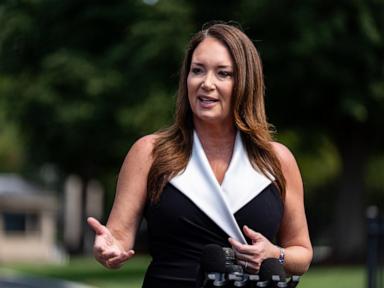
This quiet friction at the edge of the English Channel is the backdrop to a political shift that would have seemed unthinkable in Westminster only a few years ago. When Rachel Reeves, Britain’s Chancellor of the Exchequer, indicated that the United Kingdom’s long-term future belongs inside the European Union, the remark landed like a stone dropped into still water.
For years, the official orthodoxy in London was absolute. Brexit was settled. The single market was off the table. The customs union was a closed door. Yet the arithmetic of the British economy—stubbornly low productivity, sluggish export growth, and a fiscal straitjacket that leaves little room for public investment—has forced a reckoning that ideology alone could not outrun.
To understand why a sitting Chancellor’s words carry such weight, you have to step away from the dispatch box in the House of Commons and look at what happens when an island nation builds an invisible wall between itself and its largest trading partner.
The Invisible Tax on Everyday Ambition
Consider a hypothetical business owner—let us call her Clara—who runs a mid-sized specialist engineering firm outside Birmingham. Ten years ago, sending a shipment of precision valves to a buyer in Munich was roughly as complicated as sending a parcel from London to Edinburgh. You packed the box, printed a label, and put it on a lorry.
Today, Clara employs two full-time administrators whose entire working lives are dedicated to customs compliance.
Nothing about her valves changed. The steel is the same. The tolerances are the same. Yet the cost of moving those parts across a twenty-one-mile stretch of water rose overnight, not because of a dramatic tariff war, but because of what economists call non-tariff barriers. Checks. Delays. Diverging regulatory standards.
Multiplying Clara’s story across tens of thousands of British small and medium-sized enterprises reveals the quiet drain at the heart of the UK economy. According to estimates from the Office for Budget Responsibility, the post-Brexit trading arrangement has reduced the United Kingdom’s long-run productivity by roughly four percent, with exports and imports expected to be around fifteen percent lower than if the country had remained in the EU.
Four percent sounds small on a spreadsheet. In the real world, four percent is the difference between a regional hospital getting a new diagnostic wing and making do with outdated scanners. It is the difference between a young graduate finding a high-skilled job in Manchester or feeling forced to move abroad.
When Reeves speaks of Britain’s future inside the EU, she is not merely making a philosophical point about European identity. She is staring at those exact numbers on the Treasury’s balance sheet.
How the Consensus Shifted
For nearly a decade after the 2016 referendum, British politics operated under a powerful taboo. Both major parties treated the European question like an unexploded shell buried beneath the floorboards—something to be stepped around carefully, never touched, for fear of detonating the fragile electoral coalitions holding power together.
Even as public opinion began to drift, Westminster remained frozen.
Polling over the last several years has consistently shown a steady erosion of confidence in how Brexit was executed, particularly among younger voters and those feeling the squeeze of higher food prices and stagnant wages. Research from the Centre for European Reform estimated that by the mid-2020s, leaving the single market had already cost the UK economy tens of billions of pounds in lost output and billions more in lost tax revenue—money that could have funded public services without raising taxes on working families.
Still, politicians hesitated. Reopening the debate meant risking accusations of betraying democratic mandates or reviving the bitter parliamentary deadlocks of 2019.
Instead, governments tried incremental fixes. Veterinary agreements. Youth mobility schemes. Mutual recognition of professional qualifications. Security pacts. Each small step was framed as pragmatic cooperation rather than reversal.
Yet every negotiation ran into the same structural reality. The European Union is not an à la carte menu. Its single market functions because all participants accept common rules, shared oversight, and the jurisdiction of European institutions to enforce them. You cannot enjoy frictionless trade while insisting on the right to diverge from the rulebook at will.
Think of it like trying to play in a professional football league while refusing to accept the referee. You can still kick a ball around in the park, and you are completely free to make up your own rules. You just cannot play in the championship.
The Arithmetic of the Treasury
Anyone who has ever sat down at a kitchen table at the end of the month, trying to stretch a paycheck across rising utility bills, an overdue car repair, and groceries that somehow cost twenty percent more than they did two years ago, understands the pressure facing the Treasury.
You cannot wish a deficit away. You can only raise taxes, cut spending, borrow more, or grow the economy.
Raising taxes hits households already exhausted by years of inflation. Cutting public spending risks breaking schools, courts, and healthcare systems stretched to their limits. Borrowing too heavily spooks bond markets, a lesson Britain learned painfully during the market turmoil of 2022.
Growth is the only way out that does not hurt.
And this is where the European question ceases to be a culture war and becomes pure mathematics. The European Union remains Britain’s nearest and largest market, accounting for roughly half of all UK trade. Geography does not care about slogans. Rotterdam is closer to London than Glasgow is. Paris is closer to Dover than York.
Supporters of Britain’s current arrangement argue that regulatory independence allows the UK to strike agile trade deals with fast-growing economies in the Indo-Pacific and North America, and to tailor rules in sectors like artificial intelligence and life sciences without waiting for Brussels. Critics of rejoining warn that returning to the EU would mean accepting rules made elsewhere, resuming substantial budget contributions, and reigniting social divisions that took years to cool.
Those arguments are not trivial. Sovereignty has real value to millions of citizens who felt ignored by distant institutions, and any move back toward EU membership would require immense political capital, lengthy negotiations, and almost certainly another democratic mandate.
Yet the counter-argument has grown harder to dismiss. Trade deals with distant nations, while welcome, add fractions of a percent to GDP over decades. Friction with a neighbor right across the Channel subtracts whole percentage points right now.
What Rejoining Would Actually Mean
If Britain were ever to walk back through the door of the European Union, it would not be a return to 2015.
History rarely offers a rewind button. In the years before Brexit, the United Kingdom enjoyed a unique suite of opt-outs—from the euro currency, from the Schengen border-free zone, and from certain justice and home affairs provisions, alongside a substantial budget rebate negotiated in the 1980s.
Brussels has made clear in countless diplomatic signals that a future membership application would be treated under standard accession rules, not as a restoration of past privileges. A Britain seeking to rejoin would face tough questions about currency commitments, border arrangements, and its willingness to be a committed, long-term partner rather than a reluctant member with one foot out the door.
It would also take years. Accession negotiations involve aligning thousands of pages of domestic legislation with EU law—the acquis communautaire—followed by ratification across every existing member state.
For a generation of young Britons who grew up after 2016, however, the prospect does not feel like a step backward. It feels like recovering a birthright they never got to use. They look at friends in Dublin, Amsterdam, and Berlin who can study, work, fall in love, and build businesses across twenty-seven countries without visas or work permits, and they wonder why their own horizons shrank.
The Fog on the Channel
Step back onto the seafront at Dover as dawn begins to break. The grey light catches the hulls of the ferries sliding out of the harbor toward Calais, white wakes curling behind them in the cold water.
Every twenty-four hours, thousands of trucks cross that narrow strip of sea, carrying medicines, fresh produce, car parts, and books—the ordinary bloodstream of two interconnected economies that have traded across this water since Roman galleys rowed into Richborough.
Politics often pretends that borders are clean lines drawn on maps, crisp and absolute. Reality is messier. Reality is a lorry driver checking his watch in the rain, a small manufacturer deciding whether it is worth the headache to bid on a German contract, and a Chancellor looking at numbers that refuse to add up while the wall stays up.
Whether Rachel Reeves’s vision becomes official policy in the coming years or remains a marker laid down for a future political generation, the silence has been broken. The question is no longer whether Britain can afford to talk about its place in Europe. It is how long Britain can afford not to.