Language is never just a tool for commerce or administrative convenience. It is a shifting architecture of belonging. Words carry weight because they determine who belongs inside the warm circle of the hearth and who remains outside in the cold rain. When politicians start arguing over what constitutes proper national identity, they are rarely talking about grammar or heritage. They are drawing lines in the dirt.
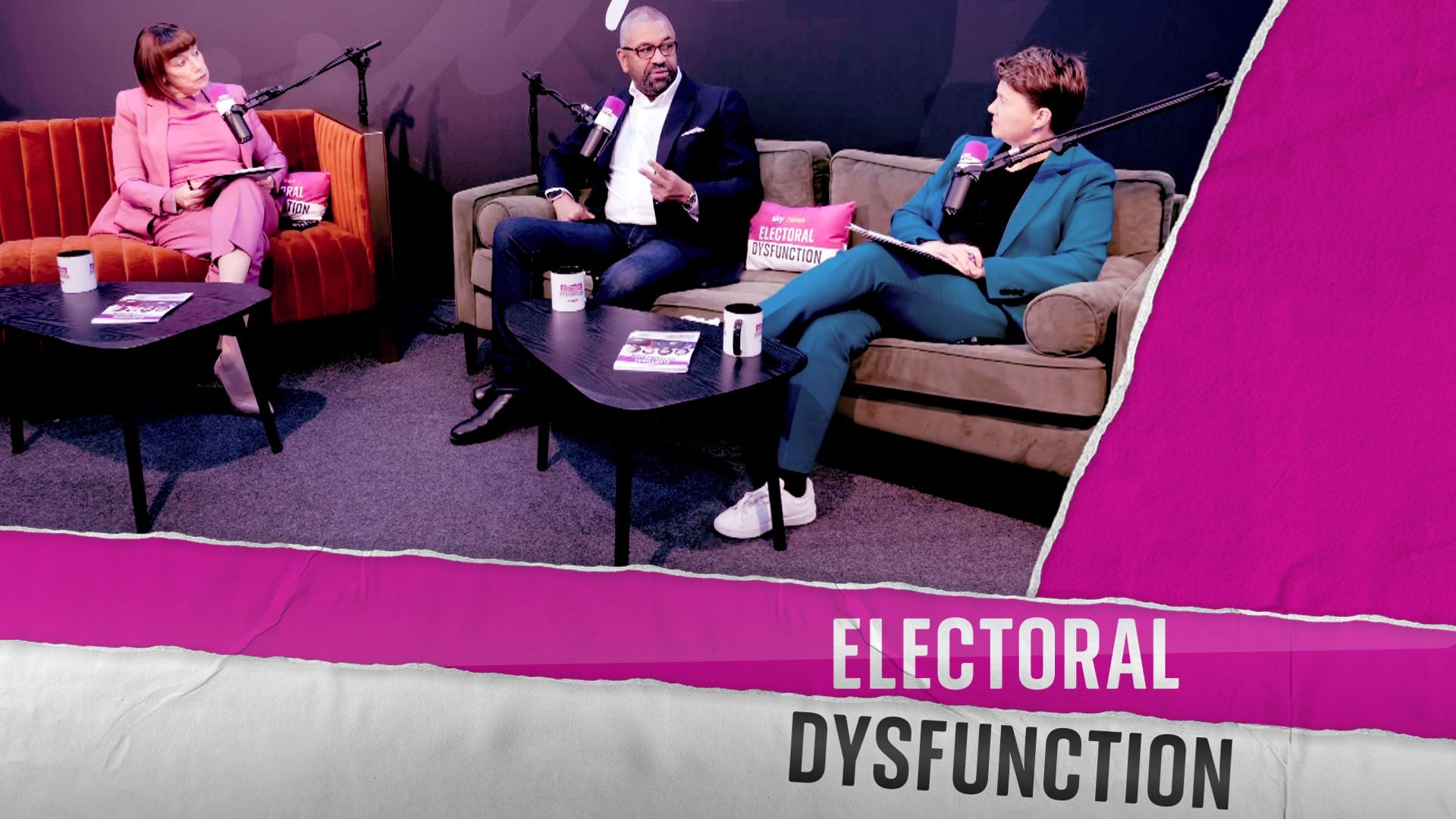
James Cleverly found himself stepping across one of those contested lines during a high-stakes political clash that exposed the raw nerves of modern British politics. The flashpoint centered on Suella Braverman and a recurring ideological battle over Englishness, culture, and assimilation. To understand why this matters, you have to look past the Westminster television studios and examine the quiet, daily reality of millions of citizens who wake up every morning wondering if their passport comes with an asterisk.
Consider the kitchen table in a terrace house in Leicester.
A family sits over morning tea. The television murmurs in the background, broadcasting soundbites from politicians arguing over traditional values and cultural purity. The parents are immigrants who arrived decades ago, working double shifts in factories and hospitals, paying their taxes, and raising children who speak with local accents and cheer for the national football team. Yet, whenever a debate erupts over who truly embodies the nation, that family feels a familiar tightening in the chest. They love the country they chose, but the country keeps running focus groups on whether they are truly part of the family.
This is the invisible cost of identity politics. It turns citizenship from a legal status into an ongoing audition.
The political feud between Cleverly and Braverman was not merely a disagreement between colleagues; it was a proxy war for the soul of a party and, by extension, the national narrative. Braverman had frequently leaned into populist rhetoric concerning cultural preservation, warning against the dilution of traditional British identity and pushing a hardline stance on immigration and integration. To her supporters, this was honest straight-talking about the pressures placed on public services and shared cultural norms. To her critics, it was a dangerous dog whistle that alienated minority communities and redefined Britishness through an exclusionary lens.
Cleverly, stepping into the fray, offered a different register. Known for a more pragmatic, affable style of political communication, his counter-arguments highlighted the inclusive reality of modern Britain. He pointed to a society built by diverse hands, where Englishness is not a static museum piece frozen in 1952, but a living, breathing culture shaped by every person who contributes to it.
Yet, watching from the sidelines, many voters felt a deep fatigue. They have seen this play before.
Political discourse in the twenty-first century often operates as a pendulum swinging between nostalgia and anxiety. On one side, politicians sell a sepia-toned fantasy of an England that perhaps never truly existed outside of romantic poetry—a place of village greens, unchanging traditions, and homogeneous neighborhoods. On the other side, technocrats offer bland assurances about economic metrics and diversity checkboxes that fail to address the genuine emotional attachments people have to their local neighborhoods and shared heritage.
Both approaches miss the human core.
People are not data points on a spreadsheet, nor are they props for a culture war. They are individuals trying to build stable lives in a rapidly changing world. When housing is scarce, wages are stagnant, and local hospitals are overstretched, it is easy to channel economic anxiety into cultural resentment. It is much easier to blame the neighbor who looks different than it is to untangle global supply chains, underfunded public infrastructure, and decades of shifting economic policy.
This is where the rhetoric of cultural ownership becomes dangerous. When politicians bicker over who has the authentic claim to "Englishness," they provide a convenient smokescreen. They transform structural failures into cultural grievances.
Imagine walking through a bustling high street in Birmingham on a rainy Tuesday afternoon. You pass a Polish bakery, a Caribbean grocer, a traditional British pie shop, and a tech startup run by second-generation entrepreneurs. Listen to the cadence of the voices on the pavement—a chaotic, beautiful mashup of dialects, accents, and slang that would have been entirely unrecognizable a century ago.
Is that street less English than a sleepy postcard village in the Cotswolds?
Of course not. It is simply the latest chapter in a long, messy history of island life. Britain has always been a nation of mongrels, built by successive waves of invaders, traders, refugees, and immigrants. From the Romans and the Anglo-Saxons to the Windrush generation and contemporary tech workers from across the globe, the island has never stood still. To pretend otherwise is to misunderstand the very nature of culture, which survives only by growing, adapting, and absorbing.
When leaders bicker over identity, they freeze this dynamic process. They demand ideological purity tests that even native-born citizens would struggle to pass. They confuse heritage with exclusion.
The clash between Cleverly and Braverman ultimately revealed the widening fault lines within conservative politics regarding how to address a diverse electorate. One faction believes victory lies in doubling down on cultural grievances, rallying a base defined by what it opposes. The other senses that a modern, multi-ethnic society requires a broader tent—one that can accommodate different backgrounds while maintaining a shared commitment to democratic norms, the rule of law, and mutual respect.
But beneath the tactical calculations of Westminster insiders lies a profound question for every citizen. What do we want our national identity to feel like?
Do we want a fortress mentality, constantly scanning the horizon for cultural threats, policing language, and treating our neighbors as suspicious interlopers? Or do we want a confident civic identity, secure enough in its values to welcome new voices, bold enough to debate its flaws, and generous enough to share the story of the nation with anyone willing to help write its next chapter?
The politicians will move on to the next news cycle. The television cameras will pivot to new controversies. The soundbites will fade into the digital archive.
Back in Leicester, the family finishes their tea. The children grab their school bags and head out the door, laughing as they rush into the morning drizzle. They do not spend their days pondering cabinet ministers or theoretical debates about national character. They simply live it. They are English, they are British, and no amount of political posturing at Westminster can change the simple truth of where they belong.
The flag belongs to everyone who stands under it, working to make tomorrow better than yesterday.