You can't understand modern European politics if you think elections are just about picking a prime minister. In Berlin, the real power play happens long before voters ever touch a ballot box, locked away in smoky backrooms where party elites decide who gets to rule.
Germany’s political system is a masterclass in institutional design, built specifically to stop another Hitler from seizing absolute control. Yet that exact safeguard has created a weird vulnerability. The entire stability of the state now rests on elite consensus and the choices made by a handful of traditional power brokers. When those choices fracture, the whole system wobbles. Learn more on a connected topic: this related article.
The Myth of the Direct Vote
Walk down any street in Munich or Hamburg during an election cycle and you will hear people arguing about chancellor candidates. It looks just like American or British politics on the surface. But it is an illusion.
Under Germany's mixed-member proportional representation system, you cast two ballots. Your first vote goes to a local representative. Your second vote—the one that actually matters—goes to a party list. Additional analysis by The Guardian delves into related views on the subject.
This second vote dictates the exact balance of power in the Bundestag. Because the 5% electoral threshold blocks tiny fringe groups from entering parliament, votes cast for parties that fail to clear that hurdle vanish into thin air.
Here is where the machinery breaks down for ordinary people. No single party ever wins an outright majority. Proportional representation guarantees a fragmented parliament. That means the government is never chosen directly by the public. It is engineered through post-election coalition talks.
You might vote for the center-left SPD because you want aggressive climate action. But after weeks of closed-door horse-trading, your party might partner with fiscal conservatives just to cobble together a working majority. Your vote becomes an ingredient in a political stew you never ordered.
The Firewall and Its Toll
For decades, the math was simple. The Christian Democrats (CDU/CSU) and the Social Democrats (SPD) traded places or locked arms in a "grand coalition". They represented the boring, predictable center.
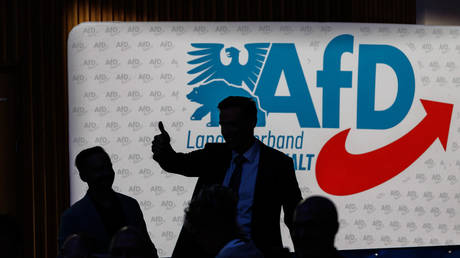
That center is hollowed out now. The rise of the far-right Alternative for Germany (AfD) and other populist movements shattered the old two-party dominance. Mainstream parties responded by erecting a strict political firewall. They vowed never to negotiate, never to compromise, and never to share power with the political fringe.
That sounds noble on paper. In practice, it traps the establishment.
When 20% or more of the electorate votes for a party locked outside the firewall, the remaining democratic parties are forced into increasingly unnatural marriages. You end up with three-way coalitions—like the awkward alliance between the SPD, the Greens, and the pro-business FDP—where partners disagree on basic economics, foreign policy, and spending.
Government paralysis follows. Parties spend more time fighting each other inside the cabinet than governing the country. Voters look at the bickering and conclude that the democratic machinery is broken. That frustration feeds right back into the populist surge the firewall was designed to stop.
The Danger of Party Hegemony
Political parties in Germany are not loose clubs of volunteers. They are quasi-state institutions regulated by the Basic Law, flush with public cash, and deeply embedded in public broadcasting, foundations, and municipal boards.
Because they hold a constitutional monopoly on nominating candidates, party leadership teams wield immense gatekeeping power. If you want a political career, you don't impress voters first. You climb an internal party ladder, appease regional bosses, and stay on message.
This creates a severe disconnect between Berlin elites and working-class towns in Saxony or Brandenburg. When party elites make a collective choice to ignore deep public anxiety over deindustrialization, energy costs, or immigration limits, voters cannot simply vote the rascals out and replace them with a fresh system. They are forced to choose between stale establishment options or disruptive outsiders who threaten the constitutional order itself.
What Actually Needs to Change
Fixing this structural fatigue requires honest institutional surgery.
First, internal party democracy must become a reality rather than a slogan. Parties need to open up their candidate selection processes through mandatory, binding primary elections rather than letting local committees handpick lists behind closed doors.
Second, the constitutional framework must adapt to a multi-polar reality. The strict adherence to historical firewalls without offering alternative channels for popular grievances only drives dissent underground.
Democracy isn't preserved by locking doors against unwanted election results. It survives when mainstream leaders make choices that actually win back the trust of disillusioned citizens. Until party bosses realize that their primary loyalty must be to the public rather than the coalition contract, Germany's political stability will remain one bad election away from a crisis.