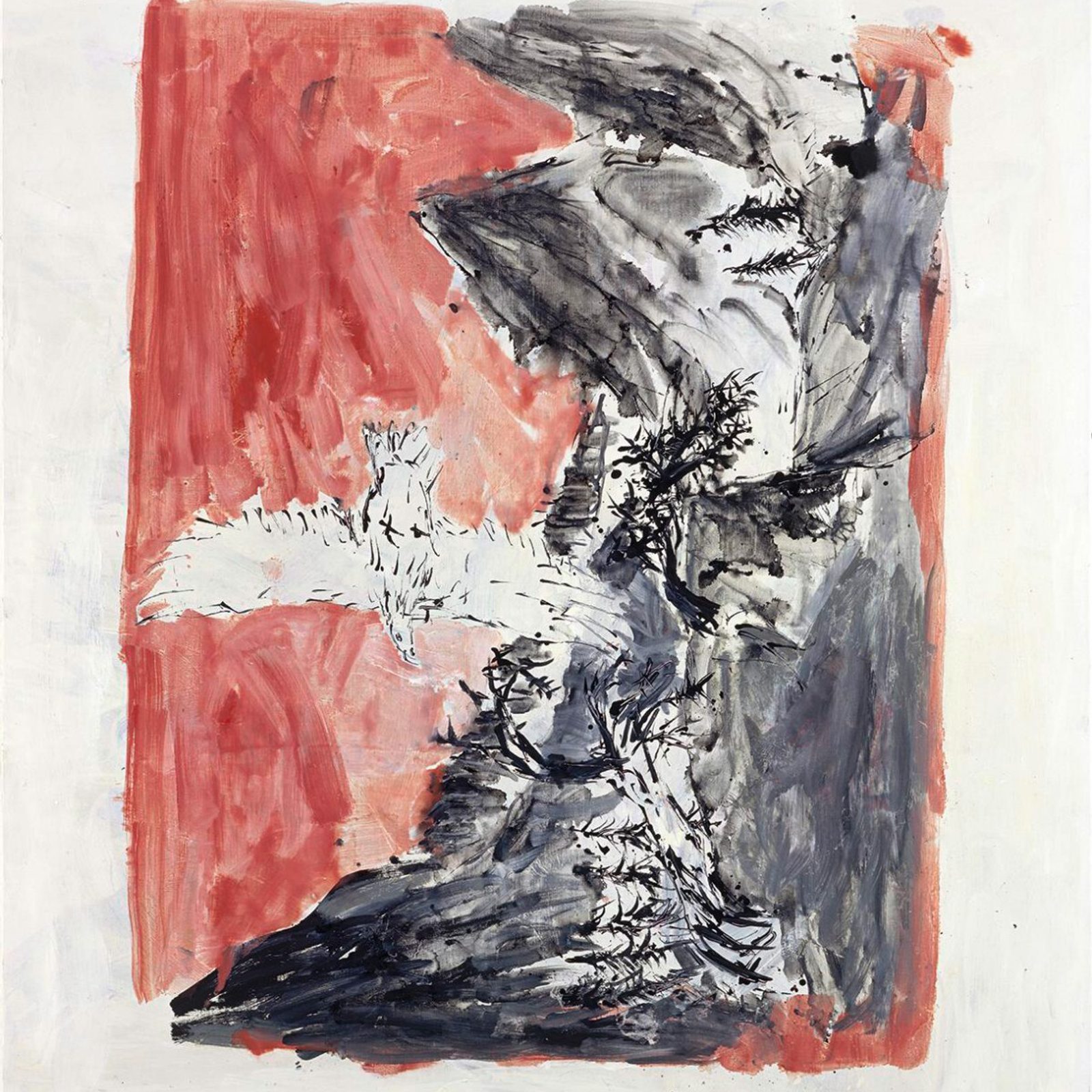
Georg Baselitz spent his entire life making people uncomfortable. He didn't just paint pictures; he fought them. When news broke that the German painter passed away at 88, the art world lost its most stubborn provocateur. He’s the man who literally turned the world upside down to make us look at it differently. If you think modern art is just people throwing paint at a canvas to see what sticks, Baselitz is the guy who proves there’s a much more violent, thoughtful struggle happening behind the frame.
He grew up in the wreckage of Nazi Germany. That’s not just a biographical footnote. It’s the engine of everything he created. While other artists were trying to find beauty or peace after the war, Baselitz was digging through the dirt. He was born Hans-Georg Kern in 1938 in Deutschbaselitz. He later took the name of his town as a permanent link to his roots. He didn't want to forget the trauma. He wanted to paint it until it bled. Meanwhile, you can read other developments here: The Girl in the Well and the Voice of the Island.
The Day Art Became Obscene
In 1963, Baselitz caused a literal riot in West Berlin. His first solo exhibition at the Werner & Katz gallery was shut down by the public prosecutor. Why? Because of two paintings: The Big Night Down the Drain and The Naked Man. They weren't just "nude." They were grotesque, fleshy, and aggressively ugly. Police confiscated the works. People were outraged. Baselitz loved it.
He wasn't trying to be a pornographer. He was reacting against the polite, abstract art that was popular at the time. To him, clean lines and pretty colors felt like a lie in a country that had just committed the Holocaust. He wanted something raw. He wanted "Pandemonic" art. This wasn't about aesthetics. It was about survival in a broken culture. To explore the complete picture, we recommend the recent analysis by The Hollywood Reporter.
Many critics at the time didn't get it. They saw a young man looking for attention. In reality, he was looking for a way to be a German artist without being a Nazi artist or a soulless copy of an American abstractionist. He found a middle ground that was jagged, uncomfortable, and entirely his own.
Why Everything Went Upside Down
By 1969, Baselitz hit a wall. He realized that people were focusing too much on what he was painting—the heroes, the trees, the figures—and not how he was painting. He wanted to strip away the story. His solution was simple and brilliant. He flipped the canvas.
The Wood On Its Head was the first major piece where he used this technique. It wasn't a gimmick. By painting upside down, he forced the viewer to see the brushstrokes, the weight of the paint, and the composition rather than the subject. You stop seeing "a tree" and start seeing the struggle of green and brown against a white void. It’s a trick that forces your brain to work harder.
This became his signature. For decades, he rendered portraits, landscapes, and still lifes inverted. It was a way to maintain representation while remaining abstract. He stayed in that tension. It’s why his work feels so heavy. You’re constantly trying to "fix" the image in your head, but Baselitz won't let you. He keeps you off-balance. It’s a metaphor for the 20th century. Nothing was right-side up anymore.
Breaking the Heroic Myth
In the 1960s, Baselitz created a series called The Heroes. They don't look like heroes. They look like survivors of a plane crash wandering through a desert. They have small heads and massive, bloated limbs. They wear tattered uniforms. They carry palettes and brushes like weapons they don't know how to use.
This was his commentary on the "Great Man" theory of history. Germany had been destroyed by "heroes." Baselitz showed the reality of the aftermath. These figures are vulnerable. They’re pathetic. Yet, they’re still standing. This series is now considered one of the most important cycles in postwar European art. It captured a specific kind of German guilt and exhaustion that nobody else dared to touch.
Wooden Giants and Chainsaws
Baselitz didn't stop at the canvas. In the 1980s, he started making sculptures. He didn't use a chisel and a fine hammer. He used a chainsaw. He hacked away at massive blocks of wood to create figures that looked like they’d been unearthed from an ancient, angry civilization.
His sculpture Model for a Sculpture at the 1980 Venice Biennale caused another scandal. People thought the figure’s raised arm was a Nazi salute. Baselitz denied it, claiming it was inspired by African art and folk carvings. Whether or not he intended the provocation, the piece screamed for attention. He wanted art to be a physical confrontation. You can’t look at a Baselitz sculpture and feel relaxed. The jagged edges and rough textures feel like a threat. That was the point. Art shouldn't be furniture. It should be an event.
The Complicated Legacy of a Grumpy Old Man
Baselitz was never a "nice" guy in the press. He famously said that women can't paint, a comment that rightfully brought him a mountain of grief. He was dismissive of peers. He was arrogant. He was often wrong.
But here’s the thing. We don't look at Baselitz for his political correctness. We look at him because he refused to let art become a commodity of comfort. He stayed angry. Even in his later years, his "Remix" series saw him revisiting his old works and painting them with a new, frantic energy. He was obsessed with his own history, constantly trying to see if his younger self was right.
His influence on Neo-Expressionism can't be overstated. Without Baselitz, you don't get the raw emotional power of artists like Anselm Kiefer or Julian Schnabel. He gave artists permission to be messy again. He proved that you could be "figurative" without being "traditional."
How to Look at a Baselitz Today
If you find yourself in a museum standing in front of an upside-down Baselitz, don't try to tilt your head. That’s a rookie mistake. Stand still. Look at the way the paint is applied. Notice the violence in the marks. He often used his fingers to smear the oil.
Think about the context. This is art made by someone who saw his world collapse before he was ten years old. The inversion isn't a joke. It’s a statement that the traditional ways of seeing have failed us. The world is broken, so the art must be broken too.
What You Should Do Next
Go find a copy of his Pandemonic Manifesto. It’s a wild, surreal read that explains his early mindset. Then, look up his 2021 retrospective at the Centre Pompidou. It shows the full arc of his career, from the early obscenities to the ghostly, thin paintings of his final years.
Don't just read about him. See the scale of the work. Baselitz is an artist of physical presence. If you’re ever in Munich, visit the Pinakothek der Moderne. They have an incredible collection. Seeing those massive, inverted figures in person changes how you perceive space. It makes you realize that most of what we see is just a matter of perspective. And sometimes, you have to turn everything on its head just to see the truth.
Art history is full of people who played by the rules. Baselitz didn't even acknowledge the rules existed. He leaves behind a body of work that is ugly, beautiful, haunting, and undeniably alive. He’s gone, but the world he flipped stays upside down. That's a hell of a legacy. Move past the headlines and actually look at the paint. You'll see exactly what he was fighting for.</ Tirant>