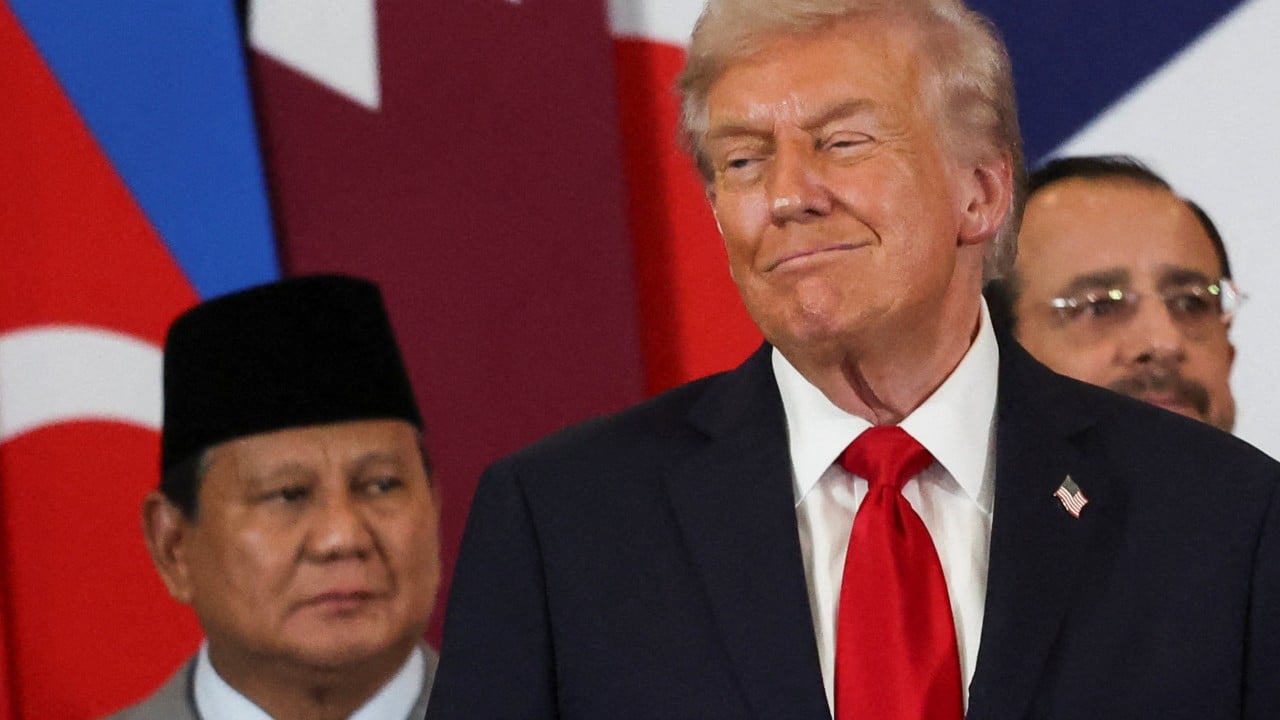
Indonesia’s attempt to secure a Limited Free Trade Agreement (FTA) with the United States for critical minerals is not a simple trade negotiation; it is a high-stakes collision between domestic industrial downstreaming (Hilirisasi) and the United States’ Inflation Reduction Act (IRA) protectionist architecture. While Jakarta seeks to qualify its nickel for US electric vehicle (EV) tax credits, the structural misalignment between Indonesian production methods and US "Foreign Entity of Concern" (FEOC) rules creates a bottleneck that no amount of diplomatic signaling can bypass. The viability of this deal rests on three distinct friction points: capital origin, environmental traceability, and the legislative constraints of the US Section 30D tax credit.
The FEOC Structural Barrier
The primary impediment to an Indonesia-US critical minerals deal is the composition of capital within the Indonesian nickel sector. Under the IRA, an EV does not qualify for the full $7,500 tax credit if its battery contains critical minerals extracted, processed, or recycled by a Foreign Entity of Concern. The US Treasury Department defines an FEOC as any entity "owned by, controlled by, or subject to the jurisdiction" of the governments of China, Russia, North Korea, or Iran.
The "25% Ownership" rule is the specific metric that destabilizes Indonesia’s negotiating position. If a Chinese entity—state-owned or private—holds 25% or more of the voting interest, board seats, or equity in an Indonesian refinery, that refinery's output is disqualified from the US supply chain.
Current Indonesian production capacity is heavily reliant on Chinese technology and financing. Estimates suggest that over 70% of Indonesia's High-Pressure Acid Leaching (HPAL) plants—the specific facilities required to produce battery-grade nickel sulfate—are joint ventures with Chinese firms like Tsingshan Holding Group, Huayou Cobalt, and Ningbo Brunp Lygend. To meet US standards, Indonesia must facilitate a massive equity restructuring or "de-risking" of its own projects, a move that risks alienating its largest source of Foreign Direct Investment (FDI).
The Environmental Accounting Deficit
The second friction point is the carbon intensity of Indonesian nickel. The US and its G7 partners have increasingly shifted toward "Green Nickel" standards, which prioritize low-carbon extraction and waste management. Indonesia’s nickel industry faces two specific environmental externalities that function as non-tariff barriers:
- The Energy Mix Problem: The majority of Indonesian nickel smelting occurs in industrial parks (e.g., Morowali, Weda Bay) powered by "captive" coal-fired power plants. Because the Nickel Pig Iron (NPI) to Matte conversion process is energy-intensive, the carbon footprint per ton of Indonesian nickel is significantly higher than that produced in jurisdictions like Canada or Australia, which utilize hydroelectric power.
- Waste Sequestration: The disposal of tailings remains a point of contention. While Deep Sea Tailing Placement (DSTP) has been largely restricted, the alternative—Dry Stacking—requires massive land use and poses risks in a seismically active, high-rainfall tropical environment.
For a US trade deal to survive congressional scrutiny, Indonesia must implement a verifiable, digitizable ESG (Environmental, Social, and Governance) tracking system. Without "Product Passport" technology that proves a specific batch of nickel was not produced via high-emission coal power, US automakers will be hesitant to integrate Indonesian ore into their IRA-compliant supply chains, regardless of what a trade treaty says on paper.
Sovereignty vs. Market Access: The Hilirisasi Paradox
President Prabowo Subianto’s administration inherits the "Hilirisasi" policy, which mandates that raw ores must be processed domestically to capture higher value-add segments of the global value chain. This policy has successfully moved Indonesia from an exporter of raw $30/ton ore to an exporter of $15,000/ton refined products.
However, this domestic success creates a geopolitical paradox. To maximize the value of its resources, Indonesia has historically welcomed the fastest, most efficient capital—which, over the last decade, has been Chinese. If Jakarta pivots to meet US IRA requirements, it faces two systemic risks:
- The Stranded Asset Risk: Refineries built with Chinese technology that cannot export to the US become dependent on the Chinese market, giving Beijing monopsony power over Indonesian pricing.
- The Subsidy Gap: Unlike the US, Indonesia does not have the fiscal space to provide multi-billion dollar production credits (45X credits) to offset the higher costs of Western-standard ESG compliance.
Logical Framework: The Four Paths Forward
To resolve the "sovereignty reckoning," Indonesian policymakers and their US counterparts are essentially navigating four strategic quadrants:
- The Equity Dilution Path: Indonesia encourages Western miners (e.g., Vale, Glencore) or sovereign wealth funds to take majority stakes in new HPAL projects, ensuring they stay under the 25% FEOC threshold. This satisfies the US but requires a slow, capital-intensive ramp-up.
- The "Dual-Track" Supply Chain: Indonesia maintains two distinct nickel ecosystems. One is "IRA-compliant" (Western-funded, green-powered) for the US/EU market, and the other is "Standard Grade" (Chinese-funded, coal-powered) for the domestic and Chinese markets.
- The Technical Equivalent Waiver: Indonesia lobbies for a "Limited FTA" that treats its nickel as "domestic" under the IRA, similar to the deal the US signed with Japan. However, Japan does not have the same FEOC-entanglement issues that Indonesia does, making this a difficult sell to the US Congress.
- The ASEAN Multi-Bloc Strategy: Using the ASEAN framework to aggregate critical minerals from Indonesia, processing in Vietnam or Thailand, and leveraging the collective bargaining power of the bloc to force a US concession.
The Economic Reality of Smelting Technologies
The distinction between Class I and Class II nickel is critical for understanding why this trade deal is stalled. Indonesia historically produced Class II nickel (Nickel Pig Iron), suitable only for stainless steel. The recent pivot to Class I (battery grade) via HPAL technology is what makes Indonesia relevant to the EV transition.
HPAL is notoriously difficult to manage. It involves high-pressure vessels and sulfuric acid to leach nickel and cobalt from limonite ores. Chinese firms have mastered the "modular" construction of these plants, bringing them online in half the time and at nearly half the cost of Western equivalents. This "Capex Advantage" is the invisible hand that forces Indonesia toward Chinese partnerships. If the US wants to displace this influence, the trade deal must be accompanied by "Financing Equivalency"—essentially, the US International Development Finance Corporation (DFC) must offer terms that compete with the China Development Bank.
Legislative Constraints in the US Congress
The US executive branch (The White House and State Department) views an Indonesia nickel deal through the lens of de-risking from China. They want the deal. However, the US legislative branch (Congress) views it through the lens of labor standards and the protection of the domestic American mining industry. Senators from mining states (e.g., West Virginia, Nevada) perceive Indonesian nickel as a threat to their own burgeoning projects.
This creates a "Ratchet Effect" where any trade agreement with Indonesia will likely include "snapback" provisions—tariffs that return if Indonesia fails to meet specific labor or environmental milestones within 24-36 months.
The Logistics of Traceability
A successful agreement requires a "Mine-to-Motor" traceability protocol. This involves:
- Geospatial Tagging: Every ton of ore must be tagged at the pit to ensure it did not come from protected rainforest areas or mines using child labor.
- Mass-Balance Accounting: Refineries that process both "clean" and "standard" ore must use rigorous accounting to ensure the final product sold to the US is truly IRA-compliant.
- Carbon Border Adjustment Alignment: Preparing for the EU’s CBAM (Carbon Border Adjustment Mechanism), which will likely set the global standard for nickel carbon intensity by 2030.
The strategic play for Indonesia is to stop viewing the US trade deal as a binary "yes/no" on sovereignty and start viewing it as a catalyst for a "Tier 1" mining jurisdiction status. By leveraging US demand to force an upgrade in ESG and energy infrastructure, Indonesia can escape the "Commodity Trap" where it is merely a source of cheap, dirty inputs for others' high-tech economies.
The final move involves Jakarta mandating that all new nickel concessions in the North Maluku and Sulawesi regions utilize renewable energy (geothermal or solar-plus-storage) as a prerequisite for licensing. This creates a natural filter that aligns with US IRA requirements without explicitly banning Chinese capital, thereby preserving diplomatic neutrality while strategically positioning for the North American market.
Indonesia must now decide if the cost of decoupling its nickel equity from Chinese state-linked firms is lower than the long-term value of being the primary battery supplier to the Western hemisphere. The current data suggests that without this decoupling, the US trade deal remains a diplomatic aspiration rather than a commercial reality.