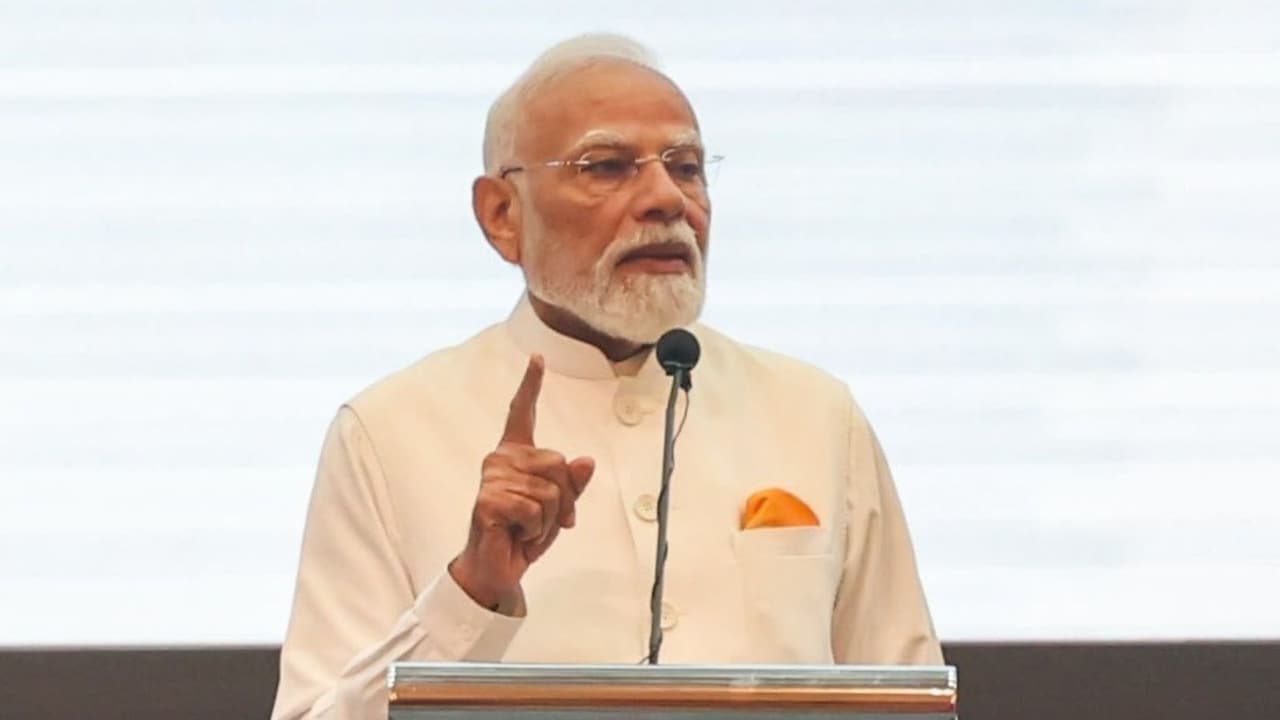
History has a funny way of forcing political rivals into awkward corners. On July 7, 2026, Narendra Modi stood before the Indonesian Parliament in Jakarta, becoming the first Indian prime minister to address that legislative body. Given the sharp, relentless ideological battle between Modi's ruling party and the legacy of India's first prime minister, nobody expected Jawaharlal Nehru to take center stage. Yet, he did. Modi openly praised Nehru for his backing of Indonesia's independence movement.
When you're trying to build a modern maritime alliance in the Indo-Pacific, history isn't something you can just rewrite or ignore. It's the currency of diplomacy. Modi needed to establish deep, historical trust with Jakarta, and that meant acknowledging the foundational ties built by the very man his domestic campaigns routinely criticize.
The Hidden Subtext of Modi's Address
The speech wasn't just a routine diplomatic exercise. It was a calculated effort to build a maritime bridge between the two largest democracies facing the Indian Ocean. Modi's address introduced what he called the Ganga-Mahakam Vision for bilateral engagement, trying to link India's development goals for 2047 with Indonesia's Golden Indonesia 2045 plan.
To make this modern vision stick, Modi had to remind the Indonesian lawmakers that their bond wasn't cooked up overnight in a trade seminar. He noted that the two nations endured long periods of foreign rule and gained independence at almost the same time. Indonesia broke free from Dutch rule in 1945, and India threw off British control in 1947.
The strategy behind the speech relies heavily on shared historical suffering and mutual defiance. By pointing out that India strongly supported Jakarta's fight for independence at the United Nations during those critical post-war years, Modi anchored modern strategic trust in historical actions.
The 1947 Secret Flying Mission That Tied the Nations Together
You can't understand why Modi brought up Nehru without looking at one of the wildest aviation rescue stories of the twentieth century. In July 1947, Indonesia's revolutionary government was facing total elimination. The Dutch had launched a massive military offensive, putting Indonesian Prime Minister Sutan Sjahrir and Vice President Mohammad Hatta under house arrest in Jakarta.
Nehru hadn't even officially taken charge as the prime minister of an independent India yet. Still, he recognized that an imperialist crackdown in Southeast Asia was a direct threat to the regional freedom he envisioned. He ordered a covert rescue operation. He didn't send a military detachment. He turned to Biju Patnaik.
Patnaik was an ace pilot, an industrialist, and a fierce nationalist who later became the chief minister of Odisha. He and his co-pilot wife, Gyanwati Patnaik, hopped into a civilian Dakota aircraft and flew directly into a conflict zone. The Dutch threatened to shoot them out of the sky. Patnaik didn't care. He landed the plane, rescued Sjahrir and Hatta from right under the noses of the colonial authorities, and flew them safely to New Delhi via Singapore.
Modi leaned heavily into this narrative during his parliamentary speech. He explicitly mentioned Patnaik's bravery, knowing that the story holds a sacred place in Indonesian diplomatic history. By highlighting a mission ordered by Nehru and executed by an Indian icon, Modi showed the Indonesian elite that India has spilled sweat and risked lives for Indonesian sovereignty.
Reclaiming the Legacy of the Bandung Conference
Another crucial element of Modi's speech was his reference to the 1955 Bandung Conference. For decades, the political right in India viewed the Non-Aligned Movement (NAM) born out of Bandung as an idealistic, weak-willed policy that left India vulnerable. Yet, in Jakarta, Modi found himself praising its foundations.
The Bandung Conference brought together 29 newly independent Asian and African countries. It was organized primarily by Nehru and Indonesian President Sukarno. The summit opposed colonialism, rejected the binary choices of the Cold War, and insisted that developing nations deserved a distinct voice.
Modi told the Indonesian Parliament that Sukarno and Nehru gave a clear message to the world that independent nations have the right to take their own decisions. This isn't just nostalgia. It fits perfectly into India's modern foreign policy agenda. Today, New Delhi champions the Global South, resisting Western pressure on trade and energy policies while simultaneously countering Chinese dominance. By invoking Bandung, Modi recast Nehru's mid-century anti-colonialism as a precursor to his own modern policy of strategic autonomy.
The Domestic Political Firestorm at Home
While Modi was collecting diplomatic points in Jakarta, back in New Delhi, his opponents were sharpening their knives. The situation became even more complicated when Indonesian President Prabowo Subianto conferred Indonesia's highest civilian honor, the Bintang Adipurna of the Republic of Indonesia medal, upon Modi.
The award recognizes exceptional service to the unity and prosperity of Indonesia. Modi accepted it with humility, stating the honor belonged to the crores of Indians and the historic ties between the nations.
The political problem? The only other Indian leader to receive this highest honor was Jawaharlal Nehru.
Congress leader Jairam Ramesh immediately took to social media to mock the Prime Minister. He pointed out on X that Nehru received the award posthumously without having to wrangle it. The opposition used the moment to highlight the apparent hypocrisy of praising Nehru abroad while systematically diminishing his domestic legacy.
This reaction exposes a permanent tension in Indian foreign policy. On the domestic stage, Nehru is often blamed for historical border disputes and economic mismanagement. But when an Indian prime minister travels to Southeast Asia, Africa, or the Middle East, escaping Nehru's shadow is impossible. His early diplomatic investments created the institutional goodwill that India still spends today.
Moving Beyond History to Maritime Realities
Diplomacy requires more than old stories and medals. The real meat of Modi's visit centers on the physical geography separating and connecting the two countries. Modi noted that while the capitals are thousands of kilometers apart, India's Andaman and Nicobar Islands sit a mere 150 kilometers away from Indonesia's Sumatra island.
The sea has never symbolised separation, Modi insisted to the parliamentarians. He called it a bridge.
This geographic reality drives the new strategic push. The Indian Ocean is a crowded, contested space. China's naval presence is expanding, pushing both India and Indonesia to rethink their security positions. Modi's address called for deeper cooperation in maritime security, cybersecurity, and emergency preparedness. The focus stretches directly from Great Nicobar to the Strait of Malacca, one of the world's most critical choke points for global trade.
They are also looking at economic integration. Modi pitched collaboration across several sectors:
- Trade and critical minerals investments.
- Digital public infrastructure, specifically exporting India's UPI payment model.
- Artificial intelligence and space tech partnerships.
- Defense production and joint naval patrols.
The rhetoric of shared heritage, from the epic tales of the Ramayana to the ancient monuments of Borobudur and Prambanan, serves as a cultural lubricant for these hard-nosed military and economic deals.
What Needs to Happen Next
If this historic address is going to mean anything, both governments must move past grand parliamentary speeches and address the bureaucratic bottlenecks that have historically stalled India-Indonesia relations.
First, the joint development of the Sabang deep-sea port in Indonesia needs to accelerate. India has been talking about developing this port for years, but progress remains slow. Sabang sits right at the entrance of the Strait of Malacca, making it a vital asset for monitoring maritime traffic.
Second, the two nations must finalize operational agreements for real-time maritime data sharing. Navy-to-navy cooperation cannot rely on sporadic joint exercises. It needs integrated tracking systems to monitor unauthorized naval movements in the eastern Indian Ocean.
Third, simplify the trade regulations blocking direct shipping routes. It's ridiculous that a significant portion of trade between two close neighbors still routes through transshipment hubs like Singapore, adding unnecessary costs and delays.
Modi's speech proved that when global strategies are on the line, pragmatic geopolitics will always override domestic political theater. You can criticize past leaders at home to win elections, but when you are standing in a foreign parliament trying to secure a vital ocean, you acknowledge the architects who built the foundation.