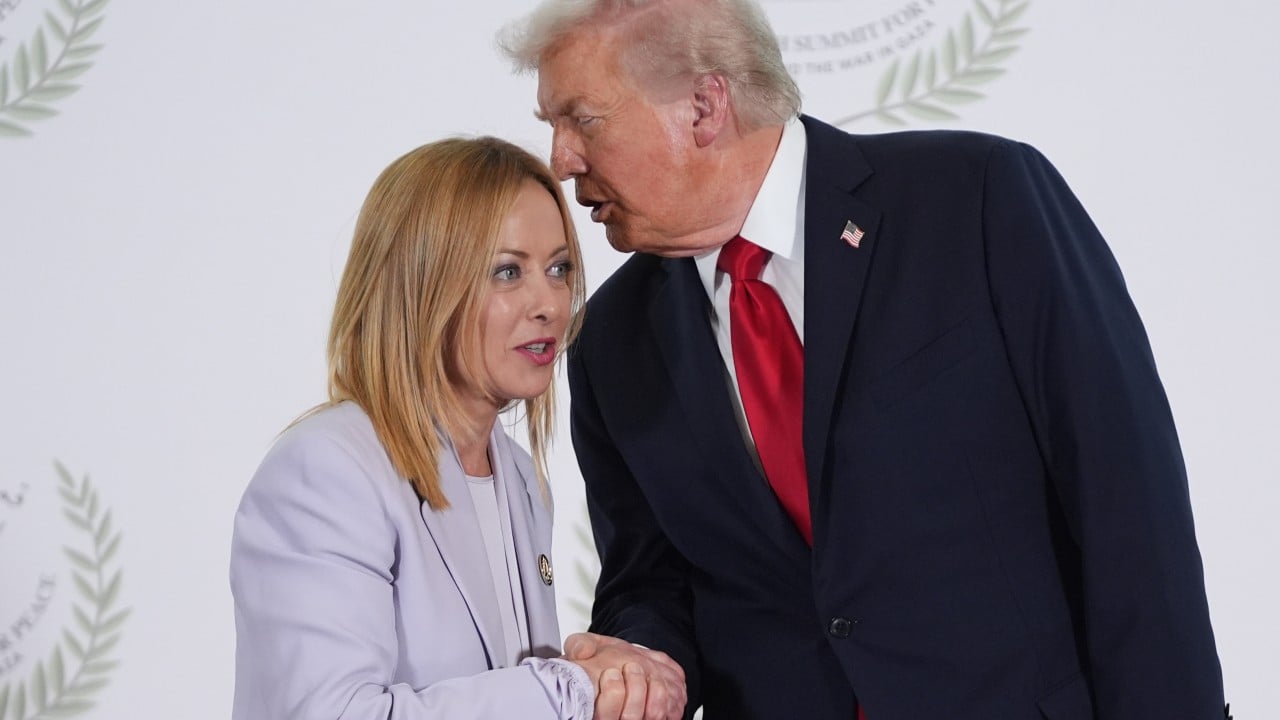
The hypothesis that Italy could replace Iran in a FIFA World Cup serves as a case study in the convergence of sports governance, international sanctions, and high-stakes diplomatic signaling. While mainstream narratives frame this as a "plot" to facilitate rapport between the United States and Italian administrations, a structural analysis reveals that such a maneuver requires navigating a rigid triadic bottleneck: FIFA’s Statues on government interference, the legal threshold for "extraordinary exclusion," and the commercial mechanics of broadcast rights.
The Triadic Bottleneck of National Team Substitution
For a qualified nation to be removed from a FIFA tournament and replaced by an unqualified one, three distinct institutional layers must be breached simultaneously. The failure of any single layer renders the scenario a mathematical and legal impossibility.
1. The Legal Mechanism of Suspension vs. Expulsion
FIFA operates under a private Swiss legal framework. Article 16 of the FIFA Statutes grants the FIFA Council the authority to suspend a member association with immediate effect if it seriously violates its obligations. However, the threshold for stripping a nation of a World Cup spot—already earned on the pitch—is significantly higher than a standard suspension.
Suspensions typically stem from "undue influence by third parties," which usually refers to government interference in the domestic football federation. In the case of Iran, the argument for exclusion shifts from internal governance to human rights and geopolitical compliance. For Italy to benefit, Iran must not only be suspended but have its membership revoked or its competition entry invalidated in a timeframe that allows for a replacement.
2. The Precedent of Yugoslavia 1992
The only valid historical benchmark for this maneuver is the exclusion of Yugoslavia from Euro 1992.
- The Trigger: UN Security Council Resolution 757, which imposed comprehensive sanctions, including a ban on sporting participation.
- The Result: Denmark, the runners-up in Yugoslavia's qualifying group, were invited to participate.
Applying the "Denmark Model" to Italy reveals a massive logical flaw. Italy did not finish directly behind Iran in any qualifying pathway. Iran competes in the Asian Football Confederation (AFC), whereas Italy competes in the Union of European Football Associations (UEFA). FIFA regulations generally dictate that if a team is disqualified, they are replaced by a team from the same confederation to maintain the tournament's regional balance.
3. The Ranking Fallacy
Advocates for Italy’s inclusion rely on the "Highest Ranked Non-Qualifier" theory. Under this logic, Italy, as the highest-ranked team in the FIFA World Rankings to miss out, would be the natural beneficiary. However, FIFA has no codified "wildcard" rule for the World Cup. To bypass AFC runners-up (such as the United Arab Emirates or Iraq) in favor of Italy would require a unilateral executive decision by the FIFA Council that ignores established qualification pathways, likely triggering a cascade of litigation at the Court of Arbitration for Sport (CAS).
The Strategic Intersect of Trump and Meloni
The political dimension of this hypothesis rests on the assumption that the U.S. executive branch can exert sufficient pressure on FIFA to manipulate the tournament lineup. This assumes a level of hegemony over a Swiss-based NGO that is historically inconsistent with FIFA’s desire to project neutrality.
The Transactional Diplomacy Framework
The "Italy for Iran" swap is proposed as a diplomatic gift. In this framework, the U.S. administration uses its influence over FIFA—leveraged via the Department of Justice’s previous investigations into soccer corruption—to eject a geopolitical adversary (Iran) and reward a key ideological ally (Italy).
The Italian administration under Giorgia Meloni has maintained a pro-Atlanticist stance, specifically regarding NATO and Mediterranean security. Within this context, a World Cup spot functions as a "soft power subsidy." However, the cost of this subsidy is high.
- The Erosion of Meritocracy: FIFA’s primary product is the integrity of the "qualification" brand. If participation becomes a matter of diplomatic appointment rather than athletic performance, the commercial value of the qualifying rounds collapses.
- The AFC Backlash: Ejecting an Asian team to seat a European team would trigger an insurrection within the AFC, which represents 47 member associations. For FIFA President Gianni Infantino, the political cost of alienating the Asian bloc—which is vital for his reelection—outweighs the benefit of a temporary diplomatic favor to Washington or Rome.
Quantifying the Iran Disqualification Probability
The probability of Iran's exclusion is not tied to Italian interests, but rather to the internal dynamics of the Islamic Republic of Iran Football Federation (FFIRI).
Variable 1: The Gender Mandate
FIFA has repeatedly warned Iran regarding the prohibition of women in stadiums. Under the "non-discrimination" clauses of FIFA Article 4, a persistent failure to allow equal access is a technical ground for suspension.
Variable 2: Sanctions and Financial Flow
If the U.S. Treasury Department tightens sanctions to the point where FIFA cannot legally transfer participation funds or prize money to the FFIRI without violating OFAC (Office of Foreign Assets Control) regulations, the FFIRI becomes a "non-functional" member.
Variable 3: Direct State Interference
The most likely path to exclusion is if the Iranian government formally dissolves the federation or dictates coaching and squad selections in a manner that violates FIFA Article 19 (Independence of Member Associations).
Structural Barriers to the Italy-Iran Substitution
Even if Iran is removed, the "Why Italy?" question faces three massive structural barriers.
The Regional Replacement Protocol
If an AFC team is removed, the spot logically belongs to the next highest-ranked team in the AFC qualifying rounds. FIFA’s operational preference is always to maintain the "Slot Allocation" agreed upon by the FIFA Council years in advance. For the 2026 cycle, Asia has 8.5 slots. If Italy (UEFA) takes Iran’s (AFC) spot, UEFA would have an "unearned" 17th slot, while Asia would drop to 7.5. This creates a zero-sum conflict between confederations.
The "Lucky Loser" Precedent
In other sports, like tennis or UEFA's own club competitions, a "lucky loser" system exists. FIFA has resisted this for the World Cup to prevent teams from "failing upward." For Italy to be selected, FIFA would have to invent a new regulation post-facto, which is a violation of the legal principle of nulla poena sine lege (no penalty without a law).
The Commercial Logistics Timeline
A World Cup is a logistical behemoth. By the time a disqualification of this magnitude is typically litigated, the tournament is months or weeks away.
- Broadcasting: Italian broadcasters would pay a premium for Italy’s rights, but they have already missed the primary auction window.
- Ticketing: Thousands of Iranian fans hold tickets and visas. The cost of refunding an entire nation’s fan base while re-allocating those seats to Italians on short notice creates an operational deficit.
The Cost Function of FIFA’s Decision Making
FIFA’s decision-making process can be viewed as a function of Revenue (R) minus Risk (k).
$$Decision = f(R_{broadcast} + R_{sponsorship}) - (k_{legal} + k_{political})$$
- Revenue (R): Italy in the World Cup significantly boosts TV ratings in Europe and North America, likely increasing ad spend by 15-20% in those markets compared to an Iran-featured broadcast.
- Risk (k): The risk of a CAS injunction, a boycott by AFC nations, and the permanent loss of "sporting independence" from government whim.
Historically, FIFA has prioritized the mitigation of $k_{legal}$ and $k_{political}$ over short-term revenue spikes. The organization is currently defending its right to exist as a monopoly; conceding that it can be bullied by the U.S. President to swap teams would be a fatal blow to its "Supreme Court of Football" status.
Strategic Forecast: The Participation Vacuum
The most probable outcome of increased pressure on Iran’s participation is not an Italian substitution, but a "Neutral Flag" or "Forfeiture" scenario.
If the U.S. administration successfully lobbies for Iran’s removal, the "Substitution Hierarchy" will likely follow this order:
- AFC Next-in-Line: The highest-ranked Asian team that lost in the final playoff round.
- The Inter-Confederation Playoff Loser: The team that lost the final "0.5" slot playoff.
- The Vacancy: The group proceeds with three teams, and Iran’s matches are marked as 3-0 forfeits.
Italy remains the ultimate "break glass in case of emergency" option for broadcasters, but the legal architecture of global football provides no pathway for their inclusion. The talk of a "plot" between Trump and Meloni is more effectively categorized as a soft power signaling exercise—intended to show alignment against Iran—rather than a viable sporting strategy.
The strategic play for the Italian Football Federation (FIGC) is not to wait for an Iranian collapse, but to lobby for a permanent expansion of UEFA’s slot allocation in future cycles, leveraging their status as a "prestige brand" to ensure they are never in a position to require a geopolitical bailout again. Relying on a substitution requires a total collapse of the international sporting order, a price that even the most ardent fans of the Azzurri should recognize as too high.