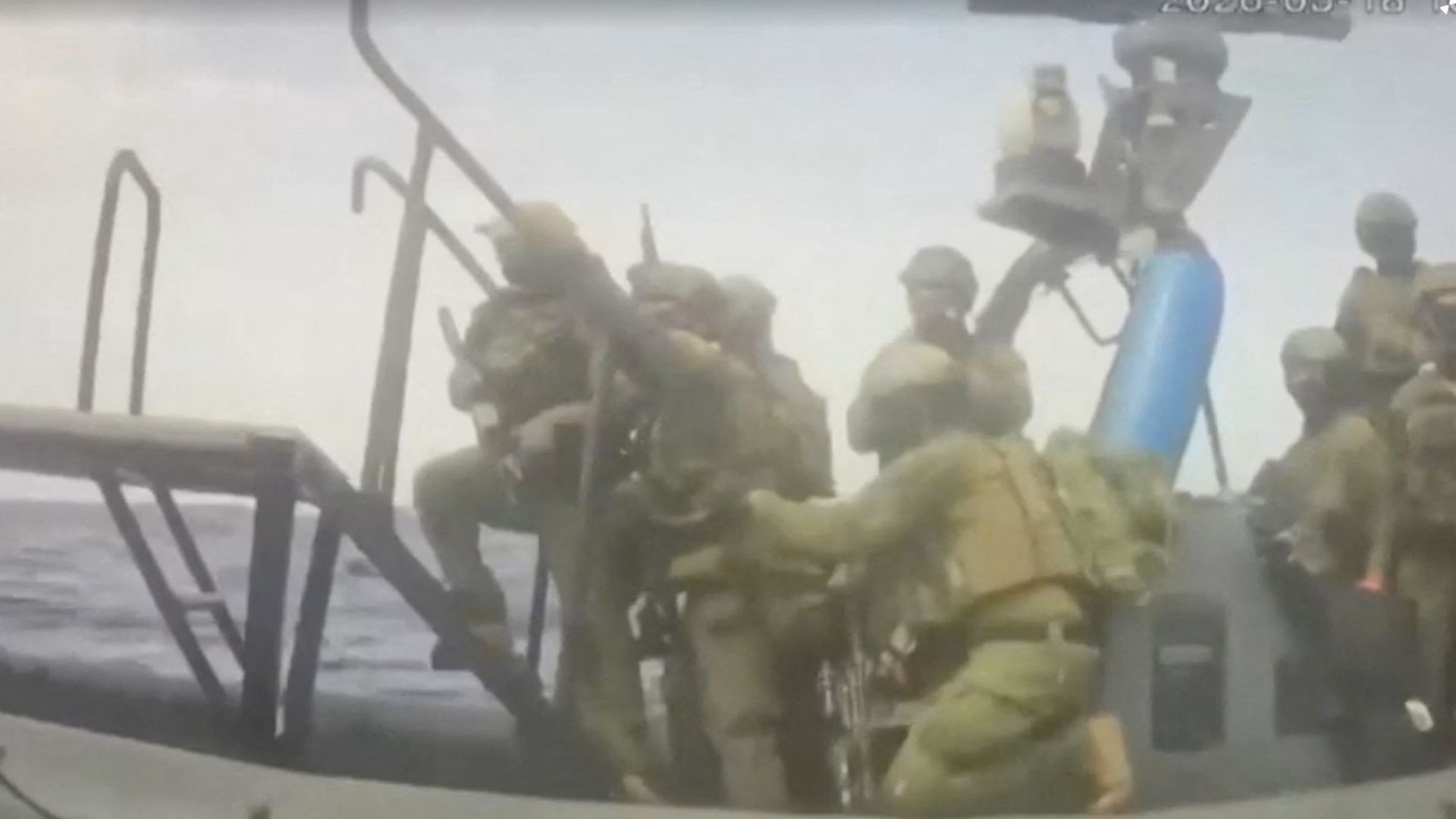
International activist operations do not exist to deliver aid. They exist to manufacture images. When news broke that an activist flotilla heading toward Gaza was intercepted, the headlines immediately defaulted to a predictable script: humanitarian actors thwarted by military force, featuring high-profile relatives of Western heads of state to maximize the emotional leverage.
The media treats these maritime confrontations as spontaneous acts of pure altruism met by disproportionate state aggression. This perspective ignores the cold mechanics of asymmetric warfare and maritime law. The standard narrative positions these events as humanitarian missions. In reality, they are highly calculated public relations exercises where the ultimate measure of success is not how many tons of supplies reach a dock, but how much outrage is generated on evening news broadcasts.
The Friction by Design Strategy
Activists understand that a direct challenge to a naval blockade leaves a state with exactly two choices, both of which serve the activists' objectives. The state can either allow an unvetted vessel to breach its security perimeter, establishing a dangerous legal and physical precedent, or it can enforce the blockade, creating the exact images of military enforcement the organizers set out to capture.
This is friction by design. The presence of high-profile individuals, such as the relatives of European politicians, is not a coincidence. It is a deliberate strategy to raise the diplomatic stakes. It transforms a routine maritime enforcement action into an international incident, forcing governments to intervene on behalf of their citizens and driving a wedge between allied nations.
True humanitarian logistics rely on quiet coordination, deconfliction agreements, and established land corridors monitored by international bodies. When an organization bypasses these established channels in favor of a photogenic sea voyage, the primary cargo isn't food or medicine. It is political leverage.
The Realities of Maritime Blockades
The public debate surrounding these interceptions frequently suffers from a fundamental misunderstanding of international maritime law. Critics often label the enforcement of a naval blockade in international waters as an illegal act of piracy. This argument collapses under basic legal scrutiny.
Under the San Remo Manual on International Law Applicable to Armed Conflicts at Sea, a blockading power is legally permitted to intercept, capture, or redirect merchant vessels suspected of attempting to breach a blockade. Crucially, this enforcement can take place on the high seas, outside of territorial waters, provided the vessel has been properly warned.
- The Rule of Uniformity: A blockade must be applied impartially to all vessels. Making an exception for a ship because it claims to carry humanitarian goods, or because a prominent figure is on board, invalidates the legal status of the entire blockade.
- The Right of Inspection: Sovereign states maintain an inherent right to verify the contents of vessels entering a conflict zone. No military command can accept the word of a non-state actor regarding the cargo of an unvetted ship.
- The Alternative Routes: Legitimate aid organizations regularly utilize designated land crossings and inspected ports to deliver supplies. The insistence on a direct sea route is a choice to prioritize political confrontation over logistically efficient delivery.
Amateur maritime expeditions do not possess the logistical infrastructure to make a meaningful dent in a humanitarian crisis. They lack the distribution networks, the trucks, and the coordination with ground authorities necessary to ensure goods reach the people who need them. A single convoy of trucks crossing an established land checkpoint can carry more verified aid than an entire flotilla of small vessels, without the attendant geopolitical crisis.
Dismantling the Public Relations Trap
The modern media ecosystem is uniquely vulnerable to this style of activism because it prioritizes high-stakes visual conflict over structural context. A headline featuring a detained relative of a Western leader generates immediate engagement. A boring, technical breakdown of cross-border logistics does not.
When analyzing these events, observers must ask the structural questions that the standard coverage ignores:
- Why choose a high-risk maritime route when established land-based humanitarian corridors exist?
- Who funds the acquisition and operation of these vessels, and what are their long-term political objectives?
- How does bypassing standard security screening procedures advance the cause of neutral humanitarianism?
The hard truth is that these operations use individuals as human shields for a broader communication strategy. When a state enforces its borders or blockades, it is doing exactly what its national security framework requires. Treating the enforcement as a surprise, or as an unprovoked act of aggression, requires a suspension of geopolitical literacy.
The global audience needs to stop viewing these maritime standoffs through the lens of a morality play. They are sophisticated, non-kinetic military operations designed to exploit Western media sensibilities and force diplomatic overreactions. Until the analysis shifts from emotional outrage to an understanding of asymmetric strategy, the public will continue to be passive consumers of a carefully scripted theatrical performance.