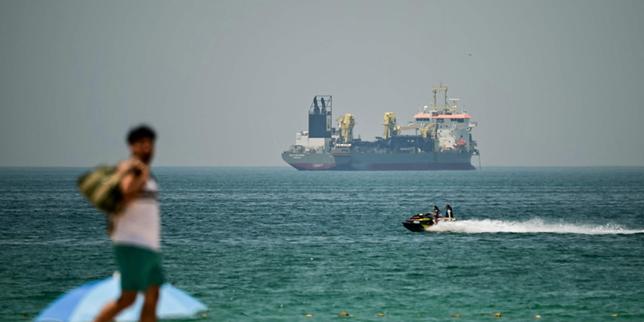
The Strait of Hormuz functions as a choke point for roughly 20% of the world’s liquid petroleum gas and oil consumption, yet its utility as a tool for Iranian geopolitical "blackmail" is diminishing. The recent diplomatic intervention by Qatar, signaling that the Strait should not be used to leverage concessions from Gulf Cooperation Council (GCC) monarchies, highlights a fundamental shift in the regional power dynamic. This shift is not driven by sudden moral alignment but by a cold calculation of infrastructure redundancy, economic diversification, and the breakdown of the traditional "oil-for-security" paradigm.
The Mechanics of Maritime Leverage
To understand why the threat of closing the Strait of Hormuz is losing its efficacy, one must analyze the physical and economic variables that govern the waterway. Leverage in this context is defined by the delta between a state’s ability to disrupt flow and the target’s ability to bypass the disruption.
Iran’s historical strategy relies on the Asymmetric Choke Point Model. This model assumes that even a partial blockade would trigger a nonlinear spike in global Brent Crude prices, thereby forcing Western and regional powers to provide sanctions relief or diplomatic recognition to stabilize the market. However, three structural factors are currently neutralizing this model:
- The Rise of Redundant Outflow Infrastructure: Saudi Arabia and the United Arab Emirates (UAE) have invested billions in pipelines that bypass the Strait. The East-West Pipeline in Saudi Arabia and the ADCOP pipeline in the UAE allow for significant volumes of crude to reach the Red Sea and the Gulf of Oman directly.
- Market Elasticity and Strategic Reserves: The global energy market has become more resilient to localized shocks. The proliferation of US shale oil and the systematic use of Strategic Petroleum Reserves (SPR) by OECD nations have flattened the volatility curve that Iran previously exploited.
- The GCC-Asian Pivot: The primary customers of Hormuz-trafficked oil are no longer in the West; they are in China, India, and Japan. Threatening the Strait is no longer a maneuver against "the Great Satan" but a direct economic attack on Iran’s own most vital trade partners.
The Qatar Mediation Logic
Qatar’s role as a mediator between Tehran and the GCC is often misinterpreted as a balancing act of neutrality. In reality, it is a risk-mitigation strategy for its own Liquefied Natural Gas (LNG) Export Dominance.
Unlike oil, which can be trucked or piped with relative ease across land borders given enough lead time, Qatar’s economic lifeblood—the North Field—is geographically fixed and its export mechanism is entirely maritime. A closure of the Strait would be a catastrophic failure for the Qatari state, regardless of the political objective. By publicly stating that the Strait should not be used for "blackmail," Doha is communicating to Tehran that its protection of Iranian interests in international forums has a hard ceiling: the physical flow of gas.
The Cost Function of a Blockade
If Iran were to attempt a blockade, the cost-benefit analysis yields a net negative for the Iranian state almost immediately. This is calculated through the Sovereign Risk Multiplier:
- Direct Military Attrition: Any attempt to mine the Strait or seize tankers triggers a multi-national naval response. Iran’s conventional navy cannot sustain a prolonged engagement against Fifth Fleet assets and regional partners.
- Total Economic Isolation: Currently, Iran survives on a "shadow fleet" and back-channel oil sales. A blockade would force even sympathetic actors (like Beijing) to freeze Iranian assets to maintain global market stability.
- The Insurance Spiral: Even the threat of disruption raises Hull and Machinery (H&M) insurance premiums. This tax falls on the exporter. By threatening the Strait, Iran effectively taxes its own remaining exports, further depleting its foreign exchange reserves.
Strategic Redundancy as a Geopolitical Weapon
The GCC monarchies have transitioned from a reactive posture to one of Structural Encirclement. By developing ports like Duqm in Oman and Yanbu in Saudi Arabia, these states are moving their economic centers of gravity away from the Persian Gulf's interior. This "de-risking" of the maritime route strips Iran of its primary non-nuclear deterrent.
This creates a Bypass Paradox: The more Iran threatens the Strait, the faster its neighbors build the infrastructure that makes the Strait irrelevant. We are witnessing the final stages of this transition. When Qatar—a state that has historically maintained a pragmatic, if not friendly, relationship with Iran—explicitly warns against using the waterway as a tool of coercion, it signals that the regional consensus has shifted. The Strait is no longer a sovereign bargaining chip; it is a global utility.
The Failure of the Coercive Rentier Model
Iran’s strategy has long been based on "Geopolitical Rent"—extracting value not from what they produce, but from their ability to stop others from producing. This model is failing because the "tenants" (the GCC and global oil consumers) are moving out.
The primary limitation of this analysis remains the irrational actor variable. While the economic and structural data suggests that closing the Strait would be an act of national suicide for Iran, ideological imperatives within the Islamic Revolutionary Guard Corps (IRGC) may override fiscal logic. However, the operational reality remains: a blockade today would be shorter, less effective, and more diplomatically isolating than at any point in the last forty years.
States and energy stakeholders should prioritize the acceleration of the Trans-Arabian pipeline projects and the expansion of the Omani port capacities. The objective is to reach a "Point of Irrelevance" where a total closure of the Strait of Hormuz results in less than a 5% disruption in global supply. Once this threshold is met, Iran loses its most potent conventional lever, fundamentally altering the balance of power in the Middle East toward the inland and Red Sea corridors.