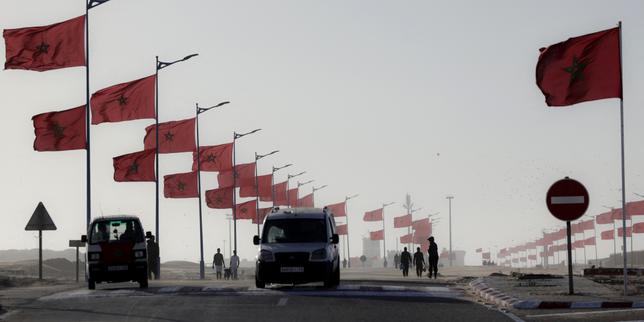
Mali's diplomatic pivot to support Morocco’s autonomy plan for Western Sahara represents a fundamental recalibration of West African security architecture. This transition is not merely a change in rhetoric but a calculated response to a triple-threat environment: the collapse of the Algiers Accord, the withdrawal of European security umbrellas, and the emergence of the Alliance of Sahel States (AES). By aligning with Rabat, Bamako is trading a legacy ideological stance for a pragmatic survival strategy rooted in Atlantic access and territorial sovereignty.
The Tri-Pillar Framework of the Malian Pivot
The shift in Mali's foreign policy operates across three distinct logic centers. Understanding this move requires moving past the surface-level "unfolding event" narrative and examining the structural pressures forcing Bamako’s hand. You might also find this connected story insightful: The Strait of Hormuz Blockade is a Geopolitical Myth.
1. The Disintegration of the Algiers Mediation Logic
For decades, Algeria served as the primary mediator between the Malian central government and northern Tuareg separatist movements. The 2015 Agreement for Peace and Reconciliation, brokered in Algiers, was the cornerstone of this relationship. However, the definitive "death" of this accord in early 2024 removed the incentive for Mali to maintain diplomatic deference toward Algiers.
When the Malian transition government officially terminated the agreement, accusing Algeria of interference and hosting "subversive" elements, the diplomatic cost of opposing Algeria’s core foreign policy interest—the Western Sahara—dropped to near zero. Supporting Morocco’s sovereignty is the direct geopolitical consequence of Mali’s domestic push to resolve the northern conflict through military force rather than Algerian-led diplomacy. As discussed in latest reports by TIME, the implications are widespread.
2. The Atlantic Initiative as an Economic Lifeblood
Mali is landlocked, a geographic reality that has historically made it dependent on the ports of Dakar (Senegal) and Abidjan (Ivory Coast). Recent ECOWAS sanctions and political friction with coastal neighbors have exposed this vulnerability. Morocco’s "Atlantic Initiative," which proposes providing Sahelian states access to the Atlantic Ocean via Moroccan infrastructure, offers a strategic alternative.
- Infrastructure Integration: Morocco is positioning its Dakhla Atlantic Port as a primary transit hub for the Sahel.
- Logistical De-risking: By supporting Morocco’s claim over the Sahara, Mali secures a stake in a trans-African corridor that bypasses the traditional, often volatile, southern routes.
- Trade Volume Recalibration: The move signals a shift from aid-dependency to trade-dependency, favoring a partner that offers tangible logistical assets over ideological solidarity.
3. The Security-Sovereignty Exchange
The current Malian administration prioritizes the principle of "territorial integrity" above all else. This creates a natural ideological synergy with the Moroccan position on Western Sahara. By recognizing Morocco’s "autonomy plan" as the only viable solution, Mali is reinforcing a regional precedent: that central governments have an inherent right to maintain sovereignty over disputed territories against separatist movements. This logic is a mirror image of Bamako’s internal struggle against groups in the Kidal region.
Quantifying the Cost of Diplomatic Friction with Algeria
The transition from a neutral or pro-Polisario stance to a pro-Rabat stance carries significant risks. The relationship between Mali and Algeria is defined by a shared 1,300-kilometer border. This geography dictates a specific cost function for Mali’s decision.
- Border Management Costs: If Algeria reduces counter-terrorism cooperation, Mali must increase its military expenditure to monitor the northern frontier.
- Energy and Subsidy Vulnerability: While Mali is moving toward the AES (Alliance of Sahel States) for economic integration, the immediate disruption of regional energy flows or cross-border trade with Algeria creates inflationary pressure on the Malian population.
- Intelligence Gaps: Algeria possesses the most dense human intelligence network in the Sahara-Sahel region. A total rupture in ties creates a "dark zone" for Malian intelligence regarding the movement of Al-Qaeda in the Islamic Maghreb (AQIM) and ISGS (Islamic State in the Greater Sahara).
Mali has clearly calculated that the benefits of the Moroccan partnership—specifically the promise of Moroccan investment and the Atlantic gateway—outweigh these regional friction costs.
Structural Incentives for the Alliance of Sahel States (AES)
Mali does not act in a vacuum. Its alignment with Morocco is a bellwether for the broader AES, which includes Burkina Faso and Niger. These three nations have collectively turned away from France and, increasingly, from the traditional mediation roles held by Algeria and ECOWAS.
The Morocco-AES Nexus
Morocco has successfully positioned itself as a "Third Way" partner. Unlike Western powers, Morocco does not tie its cooperation to democratic benchmarks. Unlike Russia, Morocco provides long-term infrastructure and civil institutional capacity. This "Expertise for Recognition" trade is the new currency of Sahelian diplomacy.
- Technical Cooperation: Morocco provides significant training for Malian cadres, religious scholars (Imams), and military officers.
- Financial Services: Moroccan banks have a dominant footprint in the Franc Zone, providing a layer of financial stability even as Mali contemplates exiting the CFA Franc.
- Religious Diplomacy: The Maliki school of jurisprudence shared by both nations serves as a soft-power tool to counter radicalization, a key pillar of Morocco’s Saharan strategy.
The End of the Neutrality Paradigm
The Malian announcement effectively ends the era of "positive neutrality" in the Sahel. For years, regional states attempted to balance their relationships between Algiers and Rabat. The intensification of the Sahara conflict, combined with the collapse of the post-colonial security order, has made this middle ground uninhabitable.
Mali’s move forces other regional actors to choose between two competing visions of African integration:
- The Continental-Internal Model: Championed by Algeria, focusing on UN-led processes and internal African Union mediation.
- The Maritime-External Model: Championed by Morocco, focusing on global trade integration, Atlanticism, and bilateral sovereignty recognitions.
Strategic Forecast: The Re-routing of Sahelian Power
The immediate result of this shift will be an acceleration of the Trans-Saharan Gas Pipeline competitors and a reconfiguration of transport corridors. If Mali successfully integrates with the Moroccan-led Atlantic Initiative, we will see a permanent shift in the Sahel’s economic gravity from the Gulf of Guinea toward the Northwest African coast.
Governments and regional analysts must monitor the following technical indicators to gauge the success of this pivot:
- Port Utilization Rates: The percentage of Malian transit cargo diverted from Dakar/Abidjan to Moroccan-controlled ports.
- Joint Security Patrolling: Whether Moroccan "soft" security assistance translates into "hard" logistical support for Mali's fight in the north.
- Algerian Counter-Moves: Potential increases in Algerian support for multilateral forums or shifts in their border posture.
Mali is betting that the future of the Sahel lies in the Atlantic, not the Mediterranean. This is a high-stakes gamble on Moroccan longevity and the ability of the AES to maintain a cohesive front against traditional regional powers. The strategic play for Bamako is now clear: consolidate the state through military force, secure an independent trade route via Rabat, and decouple from the mediation frameworks that have governed the region since the 1960s. Success depends entirely on the speed at which Moroccan infrastructure can replace Algerian mediation.