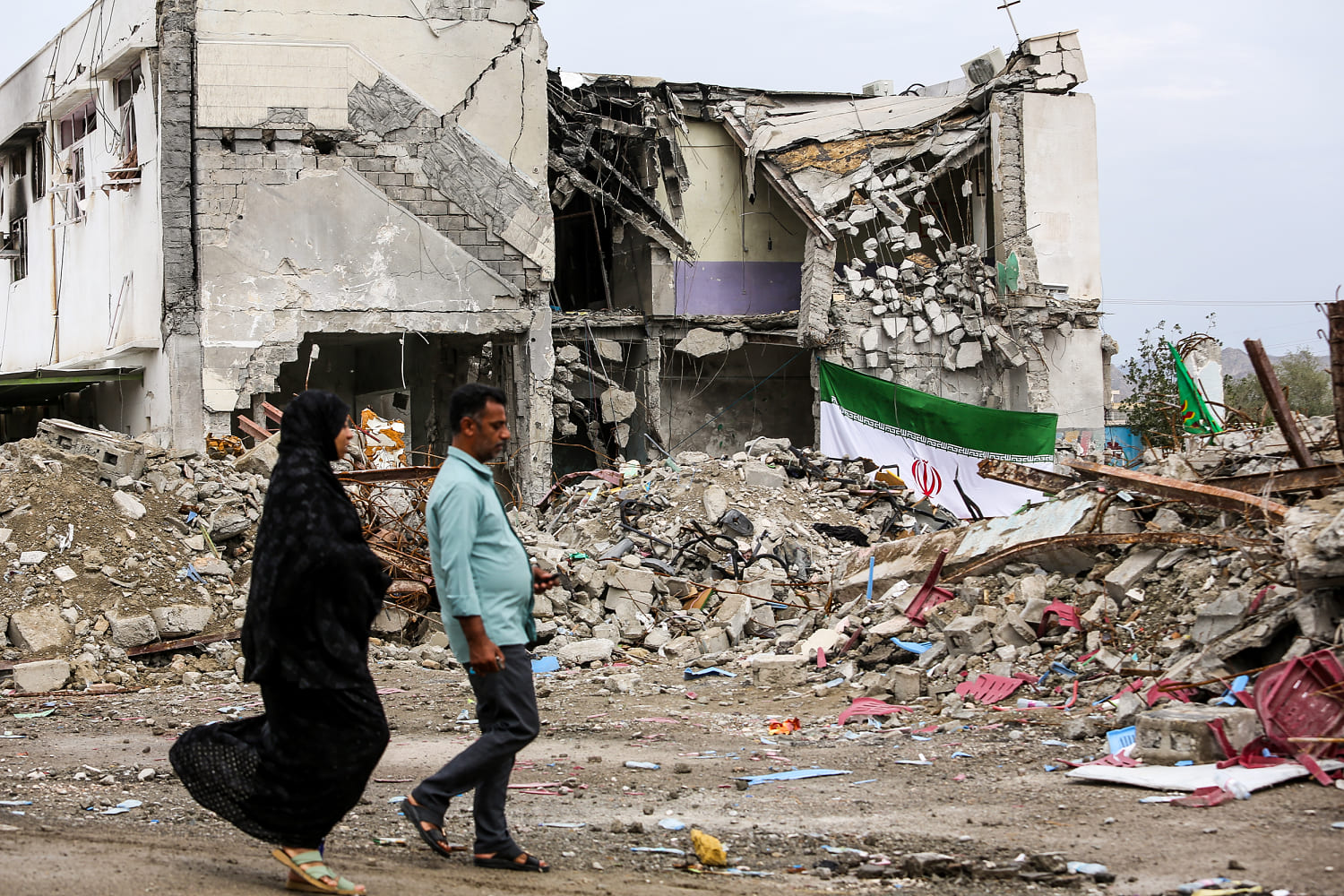
The immediate aftermath of the missile strike on a school in Iran functions as a high-pressure diagnostic for the Iranian state’s internal stability and its external adversarial posture. While traditional reporting focuses on the emotional volatility of the populace, a structural analysis reveals a sophisticated intersection of state-driven narrative architecture, historical grievance cycles, and the specific psychological impact of civilian infrastructure destruction. The "rally 'round the flag" effect observed in the wake of such incidents is not a spontaneous emotional outburst but a predictable outcome of three specific variables: the nature of the target (educational infrastructure), the perceived identity of the aggressor (U.S. and Trump), and the domestic utility of externalized rage.
The Cognitive Architecture of Targeted Grievance
The selection of a school as a kinetic target triggers a specific set of psychological and political responses that differ significantly from strikes on military or industrial sites. In the Iranian context, this serves as a catalyst for a unified national identity that bridges the gap between secular and religious demographics. For a more detailed analysis into this area, we recommend: this related article.
- Symbolic Infringement: A school represents the future-state and non-combatant innocence. When kinetic energy is applied to such a target, the state’s messaging apparatus shifts from defending political ideology to defending biological survival. This narrows the "dissent window" for citizens who might otherwise be critical of the regime.
- The Trump Variable as a Force Multiplier: The specific focus on Donald Trump within the Iranian public’s rhetoric is a result of the 2018 withdrawal from the JCPOA and the 2020 assassination of Qasem Soleimani. Trump is not viewed as a transient political figure but as the personification of "maximum pressure" tactics. His presence in the narrative provides a concrete antagonist that simplifies complex geopolitical friction into a binary struggle.
- Escalation Dominance and Moral High Ground: By framing the strike as an attack on children, the Iranian state secures international moral leverage. This is used to offset the technical and military superiority of the U.S. and its allies, creating a parity of "moral outrage" that complicates further Western intervention.
The Three Pillars of State-Public Alignment
The alignment of public rage with state objectives depends on the successful maintenance of three structural pillars. If any of these pillars weaken, the "rally" effect decays into domestic unrest.
The Pillar of External Attribution
For the Iranian government, the survival of the current political order requires that all significant systemic shocks be attributed to external actors. The missile strike provides a perfect externalization vector. As long as the public perceives the U.S. as the primary cause of civilian suffering, the internal failings of the Iranian economy and infrastructure remain secondary in the public consciousness. To get more details on this issue, comprehensive coverage can also be found on NBC News.
The Pillar of Martyrdom Culture
The Iranian social fabric is deeply intertwined with the concept of Ashura, which prizes sacrificial suffering against a superior, unjust force. A strike on a school is instantly mapped onto this cultural template. This transforms a tactical military loss into a spiritual and nationalistic victory of endurance. The state does not need to hide the damage; it amplifies it to reinforce this cultural identity.
The Pillar of Controlled Escalation
Public rage is a volatile resource. The Iranian state must modulate this rage—keeping it high enough to ensure domestic loyalty, but low enough to avoid a full-scale conventional war that it cannot currently win. This is managed through "spectacle funerals" and highly televised protests that provide a non-kinetic outlet for civilian frustration.
The Cost Function of Civilian Casualties in Asymmetric Warfare
In standard military theory, civilian casualties are often viewed as "collateral damage." In the Iranian theater, they function as a "strategic asset" for the targeted nation’s propaganda wing. The cost function of such a strike can be expressed through the relationship between tactical gain and strategic loss.
- Tactical Gain: Destruction of a specific site or elimination of specific personnel (if the school was a dual-use facility).
- Strategic Loss: Long-term radicalization of the youth demographic, the solidification of the IRGC’s domestic mandate, and the erosion of pro-Western sentiment among the Iranian middle class.
The current rage expressed by Iranians is the manifestation of this strategic loss for the U.S. Each civilian death acts as a multi-generational anchor for anti-Western sentiment, making future diplomatic reintegration exponentially more difficult.
Regional Feedback Loops and Proxy Incentives
The rage directed at the U.S. and Trump does not remain within Iranian borders. It flows through the "Axis of Resistance," providing a recruitment narrative for proxies in Lebanon, Iraq, and Yemen.
- Hezbollah’s Narrative Integration: The group utilizes images of the school strike to justify its own "defensive" posture against Israel and the U.S., framing its actions as a preemptive measure to prevent similar strikes in Lebanon.
- The Iraqi Pivot: The strike strengthens the hand of pro-Iran factions in the Iraqi parliament who seek the full expulsion of U.S. forces. The Iranian "rage" is exported as a regional demand for sovereignty.
Limitations of the Rage-Centric Model
While the current sentiment appears monolithic, it is subject to the law of diminishing returns. The Iranian state faces two major risks in leaning too heavily on this narrative:
- The Credibility Gap: If the state promises "harsh revenge" but delivers only symbolic gestures, the public rage may eventually turn inward, targeting the government’s perceived weakness rather than the external enemy's aggression.
- Economic Exhaustion: Nationalism cannot indefinitely mask the realities of hyperinflation and resource scarcity. If the strike leads to further sanctions or economic isolation, the "rage at the U.S." will eventually compete with the "frustration with the IRGC" for dominance in the public sphere.
Tactical Response Mapping
Given the current trajectory of public sentiment in Iran, the strategic move for external actors is not further kinetic escalation, but a pivot toward information operations that decouple the "U.S. government" from the "U.S. people" in the eyes of the Iranian public. For the Iranian state, the move is to maximize the visual and narrative output of the school strike to secure a new round of domestic loyalty and regional influence.
The friction will likely settle into a high-tension stalemate where the Iranian public's rage serves as a defensive shield, allowing the state to continue its regional expansion under the guise of national survival. Any future engagement with Iran must account for the fact that civilian-centric strikes do not degrade the regime's power; they provide the very fuel it requires to maintain internal cohesion during periods of systemic stress.
Monitor the specific rhetoric used in the upcoming Friday prayers in Tehran. If the language shifts from "revenge for the fallen" to "demands for systemic change," it will indicate that the state has lost control of the narrative, and the rally effect has been exhausted. Until then, assume the strike has effectively reset the clock on domestic Iranian dissent for the next 12 to 18 months.