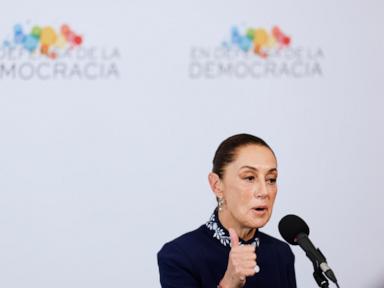
The death of United States Embassy personnel on foreign soil represents more than a localized tragedy; it serves as a stress test for the operational integrity of cross-border security protocols. President Claudia Sheinbaum’s demand for a formal explanation from the United States regarding the fatalities in Chihuahua highlights a structural divergence in how both nations define "bilateral cooperation." While the U.S. often views security operations through the lens of regional stabilization and tactical necessity, the Mexican administration views these actions through the lens of constitutional sovereignty and bureaucratic transparency. This friction creates a breakdown in the trust-based information exchange required to manage the complex paramilitary environment of Northern Mexico.
The Tripartite Framework of Diplomatic Friction
The tension surrounding the Chihuahua incident can be deconstructed into three distinct operational pillars. Each pillar represents a failure of current communication frameworks to bridge the gap between U.S. tactical objectives and Mexican legal requirements. Read more on a connected subject: this related article.
- Sovereignty as a Non-Negotiable Constraint: Under the Sheinbaum administration, the doctrine of Sovereignty First dictates that any foreign presence must operate under strict, pre-approved oversight. When U.S. officials are killed or injured in high-risk zones like Chihuahua, the immediate political fallout stems from the lack of a joint operational record. If the Mexican government cannot account for the presence of these officials, the bilateral agreement—the Bicentennial Framework—is effectively bypassed.
- The Information Asymmetry Gap: There is a persistent lag between tactical execution by U.S. agencies (DEA, FBI, or State Department security) and formal notification to Mexican counterparts. This asymmetry creates a "blind spot" where the Mexican executive branch is held accountable for security outcomes without possessing the data necessary to manage the narrative or the physical scene.
- Jurisdictional Complexity: Chihuahua serves as a nexus for competing cartels and high-volume trade routes. The presence of foreign officials in this specific geography suggests an intelligence or logistical mission that likely exists outside the traditional diplomatic scope of an embassy visit.
Quantifying the Risk of Uncoordinated Intelligence Operations
The primary mechanism of failure in this scenario is the Operational Visibility Deficit. In standard intelligence theory, a joint operation requires a synchronized risk-assessment model. When one party operates unilaterally or without full disclosure, the probability of an "unaccounted-for casualty" increases exponentially due to three specific variables:
- Recognition Failure: Local Mexican law enforcement or paramilitary groups may not recognize U.S. officials if their presence has not been socialized through the official chain of command.
- The Reaction Paradox: If U.S. personnel are attacked, they must defend themselves; however, any use of force by foreign agents on Mexican soil without a specific mandate triggers a constitutional crisis.
- Asset Exposure: Every undocumented movement of embassy personnel provides an opportunity for organized crime to exploit the resulting diplomatic tension, effectively using the "sovereignty" argument as a shield for their own territorial control.
The Chihuahua incident underscores that the "hugs not bullets" philosophy—or its refined version under Sheinbaum—cannot coexist with "gray zone" operations conducted by the U.S. Embassy. The death of these officials forces the Mexican executive to demand an audit of U.S. protocols, not merely out of grief, but as a defensive measure to prevent further erosion of domestic political standing. More reporting by Associated Press highlights similar perspectives on this issue.
The Structural Breakdown of the Bicentennial Framework
The Bicentennial Framework replaced the Merida Initiative with the intent of moving toward a more holistic security partnership. However, the mechanism for reporting the movement of foreign agents remains antiquated. This creates a bottleneck in the Response Coordination Loop.
When an incident occurs in a volatile state like Chihuahua, the local state police (Fuerza Estatal), the National Guard, and federal intelligence must all reconcile their data. If the U.S. Embassy has not filed a formal notification of movement, these agencies operate in a vacuum. The resulting delay in medical or tactical support contributes directly to the mortality rate of the personnel involved.
Analysis of the "Explanation Demand" Logic
Sheinbaum’s public demand for an explanation functions as a strategic maneuver to re-establish the hierarchy of the Mexican state. It is not an emotional plea; it is a calculated assertion that the U.S. must provide a Post-Incident Forensic Audit. This audit serves two purposes:
- Legal Justification: It provides the Mexican Attorney General (FGR) with the necessary documentation to close or pursue investigations without appearing to be a puppet of foreign interests.
- Precedent Setting: It signals to the incoming or current U.S. administration that "informal" security arrangements are no longer viable under the current Mexican regime.
Identifying the Probability of Escalation
The risk of a total breakdown in security cooperation depends on the U.S. State Department’s response. If the U.S. provides a high-transparency report, it risks exposing sensitive intelligence-gathering methods. If it provides a redacted or dismissive explanation, it risks the suspension of visas for field agents or the restriction of movement for all embassy staff.
This creates a Bilateral Stalemate. The U.S. needs mobility in Northern Mexico to monitor fentanyl precursors and migration flows. Mexico needs U.S. intelligence to combat the highly sophisticated weaponry used by cartels. Yet, the Chihuahua incident proves that neither side is willing to sacrifice their core operational philosophy to achieve these shared goals.
The Mechanism of Cartel Exploitation
Organized crime groups in Chihuahua monitor the level of coordination between Mexico City and Washington. When a friction point appears—such as a demand for explanations following a death—these groups often increase their activity. They recognize that during a diplomatic fallout, intelligence sharing is temporarily throttled. This is the Cooperation Vacuum Effect, where the period of political finger-pointing directly correlates to an increase in regional violence.
Tactical Realignment and the Sovereign-Security Equilibrium
For the Sheinbaum administration to successfully navigate this, the Mexican government must transition from a reactive posture to a proactive regulatory framework. This involves moving beyond "demanding explanations" to implementing a Real-Time Notification System (RTNS).
The current system relies on diplomatic notes and slow-moving bureaucratic channels. A modern security partnership requires a digital, encrypted ledger of foreign official movements in high-risk zones, allowing for immediate identification by Mexican federal authorities without compromising the specific nature of the mission.
The failure to implement such a system results in the current state of affairs: a recurring cycle of tragic incidents followed by diplomatic theater. The demand for an explanation is merely the symptom of an underlying systemic failure to define the boundaries of "embedded cooperation."
The Cost of Diplomatic Ambiguity
The ambiguity of why U.S. officials were in a specific part of Chihuahua at a specific time creates a high Political Overhead. For the U.S., the cost is the loss of highly trained personnel and the potential exposure of clandestine programs. For Mexico, the cost is the public perception of a porous border and a compromised national guard.
Until the "Sovereignty-Security Equilibrium" is reached, where both nations agree on the exact parameters of foreign official activity, the Chihuahua incident will not be an isolated event. It will be the blueprint for future confrontations.
The strategic play here is not found in the rhetoric of the demand but in the subsequent negotiation of the "Rules of Engagement" for foreign agents. Mexico is leveraging this tragedy to force a rewrite of the operational handbook. The U.S. must decide if the intelligence gained from uncoordinated field presence is worth the risk of a complete shutdown of institutional cooperation. The most probable outcome is a tightening of Mexican oversight, effectively ending the era of autonomous U.S. field operations in the northern states. Success in this theater now requires a transition from independent intelligence-gathering to a deeply integrated, though highly regulated, joint-task-force model.