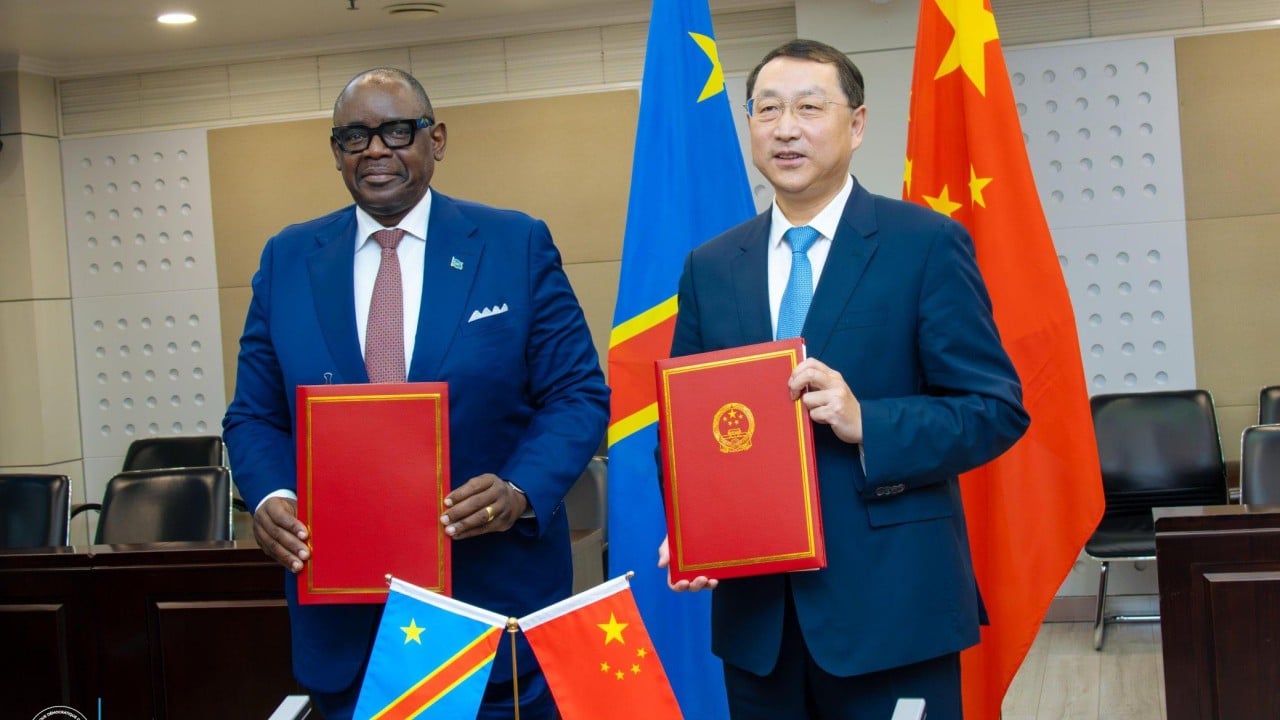
The revocation of mining permits from AVZ Minerals and the subsequent consolidation of those assets by Chinese state-backed entities represents more than a localized legal dispute; it is a manifestation of the Capital Velocity Gap between Western public equity and Chinese state-driven industrial policy. In the Democratic Republic of the Congo (DRC), the transition of the Manono lithium project from Australian control to a dominant Chinese footprint reveals a structural failure in how Western firms manage jurisdictional risk versus how Chinese firms internalize it as a cost of market entry.
The Triad of Jurisdictional Erosion
The displacement of AVZ Minerals from the Manono deposit—widely regarded as one of the world's largest hard-rock lithium deposits—occurred through three distinct mechanisms of erosion that often go unquantified by Western analysts.
- Administrative Attrition: This involves the deliberate slowing of permit renewals or the retroactive questioning of title validity. In the DRC, the Ministry of Mines utilizes a "use it or lose it" doctrine which, when applied selectively, creates a legal vacuum that competitors can fill with superior liquidity or political alignment.
- Litigation Saturation: Competitors, specifically Zijin Mining and Cominière (the DRC state miner), engaged in a multi-front legal campaign across international and local courts. This forced AVZ into a defensive posture, consuming executive bandwidth and depleting cash reserves on legal fees rather than project development.
- The Sovereignty Exchange: Chinese entities often offer "infrastructure-for-minerals" packages at the state level. When a Western firm holds a permit but lacks the sovereign-level diplomatic backing to counter-offer, the host government views the permit revocation not as a legal risk, but as a strategic pivot toward a partner capable of delivering macro-scale infrastructure.
The Asymmetry of Risk Tolerance and Capital Structure
Western mining firms operate under a Fiduciary Constraint Model. They are beholden to shareholders who demand ESG compliance, transparency, and predictable legal frameworks. When the DRC government rescinded portions of AVZ’s PR 13359 permit, the company’s share price plummeted, limiting its ability to raise the capital necessary to fight the legal battle or develop the mine.
In contrast, Chinese state-affiliated firms operate under an Industrial Security Model. Their objective is not immediate quarterly dividends but the long-term vertical integration of the global battery supply chain. This difference in motivation creates an uneven playing field in three specific areas:
- Cost of Capital: While AVZ faced high-interest rates and skeptical equity markets, Chinese firms like Zijin Mining and Manono Lithium (a joint venture involving Chinese interests) have access to state-directed credit lines. These funds do not require the same risk premiums as Western commercial banks.
- Time Horizons: Western firms are often forced to exit projects if "First Production" dates slip by 24 to 36 months. Chinese entities are prepared to let assets sit in litigation for a decade if it prevents a competitor from controlling a critical node in the supply chain.
- Local Content and Influence: The "Sino-Congolese" relationship is built on a 2008 framework—recently renegotiated in 2024—that ties mining rights to billions in road and hospital construction. A standalone junior miner from Perth or Vancouver cannot compete with a national treasury.
The Mechanics of Title Fragmentation
The Manono project’s downfall for AVZ was precipitated by the fragmentation of its ownership structure. By disputing the validity of AVZ’s 60% or 75% stake, the DRC government and its partners introduced "clouded titles."
In mining finance, a clouded title is a terminal condition for Western debt financing. No major commercial bank will lend against a permit that is currently under international arbitration (ICSID). This creates a Liquidity Trap: the firm cannot develop the mine without money, but it cannot get money because it cannot prove it owns the mine. Chinese firms, operating as strategic buyers, use this trap to acquire assets at a "litigation discount." They buy the distressed debt or the disputed minority stakes, eventually outmuscling the original permit holder through sheer financial endurance.
Structural Bottlenecks in the Battery Metals Supply Chain
The shift at Manono signifies a deepening of the Chinese monopoly on the "Midstream Refinement" of lithium. Even if AVZ had maintained its permits, it likely would have sold its spodumene concentrate to Chinese refineries, as the Western world lacks the processing capacity. This creates a Monopsony Effect where a single buyer (China) dictates the viability of upstream projects (DRC mines).
When the primary buyer of the ore also seeks to own the mine, they can use price volatility in the lithium market to squeeze the margins of independent miners, making them more susceptible to state-led takeovers or permit revocations. The "Downstream Pull" of the Chinese EV industry acts as a gravity well, sucking in raw material assets across Africa.
Strategic Realignment and the Pre-emptive Defense
For Western firms to survive in the DRC’s "High-Stakes" mining environment, they must move away from a purely legalistic approach to permit security. The current strategy of relying on the International Chamber of Commerce (ICC) or ICSID is a lagging indicator of success; by the time an award is granted, the physical asset has often been developed by the competitor.
The only viable counter-strategy involves Sovereign De-risking. This requires Western governments to treat critical mineral mining as a matter of national security rather than private enterprise. This includes:
- Direct Diplomatic Intervention: Moving mining disputes from the Ministry of Mines to the Presidential level through bilateral security and trade agreements.
- Blending Finance: Utilizing Export Credit Agencies (ECAs) to provide "Political Risk Insurance" that matches the low-cost capital provided by Chinese state banks.
- Localized Value Addition: Committing to build refineries and processing plants within the DRC. The Congolese government’s primary grievance with Western "Junior Miners" is the perception that they are "Paper Flippers"—firms that secure a permit to increase their stock value without the intention or capital to build physical infrastructure.
The loss of the Manono permit is a case study in the obsolescence of the traditional junior mining model in contested geographies. To maintain a foothold in the DRC, the Western mining sector must integrate its corporate strategy with broader geopolitical and industrial policy objectives. Failure to do so will result in a total exit from the world's most mineral-rich jurisdictions, leaving the global energy transition entirely dependent on a single-point-of-failure supply chain controlled by Beijing.