The transition from kinetic conflict to a durable regional equilibrium in the Middle East is not a matter of diplomatic sentiment but a calculation of shifting cost-benefit ratios among three primary actors: sovereign states, non-state proxies, and global energy markets. While official rhetoric from Jerusalem suggests an inevitable return to peace following the degradation of Iranian-backed networks, the structural reality depends on a specific sequence of military attrition, economic realignment, and the replacement of "shadow war" gray zones with hard-line deterrence.
The current instability is the result of a deliberate strategy of asymmetric escalation. By utilizing a network of decentralized militias, Tehran has historically been able to exert pressure on its adversaries without incurring the direct costs associated with state-on-state warfare. This model functions as a low-cost, high-leverage investment. To reverse this, the opposing coalition must increase the cost of maintaining these proxies until the expenditure outweighs the strategic utility for the patron state.
The Triad of Deterrence Degradation
Stability in the Levant and the Persian Gulf rests on three distinct pillars. When one is compromised, the entire regional security architecture enters a state of flux.
- Conventional Overmatch: The ability of a state to project power such that any direct attack results in disproportionate damage to the aggressor’s domestic infrastructure.
- Intelligence Dominance: The capacity to map and neutralize clandestine networks before they achieve operational readiness.
- Economic Integration: The creation of shared financial incentives—such as the Abraham Accords—that make the cost of conflict prohibitive for participating economies.
The recent escalation cycle demonstrates a breakdown in the first two pillars. The proliferation of low-cost precision-guided munitions (PGMs) and unmanned aerial vehicles (UAVs) has allowed non-state actors to bypass traditional defensive perimeters. This "democratization of lethality" means that even a technologically superior force like the Israel Defense Forces (IDF) must contend with a high-volume, low-cost threat profile that challenges the sustainability of expensive interceptor systems like Iron Dome or David’s Sling.
The Attrition Logic of the Proxy Model
To understand why "peace" is currently defined as the "absence of Iranian influence" by Israeli officials, one must analyze the mechanics of the "Ring of Fire" strategy. This doctrine surrounds a central target with multiple threat vectors, forcing the target to defend 360 degrees of its perimeter.
- The Northern Vector (Hezbollah): Acts as a strategic deterrent against direct strikes on Iranian nuclear facilities.
- The Southern Vector (Hamas/PIJ): Functions as a localized friction point to drain military resources and political capital.
- The Eastern/Maritime Vector (Houthis/Iraqi Militias): Targets global trade arteries, specifically the Bab el-Mandeb strait, to internationalize the cost of a local conflict.
The objective of current Israeli operations is to deconstruct this ring through a process of systematic decapitation and infrastructure neutralization. If the command-and-control hierarchy of a proxy is severed, the organization reverts to a disorganized insurgency. While an insurgency can cause local instability, it lacks the "state-like" capability to threaten the existence of a sovereign nation. The strategic goal is not the total eradication of every militant—an impossible task—but the reduction of their collective capability below the threshold of "strategic threat."
Economic Variables and the Energy Feedback Loop
The Middle East remains the world's primary swing producer of hydrocarbons. Any analysis of regional peace must account for the "Risk Premium" embedded in global oil prices. Historically, a conflict involving Iran would trigger an immediate spike in Brent Crude. However, the modern energy market has become more resilient due to non-OPEC production increases and the strategic petroleum reserves of Western nations.
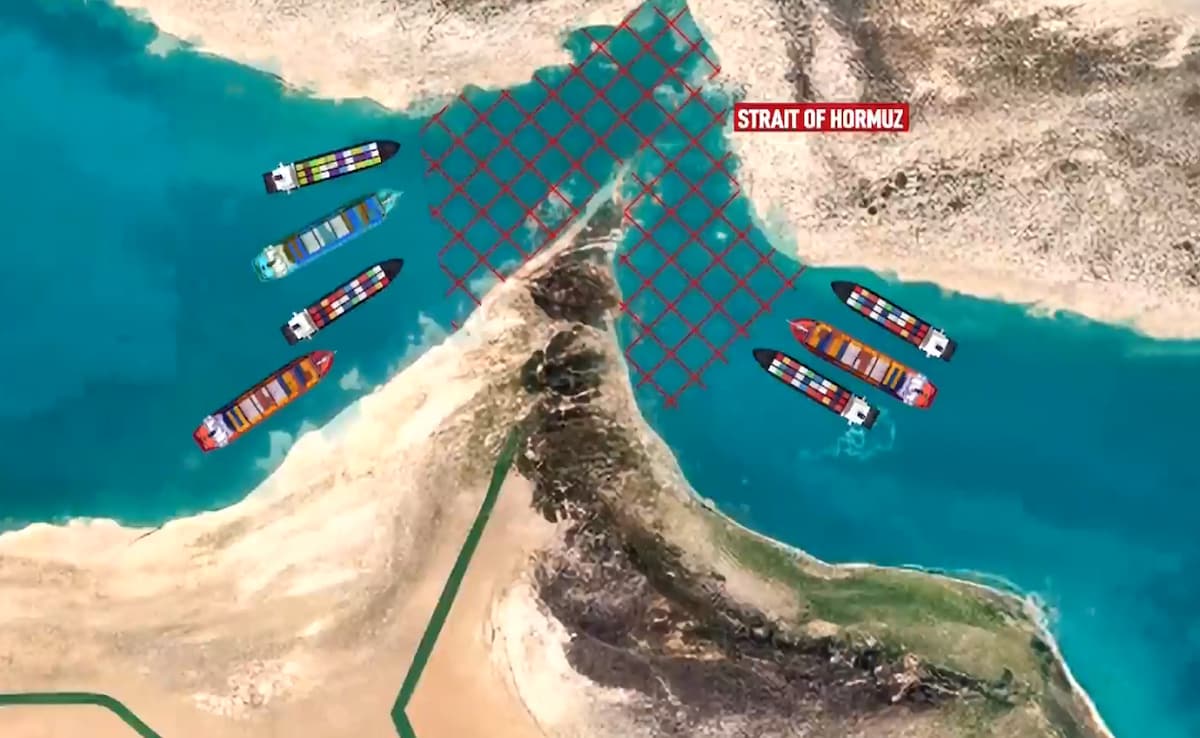
This resilience changes the leverage available to regional agitators. If an escalation in the Strait of Hormuz fails to trigger a global economic crisis, the "energy weapon" is effectively neutralized. This creates a window for more aggressive military action against proxy networks because the fear of global economic blowback is diminished.
The Logistics of a Post-War Equilibrium
For the Prime Minister’s aide’s prediction of "peace" to manifest, the region must move toward a Westphalian model where states are held strictly accountable for the actions originating from their territory. This requires a shift from the current "gray zone" warfare to a transparent security framework.
The Buffer Zone Requirement
Kinetic peace is often maintained through physical geography. In Lebanon, this involves the enforcement of UN Resolution 1701, which mandates the absence of armed personnel south of the Litani River. In Gaza, it involves a multi-layered security corridor. These zones function as "reaction time buffers," providing the defending state with the necessary minutes to identify and intercept incoming threats.
The Normalization Coefficient
The second phase of the strategy involves expanding the circle of normalization. This is a cold-blooded calculation: the more Arab states that integrate their air defense systems and economies with Israel, the more isolated Iran becomes. This creates a "Security Co-op" where intelligence is shared in real-time to track UAV launches across the Arabian Peninsula.
Structural Limitations and Friction Points
Despite the optimistic outlook from official channels, three bottlenecks prevent a rapid return to stability.
The first is the radicalization cycle. Even if the kinetic capability of a group like Hamas is destroyed, the underlying ideology remains a potent recruitment tool. Without a viable governance alternative that offers economic mobility, the vacuum left by destroyed proxies will inevitably be filled by new iterations of the same threat.
The second limitation is Iranian domestic resilience. The assumption that external pressure will lead to internal collapse has proven incorrect over decades of sanctions. The regime has mastered the "Resistance Economy," utilizing illicit oil sales and shadow banking to maintain its core security apparatus even under extreme duress.
The third friction point is Global Power Competition. The Middle East is no longer a unipolar theater. Russian and Chinese interests often run counter to US-led stabilization efforts. Russia’s reliance on Iranian drone technology for its operations in Ukraine has forged a strategic axis that provides Tehran with a diplomatic shield at the UN Security Council, complicating any multi-lateral efforts to enforce peace.
The Technology of Deterrence: AI and Autonomous Systems
The next iteration of regional security will be defined by the integration of Artificial Intelligence into the "Sensor-to-Shooter" cycle. The speed of modern drone swarms exceeds the cognitive limits of human operators. To maintain peace, defensive forces are moving toward autonomous identification and neutralization.
- Pattern Recognition: Using AI to scan satellite and drone feeds for anomalous movements that indicate tunnel construction or missile transport.
- Automated Interception: Systems that can prioritize targets based on projected impact points, ensuring that limited interceptor stocks are not wasted on "empty sand" hits.
This technological edge creates a temporary "Deterrence Gap." However, history shows that such gaps are eventually closed through reverse engineering or state-sponsored technology transfers. Therefore, technological superiority is not a permanent solution but a tool to buy time for political restructuring.
The Strategic Realignment
The path to a restructured Middle East necessitates a transition from "managing the conflict" to "winning the conflict." This requires a definitive end to the policy of containment, which allowed proxies to grow into mini-armies over the last two decades.
The final strategic play involves a coordinated "Pressure-Plus" approach. Militarily, this means the continued systematic degradation of proxy infrastructure to the point of operational irrelevance. Economically, it requires the formalization of the "Middle East Air Defense" (MEAD) alliance, linking the radars and interceptors of former enemies into a unified shield. This makes the "Ring of Fire" obsolete. If the cost of launching a missile is $10,000 and the probability of it hitting a target is near zero because of an integrated regional shield, the utility of that weapon disappears. Peace, in this cold analytical sense, is the point where the cost of aggression definitively exceeds the probability of its success.