The shift in American foreign policy from active military involvement toward a "winding back" strategy is not merely a change in rhetoric; it is a fundamental recalibration of the Strategic Value-to-Risk Ratio. When a superpower evaluates the utility of an ongoing conflict, it weighs the marginal utility of continued presence against the accelerating depreciation of its domestic political capital and industrial base. The current administration's movement toward de-escalation reflects a transition from a doctrine of global hegemony to one of Transactional Realism, where military expenditures must yield quantifiable returns to the American taxpayer and industrial sector.
Understanding this pivot requires an analysis of the Three Pillars of Strategic Withdrawal. These pillars define the criteria by which the United States determines if a war has reached its point of diminishing returns. For another perspective, check out: this related article.
The Pillar of Industrial Capacity and Resource Scarcity
Modern warfare is an exercise in supply chain resilience. The conflict in Ukraine, and the broader global tension surrounding it, has exposed a critical bottleneck in the Western military-industrial complex. The rate of ammunition consumption—specifically 155mm artillery shells—has frequently outpaced the combined production capacity of the United States and its NATO allies.
- The Depletion Curve: For every unit of kinetic energy deployed on the front lines, there is a corresponding depletion of domestic stockpiles that cannot be replenished in a 1-to-1 ratio within a fiscal year.
- Technological Opportunity Cost: Capital diverted to maintain legacy systems or "dumb" munitions in a protracted war of attrition is capital stolen from R&D in autonomous systems, AI-driven signals intelligence, and orbital defense.
When the administration discusses winding back war, they are effectively conducting a Cold-Start Analysis of the industrial base. If the cost of maintaining a stalemate exceeds the capacity to deter a second, more critical conflict (e.g., in the Indo-Pacific), the logical move is to freeze the current theater to allow for industrial "re-tooling." Related reporting on the subject has been shared by Al Jazeera.
The Pillar of Sovereign Debt and Fiscal Constraints
The fiscal mechanics of "Forever Wars" operate on a compounding interest model that the American economy is struggling to service. With national debt exceeding $34 trillion, the interest payments alone have begun to rival the entire defense budget.
- The Crowding-Out Effect: Government borrowing to fund overseas military aid increases the cost of capital for domestic infrastructure and technology sectors.
- Currency as an Instrument of Power: Prolonged use of financial sanctions as a primary weapon of war accelerates "De-dollarization" among BRICS nations. This reduces the long-term efficacy of the U.S. Treasury as a tool of geopolitical coercion.
A strategy of winding back is a defensive maneuver to protect the dollar’s status as the global reserve currency. By reducing the frequency and intensity of military interventions, the administration seeks to stabilize the fiscal deficit and regain the leverage inherent in a healthy, non-overextended economy.
The Pillar of Regional Security Architecture
The "Winding Back" doctrine assumes that regional actors should bear the primary cost of their own security. This is a shift toward a Multi-Polar Deterrence Model. Instead of the United States acting as the primary guarantor of borders, it transitions into the role of a "Lender of Last Resort" for military hardware and intelligence.
In the context of the Russo-Ukrainian conflict, this logic dictates a shift toward a negotiated settlement that prioritizes the stability of the global energy market and the prevention of nuclear escalation over the absolute restoration of pre-2014 borders. The mechanism here is the Escalation Ladder. At each rung, the risk of a "Black Swan" event—such as a tactical nuclear strike or a direct NATO-Russia kinetic engagement—increases exponentially. The administration’s goal is to force a de-escalation before the ladder reaches its terminal point.
The Mechanics of the Negotiated Freeze
To achieve a successful "winding back," the administration must utilize specific levers to bring belligerents to the table. This is not a passive withdrawal but an active manipulation of the Incentive Structure of War.
- The Leverage of Attrition: By signaling a hard cap on future aid, the U.S. forces its allies to seek diplomatic avenues while they still possess tactical leverage on the ground.
- Economic Re-integration as a Carrot: The potential for easing specific sanctions serves as a powerful negotiation tool for the opposing side, provided they agree to a verifiable ceasefire and the establishment of a demilitarized zone.
- The Technology Transfer Penalty: The U.S. can threaten to escalate the quality of hardware (e.g., long-range strike capabilities) if the opposing party refuses to negotiate, while simultaneously offering to withhold such hardware if a deal is reached.
This creates a Nash Equilibrium where both sides find that the cost of continuing the war exceeds the potential gains of a breakthrough, given the new American reluctance to bankroll the stalemate indefinitely.
Strategic Risks and Systemic Vulnerabilities
No strategy is without a failure mode. The move toward isolationism or "winding back" introduces three primary risks that must be managed with clinical precision.
- The Vacuum Effect: Historically, when a hegemon retreats, regional powers attempt to fill the void. This can lead to localized "resource wars" or the expansion of rival spheres of influence (e.g., Iranian influence in the Middle East or Chinese influence in Eastern Europe).
- Credibility Depreciation: Alliances are built on the expectation of consistent behavior. A sudden pivot in policy can lead to "Hedging Behavior" among allies, where they seek security guarantees from competitors to ensure their survival.
- Intelligence Blind Spots: Winding back military presence often leads to a reduction in human and signals intelligence (HUMINT/SIGINT) capabilities in the region, making the U.S. more vulnerable to sudden geopolitical shifts.
The Forecast for U.S. Defense Procurement
As the focus shifts away from active war-fighting, the defense budget will likely undergo a Structural Pivot. Expect a reduction in the procurement of high-volume, low-margin hardware in favor of high-margin, high-complexity systems.
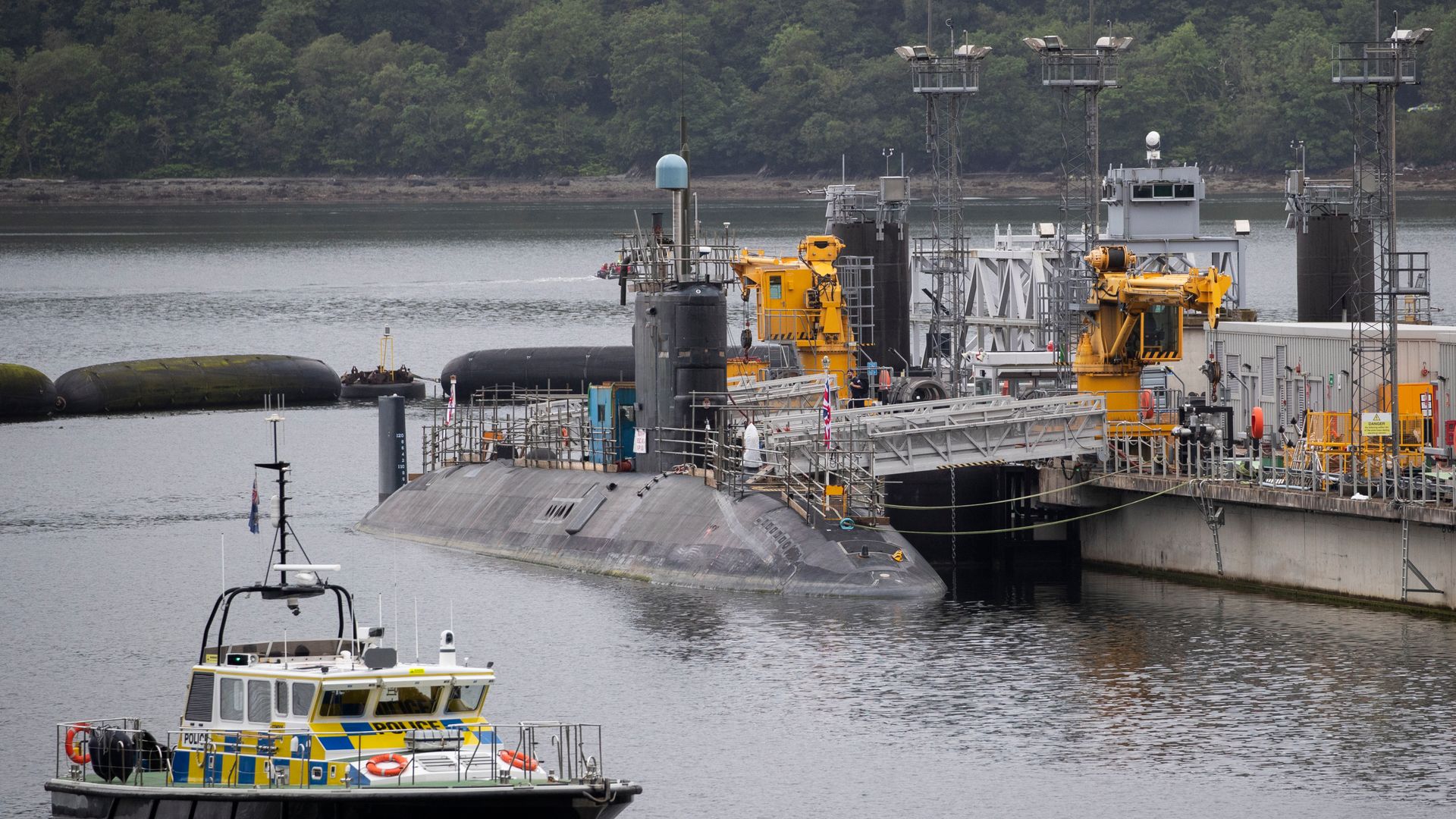
- Subsurface Dominance: Increased investment in autonomous underwater vehicles (AUVs) to secure global shipping lanes without surface-level vulnerability.
- Cyber-Kinetic Integration: Shifting the battlefield from physical terrain to the digital infrastructure that controls it. This is a significantly lower-cost method of de-escalating or preventing conflict before it reaches the kinetic stage.
- Orbital Logistics: Expanding the Space Force’s capability to provide global surveillance and instantaneous communication, allowing for a "light footprint" that can still project power anywhere on the planet.
The administration’s move to wind back war is a recognition that the Unipolar Moment has passed. The strategy is now to preserve American strength by conserving resources, forcing allies to increase their own defense spending, and focusing on the technological frontier rather than the muddy trenches of the 20th century.
The strategic play here is clear: The United States is transitioning from the world's "Policeman" to its "Principal Stakeholder." This requires a ruthless prioritization of interests where survival and economic dominance are the only metrics that matter. To execute this, the administration will likely initiate a series of high-level summits aimed at freezing existing conflict lines, followed by a massive reinvestment in domestic high-tech manufacturing. The goal is to ensure that while the U.S. may be "winding back" its physical presence, it is simultaneously "winding up" its technological and economic overmatch.
Would you like me to analyze the specific impact of this de-escalation strategy on the global energy market and the resulting shifts in the Brent Crude pricing index?