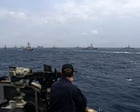
The headlines are screaming right on cue. Black gold is under siege. Shipping lanes are in peril. A military clash in the Strait of Hormuz—coupled with reported strikes in Tehran—instantly triggers the same tired, knee-jerk reaction from mainstream analysts: Prepare for an oil shock.
It is a neat, tidy narrative. It is also entirely wrong.
For decades, the foreign policy establishment and financial media have operated on an outdated 1970s playbook. They treat every spark in the Persian Gulf as an existential threat to global energy supply. They warn of $150-a-barrel crude, inflation spirals, and global economic paralysis.
I have spent years analyzing energy flows and maritime supply chains. I have watched boards of directors panic-buy hedges and governments burn diplomatic capital over "chokepoint anxiety." The reality? The obsession with the Strait of Hormuz as an "oil chokepoint" is a historical relic.
If you are watching the current escalation through the lens of energy security, you are missing the real conflict. The true crisis here is not about oil scarcity. It is about a fundamental, structural shift in global logistics and a brutal lesson in the limits of naval deterrence.
The Death of the Oil Shock Narrative
Let us dissect the primary fallacy dominating the airwaves: the idea that closing the Strait of Hormuz plunges the West into immediate darkness.
This argument ignores twenty years of structural changes in the global energy market.
First, the United States is no longer the vulnerable, import-dependent nation it was during the Carter administration. Thanks to the shale revolution, the US is the world’s largest producer of crude oil. It is a net exporter. While global prices are interconnected, the physical reliance on Persian Gulf crude to keep American factories running is gone.
Second, consider where the oil flowing through Hormuz actually goes. It does not head to New York or Rotterdam.
Over 80% of the crude passing through the Strait of Hormuz is destined for Asian markets—specifically China, India, Japan, and South Korea.
If the strait is blocked, the immediate crisis belongs to Beijing, not Washington.
Strait of Hormuz Crude Destinations:
┌───────────────────────────────┬────────┐
│ Destination                   │ Share  │
├───────────────────────────────┼────────┤
│ Asia (China, India, Japan, etc)│ ~80%   │
│ Rest of the World             │ ~20%   │
└───────────────────────────────┴────────┘
By framing this strictly as a Western security crisis, commentators miss the geopolitical irony: the US military is essentially spending billions of dollars to police a shipping lane that primarily feeds its chief economic rival, China.
Why "Alternative Routes" are a Fantasy
When analysts realize the oil shock narrative is weak, they pivot to their favorite backup argument: “Don’t worry, Saudi Arabia and the UAE can just bypass the strait using pipelines.”
This is another comforting myth. Let us look at the hard math of pipeline capacity.
- The East-West Pipeline (Saudi Arabia): Ostensibly built to pump crude from the Eastern Province to the Red Sea, its effective, sustained capacity is a fraction of what would be needed to offset a Hormuz closure.
- The Habshan–Fujairah Pipeline (UAE): This pipe bypasses Hormuz to feed the Gulf of Oman. Its capacity sits around 1.5 million barrels per day.
Compare those numbers to the 20-plus million barrels of oil and liquefied natural gas (LNG) that transit the Strait of Hormuz every single day.
You cannot squeeze a firehose of crude through a soda straw of pipelines. If the strait closes, the volume cannot be rerouted. But here is the contrarian truth: the world can survive the supply drop.
In a true emergency, global strategic reserves—most notably the US Strategic Petroleum Reserve (SPR) and equivalent stockpiles in OECD nations—can easily bridge a multi-month disruption. We have the barrels. What we do not have is a functional global insurance system for the ships that carry them.
The Real Crisis: The Death of Maritime Insurance
If the threat is not physical oil scarcity, what is it?
It is the invisible architecture of global trade: maritime insurance.
A modern supertanker is a floating asset worth upwards of $100 million, carrying a cargo worth even more. These vessels do not sail without hull and machinery insurance, war risk cover, and Protection and Indemnity (P&I) club backing.
The moment a kinetic strike occurs in the Strait of Hormuz, underwriting syndicates in London (like Lloyd's) do not just raise premiums; they declare "excluded areas."
- When war risk premiums spike by 1,000% in a single afternoon, shipping companies simply refuse to enter the Gulf.
- It is not a physical blockade of ships that stops the flow; it is a blockade of paper.
No captain will sail, and no shipowner will risk their fleet, if they are operating completely uninsured.
This is the vulnerability our adversaries understand perfectly. You do not need a massive navy to shut down the Strait of Hormuz. You do not even need to sink a ship. You only need to create enough calculated chaos to make the waters uninsurable.
The Deterrence Illusion
For decades, the geopolitical consensus has held that the presence of the US Fifth Fleet in Bahrain is enough to guarantee freedom of navigation.
We are currently witnessing the collapse of that illusion.
Modern asymmetric warfare has rendered traditional naval power projection incredibly expensive and highly inefficient. A state-sponsored actor can deploy a swarm of $20,000 loitering munitions, sea-skimming anti-ship missiles, and cheap naval mines.
To counter this, a Western destroyer must fire multimillion-dollar air-defense missiles.
Asymmetric Cost Imbalance:
Attack:  [ $20,000 Drone ]  ──>  [ Supertanker ]
Defense: [ $2,000,000 Air-Defense Missile ]  ──>  [ Neutralizes Drone ]
Result:  Defender spends 100x more than the attacker.
This math is unsustainable. You cannot defend every commercial tanker across a narrow, 21-mile-wide choke point against swarm tactics indefinitely.
The strikes in Tehran and the retaliatory skirmishes in the Gulf prove that traditional deterrence is fractured. The assumption that "the US Navy will keep the lanes open" is a promise the military can no longer guarantee without entering a full-scale, catastrophic regional war.
Stop Asking "Will Oil Spike?" Ask This Instead
If you want to understand the fallout of this escalation, stop looking at the daily ticker for Brent crude.
Start looking at the global supply chain of refined products and manufacturing components.
While the world can swap crude sources, it cannot easily swap the massive volume of petrochemicals and fertilizer components that originate in the Gulf. A disruption in Hormuz immediately threatens the global food supply chain by choking off sulfur and urea exports. It halts manufacturing in Asia by delaying chemical feedstocks.
That is where the true economic contagion lies. It is a slow-motion supply chain strangulation, not a sudden spike at the gas pump.
The old playbook says buy oil futures and panic.
The contrarian reality says the oil will eventually find a way out—even if it is smuggled, dark-flagged, and discounted. But the global trust in open, unpoliced, and cheaply insured ocean highways is gone. And that is a price hike no central bank can print its way out of.
If you are waiting for a return to "normalcy" in the Gulf, you are looking backward. The era of cheap, guaranteed maritime transit through the world's most volatile corridors is officially over. Adjust your strategies accordingly.