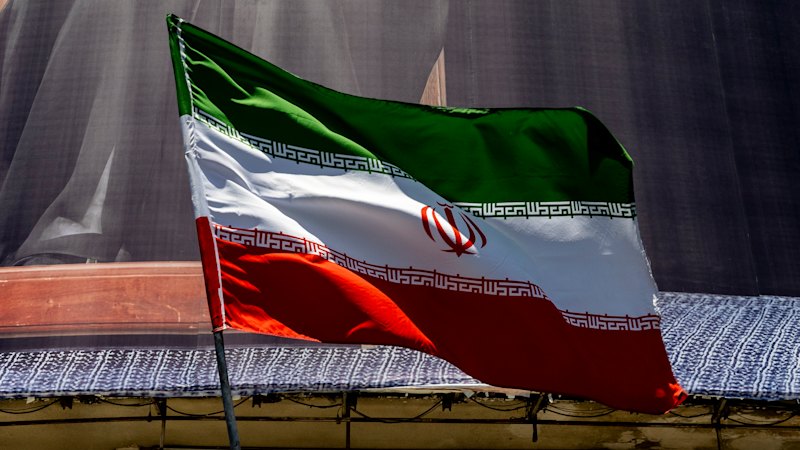
A durable diplomatic settlement between the United States and Iran cannot rely on diplomatic goodwill; it must function as a self-enforcing equilibrium. Any comprehensive framework, such as a multi-point peace initiative, operates within a complex geopolitical matrix governed by credible commitments, verification mechanisms, and regional security dynamics. To evaluate the viability of a sweeping 14-point framework, the agreement must be disassembled into three operational pillars: nuclear non-proliferation architecture, economic integration mechanics, and regional deterrence stability.
Evaluating this framework requires analyzing the structural friction points that historically derail bilateral accords, establishing the strategic prerequisites for a stable equilibrium. You might also find this related story useful: The Microeconomics of Elite Educational Networks: Analyzing the Structural Endurability of Cross-Border Capital Assets.
The Nuclear Non Proliferation Architecture
The core of any US-Iran settlement rests on the technical parameters of Iran's nuclear cycle. A stable agreement must permanently close both the uranium and plutonium pathways to a nuclear weapon while establishing an intrusive verification regime.
The primary metric of success is "breakout time"—the duration required to produce enough weapons-grade fissile material (one Significant Quantity, or SQ) for a single nuclear device. As discussed in recent articles by The New York Times, the implications are widespread.
To permanently extend this timeline beyond a critical threshold of 12 months, the framework must enforce specific technical constraints:
- Centrifuge Inventory and R&D Limitations: Enrichment must be restricted exclusively to first-generation IR-1 centrifuges. Advanced centrifuge models (IR-2m, IR-4, IR-6, and IR-8) must be dismantled and placed under continuous International Atomic Energy Agency (IAEA) monitored storage. R&D on advanced enrichment technologies must be subjected to a strict caps-and-sunset schedule.
- Stockpile Caps and Purity Ceilings: The inventory of enriched uranium hexafluoride ($UF_6$) must be capped at a nominal operational level (typically under 300 kilograms) with an enrichment ceiling of 3.67% U-235. All material enriched beyond this threshold must be blended down or shipped out of the country.
- Heavy Water Reactor Modification: The Arak heavy water research reactor must be irreversibly redesigned to prevent the production of weapons-grade plutonium. The original reactor core must be rendered unusable, and all spent fuel must be exported for reprocessing.
+-------------------------------------------------------------+
|               Verification & Access Matrix                  |
+-------------------------------------------------------------+
| Regular Inspections (Declared Sites)                         |
|   -> Fuel Enrichment Plants (Natanz, Fordow)                |
|   -> Conversion & Fuel Fabrication Facilities               |
+-------------------------------------------------------------+
| IAEA Additional Protocol (Complementary Access)            |
|   -> Centrifuge Manufacturing Workshops                     |
|   -> Uranium Mines and Mills                                |
+-------------------------------------------------------------+
| Modified Code 3.1 (Early Notification)                     |
|   -> Mandatory Design Information for New Facilities        |
+-------------------------------------------------------------+
This technical architecture fails without absolute verification. Trust is replaced by systemic transparency. The framework requires Iran to ratify and implement the IAEA Additional Protocol alongside Modified Code 3.1. This grants inspectors managed access to undeclared locations within short notification windows, mitigating the risk of clandestine enrichment facilities.
The structural limitation of this pillar lies in the "sunset clauses." If technical restrictions expire after a fixed duration without a fundamental shift in Iran’s regional security calculus, the agreement merely defers a proliferation crisis rather than resolving it.
Economic Integration Mechanics and Sanctions De-escalation
The primary strategic incentive for Iranian compliance is the systematic dismantling of the multilateral sanctions regime. However, the execution of sanctions relief introduces severe economic asymmetry and timing mismatches that can destabilize the treaty.
The economic component of the deal operates through a phased reciprocity model. Iran requires immediate capital inflows, whereas Western powers require verified technical compliance before conceding leverage.
       [IRANIAN COMPLIANCE]                 [WESTERN LEVERAGE]

  Phase 1: Verification of Technical Caps -> Partial Asset Unfreezing
                                              (Escrow Accounts)
                                                    │
                                                    ▼
  Phase 2: Long-term IAEA Monitoring      -> Secondary Sanctions Waivers
                                              (Oil & Petrochemicals)
                                                    │
                                                    ▼
  Phase 3: Permanent Ratification (AP)    -> Statutory Sanctions Repeal
The sequencing of this mechanism determines its stability:
- Tranche 1 (Immediate Relief): Upon initial IAEA verification of centrifuge decommissioning, access is granted to frozen foreign exchange reserves held in international escrow accounts. These funds are restricted to humanitarian trade via specialized banking channels to prevent immediate reallocation to military budgets.
- Tranche 2 (Sectoral Waivers): The United States issues renewable waivers on secondary sanctions targeting Iran’s energy, petrochemical, and automotive sectors. This allows international conglomerates to resume crude oil purchases and execute long-term capital investments.
- Tranche 3 (Structural Integration): Upon permanent ratification of the Additional Protocol by the Iranian parliament, the US Congress moves to formally repeal statutory sanctions, and Iran is reintegrated into the SWIFT financial messaging network.
This economic framework faces a major structural obstacle in the form of "snapback" provisions. If Iran violates a clause, the US or any permanent UN Security Council member can unilaterally trigger the reinstatement of previous sanctions.
This introduces a high level of sovereign risk. Foreign corporations will hesitate to commit long-term direct investment (FDI) if a single compliance dispute can instantly criminalize their assets. The threat of snapback reduces the economic reward for Iran, eroding their long-term incentive to abide by the treaty.
Regional Deterrence and Proxy Alignment
A nuclear agreement that ignores regional proxy dynamics creates a strategic destabilization known as the "sub-nuclear paradox." By neutralizing the nuclear threat and providing economic relief, the deal inadvertently frees up resources for conventional and asymmetric gray-zone operations across the Middle East.
A comprehensive peace deal must address the asymmetric power projection capabilities that define Iran’s regional strategy.
+------------------------------------------------------------------------+
|                      Regional Asymmetric Matrix                        |
+------------------------------------------------------------------------+
| Missile Proliferation Controls                                         |
|   - Range Caps (< 2,000 km)                                            |
|   - Precision Guidance Technology Transfer Prohibitions                |
|   - Space Launch Vehicle (SLV) Dual-Use Restrictions                   |
+------------------------------------------------------------------------+
| Proxy Subsidization Restrictions                                      |
|   - Interdiction of Advanced Conventional Weapons (UAVs, ATGM, ASCM)    |
|   - Formalization of State-to-State Diplomatic Channels                |
|   - Border Security Integration Agreements                              |
+------------------------------------------------------------------------+
The proliferation of precision-guided munitions (PGMs), unmanned aerial vehicles (UAVs), and ballistic missile technology to non-state actors presents a direct threat to maritime trade routes and regional security. A viable framework must establish strict range limitations—restricting ballistic development to a defensive 2,000-kilometer cap—and enforce zero-tolerance protocols on the transfer of missile components to regional proxies.
The core challenge is that proxy networks are not a separate asset to be bartered away; they form the bedrock of Iran's forward defense doctrine. This strategy is designed to offset conventional military inferiority relative to the United States and its regional allies.
Demanding the immediate dismantling of these networks creates a severe security dilemma for Iran. Without ironclad, legally binding security guarantees from regional neighbors, any clause requiring Iran to abandon its proxy architecture will likely lead to non-compliance or hidden defiance.
The Friction Points of Diplomatic Execution
The failure mode of a 14-point peace deal is rarely found in the text itself, but rather in the political and institutional friction points of its execution.
The first friction point is institutional path dependency. In Washington, foreign policy is constrained by congressional oversight and electoral cycles. An executive agreement signed by one administration can be unilaterally revoked by the next, destroying the credibility of long-term US commitments. Without a formal treaty ratified by a two-thirds majority in the US Senate—an unlikely political outcome—any deal remains structurally unstable.
The second friction point is the internal political economy of Iran. Sanctions have fostered a highly insular economy where powerful institutional actors, including the Islamic Revolutionary Guard Corps (IRGC), control significant black-market trade and smuggling networks. Economic normalization threatens these entrenched interests by introducing foreign competition and demanding transparency under global anti-money laundering (AML) and combating the financing of terrorism (CFT) standards, such as the Financial Action Task Force (FATF). Consequently, internal political factions are incentivized to subvert compliance to preserve their economic monopolies.
+-------------------------------------------------------------------+
|                     Systemic Risk Variables                       |
+-------------------------------------------------------------------+
| US Political Risk                                                 |
|   - Executive Agreements are Vulnerable to Electoral Cycles       |
|   - Lack of Legislative Ratification Invites Policy Reversals     |
+-------------------------------------------------------------------+
| Iranian Political Risk                                            |
|   - Entrenched Institutional Resistance to AML/CFT Compliance     |
|   - Domestic Resistance to Foreign Corporate Re-entry             |
+-------------------------------------------------------------------+
| Verification Blindspots                                           |
|   - Intelligence Gaps in Dual-Use Technology Supply Chains       |
|   - Disputes Over Military-Industrial Site Access                 |
+-------------------------------------------------------------------+
The final bottleneck is the verification protocol for dual-use technologies. Modern electronics, carbon fiber composites, and specialized industrial machinery have both civilian and military applications. Monitoring the supply chains for these items requires a high level of international cooperation. A breakdown in intelligence sharing or a dispute over access to a military-industrial site can trigger an escalatory loop, collapsing the treaty.
Strategic Playbook
To transform a broad peace proposal into a viable framework, policymakers must abandon all-or-nothing diplomatic strategies and adopt a modular, transaction-based approach.
The immediate next step requires decoupling the nuclear verification track from the regional security track. Attempting to resolve both simultaneously creates a complex diplomatic gridlock where a deadlock in one area destroys progress in the other.
The nuclear framework must be locked in using a "More-for-More" format. Instead of offering broad, reversible sanctions waivers, the United States should match specific, permanent Iranian technical concessions—such as the destruction of advanced centrifuge manufacturing equipment—with permanent, statutory adjustments to non-nuclear sanctions. This ties compliance to tangible, irreversible economic benefits.
Concurrently, regional security dynamics must be addressed through a separate, multilateral security forum involving regional powers. This track should focus on modest, verifiable confidence-building measures rather than demanding immediate disarmament. Initial steps should include maritime hotlines to prevent accidental escalation in the Strait of Hormuz and joint protocols on unmanned aerial vehicle (UAV) proliferation.
By building a network of separate but parallel agreements, the overall framework becomes resilient to single-point failures, creating a stable, long-term balance of power.