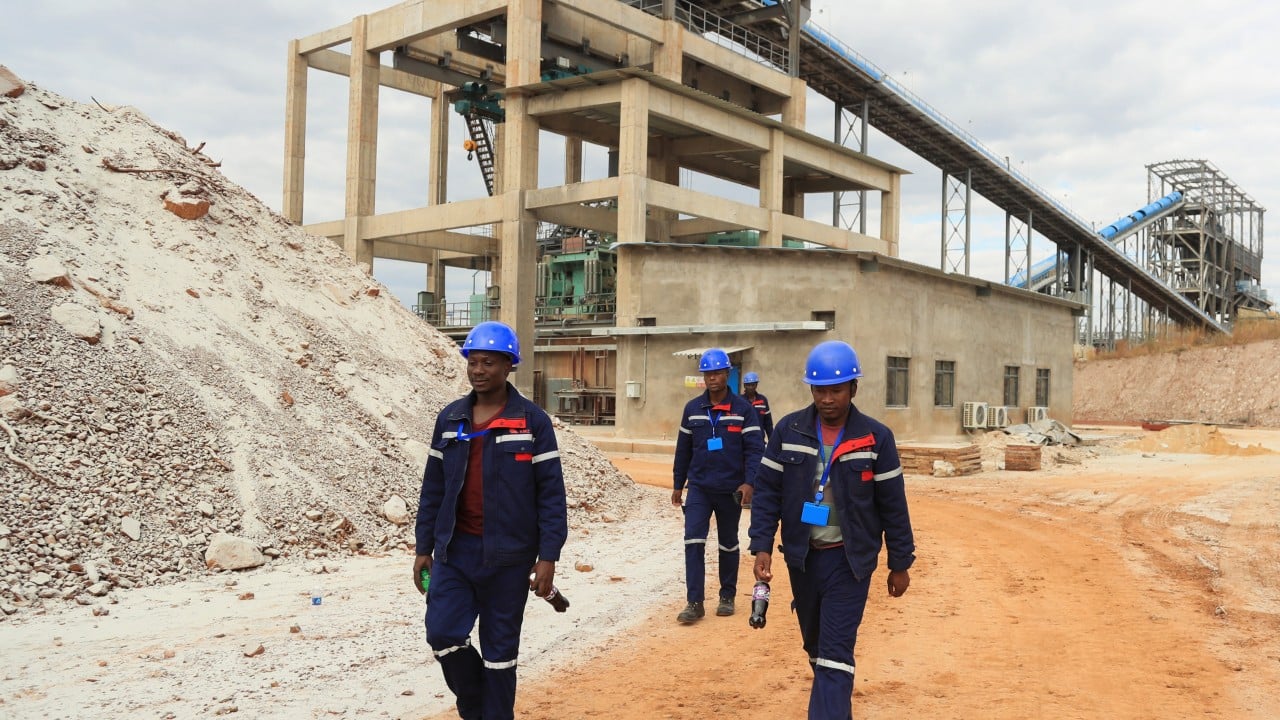
The global rare earth element (REE) supply chain is currently defined by a monopsony that dictates price discovery, refining standards, and technological IP. China’s control over 60% of mine production and nearly 90% of refining capacity creates a structural bottleneck for Western OEMs (Original Equipment Manufacturers) in the electric vehicle (EV) and defense sectors. Africa represents the most viable geographic hedge against this concentration, yet the transition from extraction to strategic partnership requires a fundamental shift in how African nations value their geological endowments. The opportunity is not found in simply digging ore; it exists in the arbitrage between Western desperation for supply security and China's existing infrastructure dominance.
The Triad of Rare Earth Dependency
To understand the strategic opening for African nations, one must decompose the REE supply chain into three distinct layers of control. Each layer presents a different barrier to entry and a different potential for African sovereignty.
1. Geological Abundance vs. Extractable Grade
While "rare" earths are not geologically scarce, deposits with concentrations high enough to justify the high Capex of a modern mine are limited. Africa’s advantage lies in carbonatite-hosted deposits, which often contain higher ratios of Neodymium (Nd) and Praseodymium (Pr) compared to the ionic clay deposits found in Southern China. These specific elements are the primary drivers of the permanent magnet market.
2. The Processing Chokepoint
Mining is only 10% of the value chain. The actual barrier is the chemical separation process. Rare earth minerals are chemically similar, making their separation into individual high-purity oxides an energy-intensive, environmentally hazardous, and technologically complex endeavor. China’s dominance is maintained through a thirty-year head start in solvent extraction (SX) technology and a lower regulatory floor regarding radioactive byproduct management (Thorium and Uranium).
3. The Magnet Manufacturing Monopoly
The final value-add is the fabrication of NdFeB (Neodymium-Iron-Boron) magnets. Even if an African nation mines and refines the ore, selling the oxide back into a Chinese-controlled magnet market preserves the price-taker status of the producer. True strategic autonomy requires a path toward mid-stream or down-stream integration.
The US Strategy: De-risking via Friend-shoring
The United States, through the Minerals Security Partnership (MSP) and the Inflation Reduction Act (IRA), is attempting to subsidize the creation of a non-Chinese supply chain. This is not driven by traditional market economics—where Chinese prices are almost always lower—but by national security imperatives.
This creates a "security premium" that African producers can capture. For a project in Malawi, Namibia, or Tanzania, the value proposition is no longer just the spot price of Neodymium. It is the ability to provide an IRA-compliant source of minerals that allows US automakers to qualify for consumer tax credits.
The Capital Expenditure Gap
Western investment in African REE projects faces a persistent "valuation trap." Chinese state-backed firms operate on 20-to-30-year horizons with low-interest sovereign loans. In contrast, Western junior miners rely on equity markets and private equity, which demand shorter-term returns and risk-adjusted premiums for "frontier market" jurisdictions. This creates a financing gap where viable African projects sit in pre-feasibility stages while Chinese firms move toward acquisition and rapid development.
Structural Bottlenecks in African Development
The narrative of an African rare earth "boom" is often tempered by three operational realities that the competitor discourse ignores.
- Energy Density Requirements: REE refining is one of the most power-hungry industrial processes. Most REE deposits in Africa are located in regions with inconsistent grid stability. Without dedicated baseload power—often requiring independent power producer (IPP) agreements—refining remains a theoretical exercise.
- The Radioactive Burden: REE ores are frequently associated with actinide elements. Managing the tailings requires sophisticated regulatory oversight. If African nations lack the environmental framework to manage Thorium disposal, they will be forced to export raw concentrates, losing the majority of the economic rent to offshore refiners.
- Infrastructure Lead Times: The "pit-to-port" distance for many East African deposits exceeds 500 kilometers. The logistics cost of transporting bulk concentrate can negate the grade advantage of the ore.
The Multi-Vector Diplomatic Framework
African states are increasingly rejecting the binary choice between Washington and Beijing. Instead, they are adopting a "multi-vector" strategy to maximize the value of their REE assets.
The Tanzanian Model
Tanzania has moved toward a framework of "mandatory local value addition." By prohibiting the export of unprocessed lithium and rare earth concentrates, the state forces foreign investors to build at least a portion of the processing infrastructure within national borders. This increases the domestic "stickiness" of the capital.
The Namibian Precedent
Namibia has successfully utilized its historical mining expertise to negotiate joint-venture structures where the state mining company (Epangelo) takes a non-dilutable stake. This ensures that the sovereign wealth of the nation grows in tandem with the project’s Net Present Value (NPV).
The Cost Function of Environmental Compliance
A significant misconception in the REE market is that Western "ESG" (Environmental, Social, and Governance) standards are purely a burden. In reality, they are a competitive differentiator. As global OEMs face increasing pressure to provide "clean" supply chains, African projects that adhere to high environmental standards can command a price floor.
The cost of remediation in China’s Ganzhou region has been estimated in the billions of dollars. African nations that implement rigorous waste management from day one avoid these legacy costs and position their output as a premium product for European and North American markets.
Mapping the Logic of Substitution
The greatest risk to the African rare earth strategy is not China; it is the laboratory. High REE prices and geopolitical instability have accelerated research into "REE-free" motors. Tesla’s announcement regarding a permanent-magnet motor that uses zero rare earths sent a shockwave through the junior mining sector.
However, the physics of energy density suggests that for high-performance applications—long-range EVs, wind turbines, and advanced fighter jets—the NdFeB magnet remains the gold standard. The substitution threat creates a "Goldilocks" zone for African producers: prices must remain high enough to justify new mines, but low enough to prevent a mass exodus toward inferior alternative technologies.
Quantitative Divergence in Project Economics
To evaluate the success of an African REE venture, one must look past the "Total Rare Earth Oxide" (TREO) percentage and focus on the Magnetic REO (MagREO) content.
- Basket Price Calculation: A deposit high in Cerium and Lanthanum is often uneconomic because these elements are currently oversupplied.
- Radionuclide Ratio: High-grade ore with 1% Thorium content might be more expensive to process than lower-grade ore with 0.01% Thorium.
- Specific Gravity and Flotation: The mineralogy (e.g., Monazite vs. Bastnäsite) dictates the complexity of the chemical circuit.
The Strategic Play for African Sovereignty
The endgame for African nations is not to replace China, but to become an indispensable node in a bifurcated global market. By leveraging US financing (via the EXIM Bank or DFC) to build the infrastructure, and maintaining trade openness with both East and West, African states can prevent their mineral wealth from becoming a tool of one-sided hegemony.
The most effective strategy involves the creation of regional processing hubs. Instead of each nation attempting to build its own separation plant, a centralized hub in a stable jurisdiction—such as South Africa or Namibia—could process concentrates from across the SADC (Southern African Development Community) region. This would provide the necessary economies of scale to compete with Chinese refineries on a cost-per-kilogram basis.
The window for this strategic positioning is narrow. As the US and EU finalize their domestic mining permits and recycling technologies mature, the "scarcity premium" for African ore will normalize. The time to lock in infrastructure-for-resource deals that include technology transfer and domestic refining capacity is now, while the geopolitical tension is at its peak.