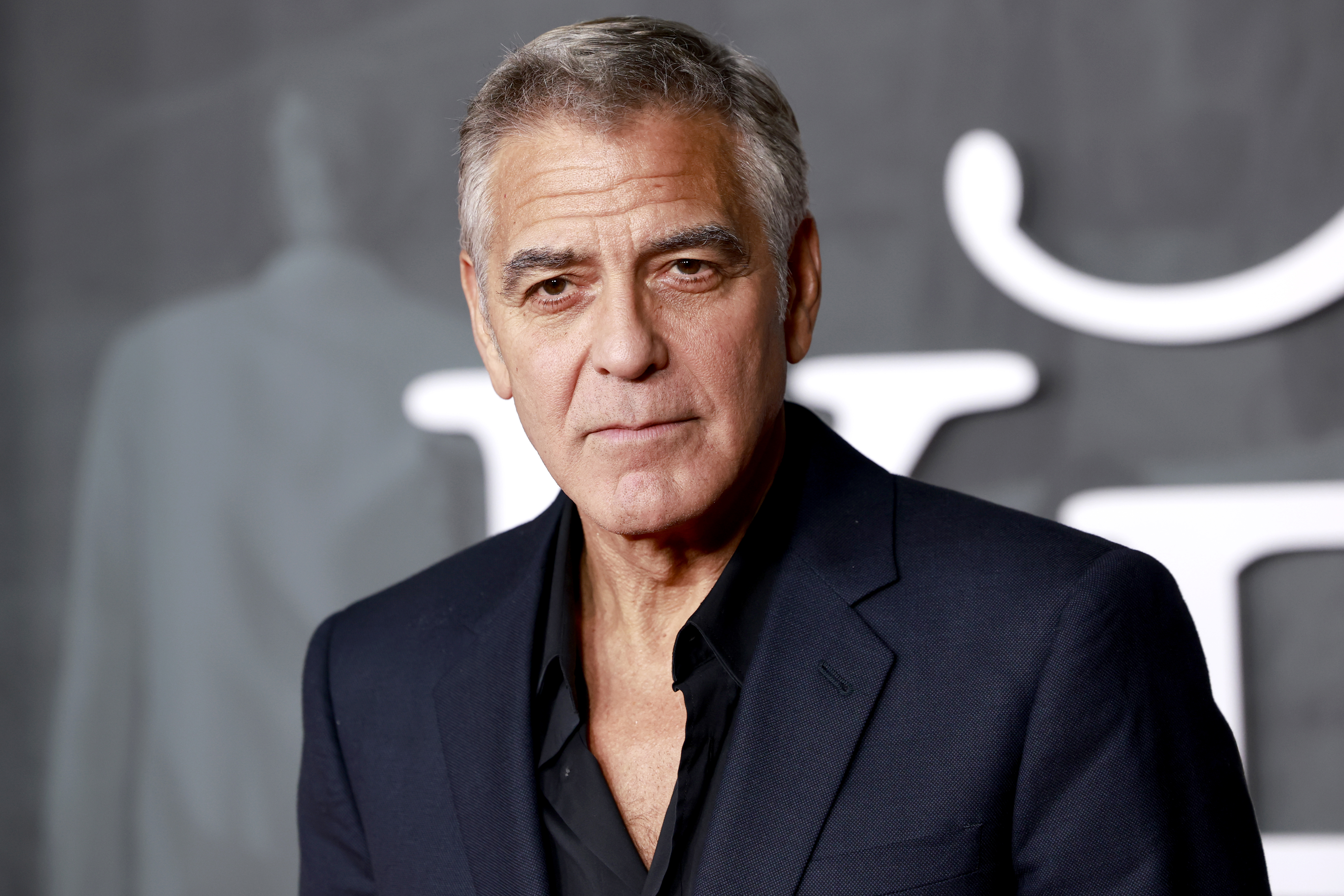
The collision between George Clooney and the Biden administration regarding the International Criminal Court (ICC) is not a simple celebrity feud; it is a breakdown in the strategic alignment between soft-power assets and hard-power diplomatic objectives. When Clooney contacted White House officials to challenge President Biden’s condemnation of the ICC’s pursuit of Israeli leaders, he exposed a structural friction point in American foreign policy: the tension between universalist legal norms and the pragmatic requirements of state-level alliances.
The Triad of Conflict: Celebrity, State, and International Law
To understand the severity of this rupture, we must map the three competing interests at play. This incident represents a failure of "Track II Diplomacy," where non-state actors (celebrities with deep humanitarian portfolios) operate in a manner that contradicts the official "Track I" state narrative. In other news, we also covered: The Long Walk Back to Gravity.
- The Universalist Legal Mandate: Represented by the ICC and, by extension, Amal Clooney’s legal advisory role. This framework operates on the principle that international law must be blind to geopolitical utility.
- The Strategic Alliance Doctrine: Represented by the White House. This framework prioritizes the stability of regional partners (Israel) and the protection of domestic political standing over the enforcement of abstract international statutes.
- The Influence Capital Risk: Represented by George Clooney. For a high-net-worth donor and cultural influencer, the currency is moral consistency. When the state’s pragmatism devalues that currency, the influencer becomes a liability rather than an asset.
The ICC Mechanism and the Immunity Precedent
The White House’s "fury" stems from a specific legal threat: the potential for the ICC to set a precedent that could eventually be applied to American officials. Although the United States is not a signatory to the Rome Statute, the ICC’s claim of jurisdiction over non-member nationals—provided the alleged acts occur on the territory of a member state (in this case, Palestinian territories)—creates a "sovereignty leak."
The administration’s condemnation of the ICC prosecutor’s move to seek arrest warrants for both Hamas and Israeli leadership was a defensive maneuver to plug this leak. By calling the move "outrageous," the Biden administration sought to delegitimize the court’s authority before it could establish a footprint that might later track back to U.S. military or executive actions in other theaters. The New York Times has provided coverage on this fascinating topic in great detail.
Clooney’s intervention disrupted this defense. By defending the legal process, he inadvertently validated the ICC’s jurisdiction, which the State Department views as a direct threat to the principle of executive immunity.
The Cost Function of High-Level Donorship
In the ecosystem of political financing, Clooney is not merely a "celebrity"; he is a Tier-1 bundler. The relationship between a political administration and a Tier-1 donor is governed by an unwritten contract of mutual reputation management.
- The Donor’s Output: Large-scale capital infusion and cultural "halo" effects that humanize the candidate.
- The Administration’s Output: Access, policy listening sessions, and the maintenance of a political environment that does not compromise the donor’s public brand.
When the Biden administration considered imposing sanctions on the ICC to protect Israeli officials, they crossed a brand-safety line for Clooney. Amal Clooney’s involvement in the ICC panel provided the factual basis for this friction. The administration’s rhetoric characterized the legal work of the ICC as "criminal," which directly attacked the professional and moral standing of the donor’s immediate circle.
This creates a negative ROI for the donor. If supporting an administration requires the donor to remain silent while that administration attacks their core professional or humanitarian work, the value of the political association collapses.
Measuring the Strategic Drift
The disconnect between the White House and the Clooney camp reveals three specific layers of strategic drift:
1. The Rhetorical Escalation Gap
The administration used high-velocity language ("crime," "outrageous") to signal strength to domestic pro-Israel constituencies. However, they failed to account for the "internal blast radius" of that language. By labeling legal advocacy as a crime, they alienated the very liberal-internationalist base that Clooney represents.
2. The Institutional Contradiction
The U.S. government has historically supported ICC actions when they align with American interests (e.g., the warrants against Vladimir Putin). This selective enforcement creates a "credibility tax." Clooney’s critique highlights this tax, making it harder for the administration to frame its foreign policy as "rules-based" without appearing hypocritical to global and domestic observers.
3. The Fundraising Bottleneck
We are entering a high-stakes phase of the election cycle where cultural validators are required to mobilize the "disengaged middle." The friction with Clooney creates a cooling effect among other Hollywood and Silicon Valley donors who view the ICC issue as a litmus test for the administration’s commitment to international human rights.
The Mechanics of State vs. Non-State Legal Interpretation
The White House argues that the ICC lacks jurisdiction because Israel is not a member and has its own robust legal system capable of investigating its military. This is the principle of Complementarity.
In contrast, the ICC prosecutor’s panel—which included Amal Clooney—concluded that there was a "reasonable basis to believe" that the domestic legal mechanisms were not currently addressing the specific violations of international humanitarian law identified by the court.
The gap between these two interpretations is not a misunderstanding of law; it is a difference in Geopolitical Weighting. The White House weights "Domestic Judicial Sovereignty" at nearly 100%, while the ICC panel weights "Independent Oversight" higher.
Structural Risks to the Democratic Coalition
The Clooney-White House rift is a microcosm of a larger fracture within the Democratic coalition. This fracture exists between:
- The Institutionalists: Those who believe the executive branch must have total leeway to navigate alliances and protect the state from international oversight.
- The Reformists: Those who believe that American "moral leadership" is contingent upon the universal application of law, even when it is inconvenient for allies.
The administrative "fury" toward Clooney is a symptom of the Institutionalists realizing that their Reformist allies are no longer willing to provide a "blank check" of cultural approval. This shift forces the administration to choose between two high-cost options: moderating their stance on the ICC to appease the donor/activist base (risking the Israeli alliance) or doubling down on state-centrism (risking the loss of cultural and financial capital).
Operational Recommendations for Influence Management
The current situation is the result of poor "Stakeholder Mapping." To prevent such ruptures, an administration must treat Tier-1 cultural assets with the same strategic rigor as foreign dignitaries.
- Pre-emptive Policy Syncing: If an administration plans to attack an international body where a key surrogate has professional ties, the communication must be socialized weeks in advance to manage the "rhetorical impact."
- The "Dual-Track" Communication Strategy: The administration could have condemned the ICC's timing or specific findings without using the word "crime," which implies a moral and legal absolute that was bound to trigger a response from legal practitioners like the Clooneys.
- Leverage Buffering: Instead of direct executive-to-celebrity conflict, the administration should use mid-level State Department liaisons to frame the disagreement as a "difference in legal interpretation" rather than a "betrayal of friendship."
The White House must now calculate the specific cost of a public break with Clooney. If Clooney scales back his fundraising efforts or—more damagingly—remains publicly critical of the administration’s human rights consistency, it creates a permission structure for other donors and voters to follow suit. The strategic play is not to win the argument over the ICC, but to pivot the conversation back to domestic stakes where the interests of the administration and the celebrity donor are once again aligned. Failure to do so transforms a manageable policy disagreement into a permanent deficit in cultural influence.