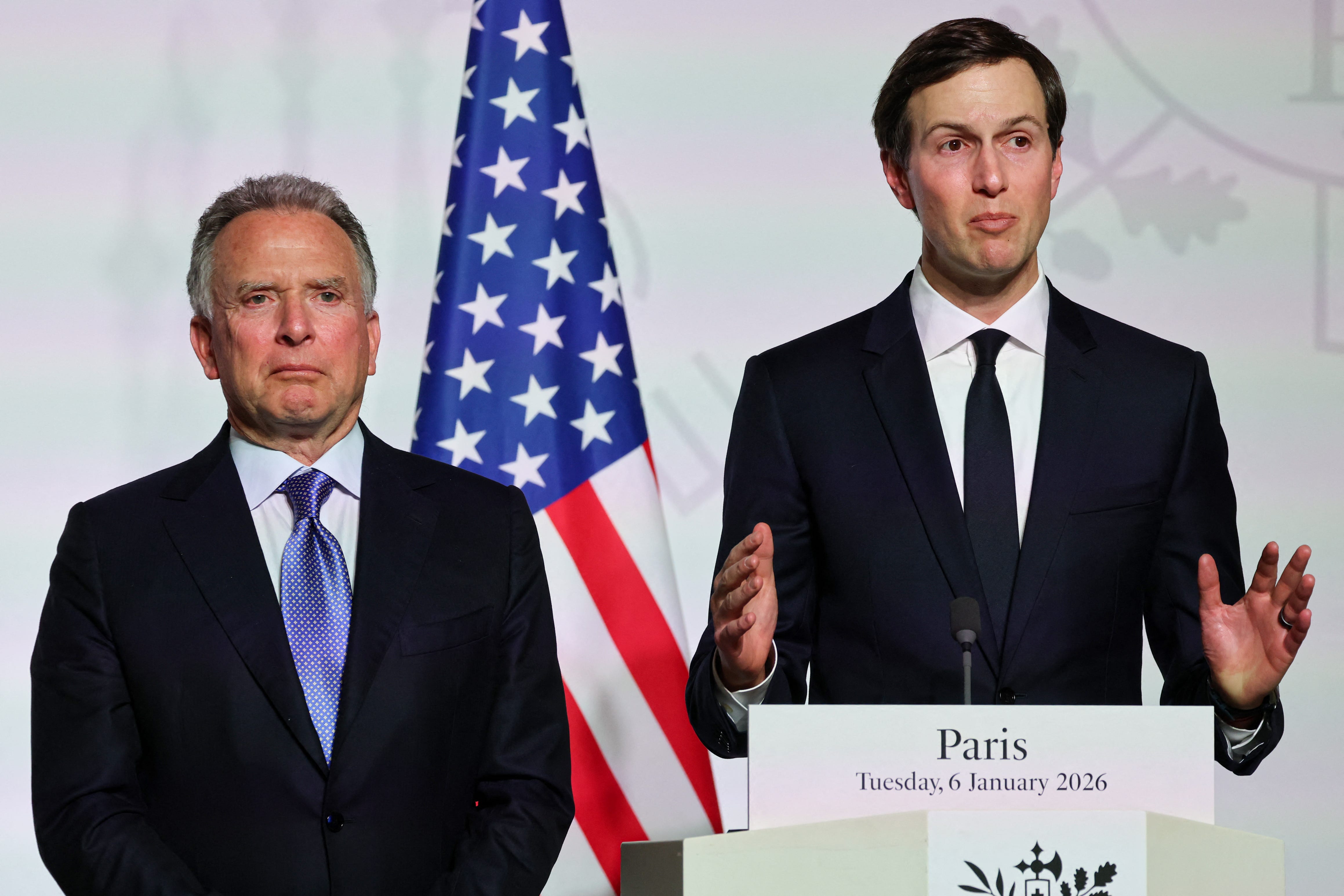
The blueprint for the morning after always looks pristine on heavy cardstock in air-conditioned conference rooms. Right now, the latest American-backed architecture for the Gaza Strip—promoted heavily by special envoy Jared Kushner alongside the newly minted Board of Peace—rests on a simple, uncompromising sequence. According to Washington’s design, Hamas must completely disarm and surrender its remaining heavy weaponry under the direct supervision of an American general before a single bag of cement crosses the border for reconstruction.
It is a sequencing trap of monumental proportions.
Prime Minister Benjamin Netanyahu doubled down on this exact precondition during a four-hour summit in Jerusalem, telling international mediators that Israeli forces will not yield an inch of the sixty percent of the territory they currently occupy until every cached rocket and underground tunnel is neutralized. Meanwhile, regional heavyweights from Riyadh to Cairo are condemning Israel’s rejection of the broader transitional roadmap, arguing that demanding total capitulation before offering any tangible horizon of recovery is a recipe for endless stagnation. Two million civilians trapped in the rubble are left to pay the price for an intractable sequencing deadlock that neither side has the political incentive to break.
The Anatomy of a Diplomatic Paradox
To understand why this current diplomatic push is sputtering, one must look past the optimistic press briefings and examine the mechanics of military trust. Following rare direct talks with Hamas political leadership in Egypt, Kushner insisted that the militant group uttered the right phrases regarding disarmament. Yet, Washington's own envoys openly admit that verifying the intentions of a non-state actor is an exercise in high-stakes gambling.
Israel's position is rooted in raw operational survival. From the perspective of the security establishment in Tel Aviv, permitting heavy rebuilding machinery, concrete, and industrial metals into the enclave before the complete dismantling of militant infrastructure invites immediate weapon-remanufacturing. Tunnels can be re-lined with concrete meant for apartment blocks. Dual-use materials can easily serve military engineering purposes.
Yet, this logic creates an absolute zero-sum condition. Hamas views its arsenal as its sole remaining political and physical leverage. Asking a militant organization to strip itself of all defensive and offensive capability while hostile forces occupy the majority of its territory is a demand for unconditional surrender without a signed peace treaty.
When absolute disarmament is made the primary gatekeeper for sanitation, clean water, and basic shelter, diplomacy ceases to be a negotiation and becomes an ultimatum.
The Architecture of the Board of Peace
The entry of external bodies like the American-led Board of Peace—featuring figures like former British Prime Minister Tony Blair—was supposed to inject neutral oversight into the crisis. The mechanism relies on an International Stabilization Force, featuring contingents from nations willing to deploy personnel to monitor disarmament milestones. Under this framework, an American general would oversee the physical decommissioning of weapons handed over by Hamas to a proposed Palestinian technocratic committee.
On paper, professionalizing the handover solves the problem of partisan bias. In practice, the timeline collapses under the weight of domestic political pressures.
In Israel, looming political cycles and hardline coalition dynamics make any premature military withdrawal politically fatal for the sitting government. Netanyahu cannot afford to be seen trading tangible security assets for unverified promises written on international paper. Conversely, Hamas leadership faces intense skepticism from its own field commanders, who view the surrender of weapons as a suicidal betrayal of their core ideology.
The inclusion of working groups dedicated to public health and demilitarization is a bureaucratic attempt to compartmentalize the nightmare. But public health cannot be separated from logistics, and logistics require open supply lines, unhindered movement, and stable ground control—none of which can exist while two heavily armed adversaries are locked in a standoff over who takes the first step backward.
The Cost of Waiting Out the Clock
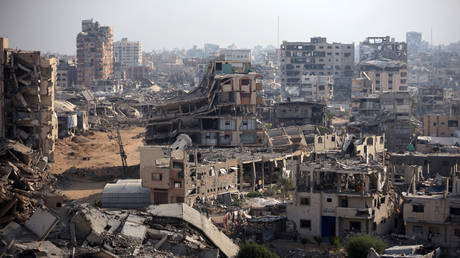
While Washington projects confidence that weapon handovers could begin within a thirty-to-sixty-day window, ground-level reality moves at a much harsher speed. Basic infrastructure across central and southern sectors remains shattered. Water desalination plants operate at a fraction of their capacity, and healthcare facilities lack the fundamental resources to manage chronic public health epidemics.
By tying the delivery of humanitarian and structural restoration to an immediate, comprehensive disarmament that neither party trusts the other to execute fairly, the international community has effectively outsourced local governance to a permanent state of emergency.
If the current impasse persists, the risk is not merely a stalled peace process; it is the permanent institutionalization of a failed statelet where reconstruction is used as a permanent carrot dangling just out of reach, eternally deferred until an impossible security threshold is met. True progress will require a simultaneous, phased matrix where small humanitarian concessions are met with incremental, verifiable security shifts, rather than demanding total surrender on day one. Until policymakers abandon the all-or-nothing trap, the rubble will remain where it is, monument to a diplomacy that mistook a demand for a strategy.
Kushner's Gaza peace plan talks end without breakthrough
This video provides an overview of the diplomatic talks between US envoy Jared Kushner and regional leaders regarding the stalled Gaza peace framework and disarmament conditions.
http://googleusercontent.com/youtube_content/1