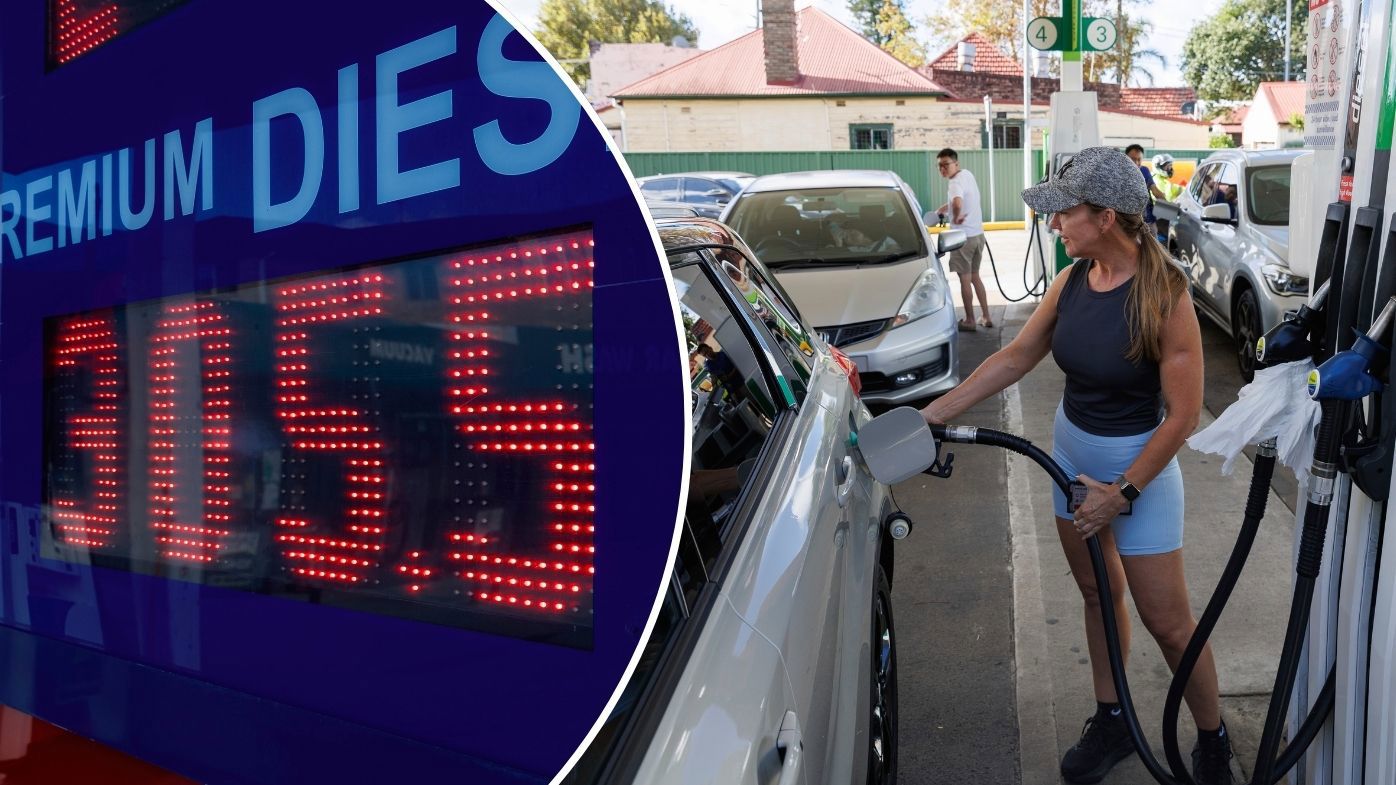
The Australian retail fuel market is frequently characterized by public grievance regarding "price gouging," yet the actual drivers of pump prices are governed by a rigid hierarchy of international benchmarks, local competition cycles, and terminal gate pricing. Blaming domestic consumers or specific local entities for price pain ignores the structural components of the Australian fuel supply chain. To understand why Australians pay what they do, one must deconstruct the fuel cost stack and the asymmetrical nature of price cycles in major metropolitan areas.
The Three Pillars of Fuel Pricing
The price at an Australian service station is not an arbitrary figure set by a local manager. It is the output of three distinct financial layers: You might also find this connected article insightful: Why Trump is Right About Tech Power Bills but Wrong About Why.
- The International Benchmark (MOPAG): Australia is a net importer of refined petroleum products. The primary benchmark for the region is the Mean of Platts Singapore (MOPS). Specifically, for unleaded petrol, the benchmark is Mogas 95 (MOPAG 95). Because this is traded in US Dollars, the AUD/USD exchange rate acts as a direct multiplier of volatility. When the Australian dollar weakens against the greenback, domestic prices rise even if the global price of crude remains static.
- The Terminal Gate Price (TGP): This represents the "wholesale" price at which fuel is sold from the terminal to distributors or large commercial customers. The TGP includes the international benchmark, shipping, insurance, and the Australian government’s fuel excise and GST. The excise is a flat cents-per-litre tax, indexed twice yearly to the Consumer Price Index (CPI), making it a significant, non-negotiable floor for retail prices.
- The Gross Retail Margin (GRM): This is the difference between the TGP and the price at the pump. It covers the cost of operating the retail site—wages, electricity, land tax, and transport from the terminal—plus the profit margin.
The Asymmetry of the Retail Price Cycle
While regional areas often see stable, "cost-plus" pricing, Australia’s five largest capital cities operate on a highly synchronized, asymmetrical price cycle. This cycle is a phenomenon of retail competition, not a reflection of immediate changes in the price of crude oil.
The Deliberate Undershoot
In the downward phase of the cycle, retailers engage in aggressive price-cutting to maintain volume. Large chains often lower prices below their effective break-even point to draw traffic into their convenience stores, where margins are higher than on fuel. This creates a "race to the bottom" where the retail price can temporarily dip below the TGP. As reported in detailed coverage by The Wall Street Journal, the results are worth noting.
The Restoration Phase
Once margins become unsustainable across the market, a "price leader"—usually a major brand—increases their price significantly, often by 30 to 40 cents per litre. Competitors follow suit within 24 to 48 hours. This is not a sign of illegal collusion, but rather "tacit parallelism," a common feature of oligopolistic markets. The peak of the cycle allows retailers to recoup the losses incurred during the discounting phase.
The Cost Function of Local Logistics
The argument that Australian distributors are uniquely responsible for price spikes fails when subjected to a geographic cost-benefit analysis. Australia possesses minimal domestic refining capacity, following the closure of several major refineries over the last decade (e.g., Kurnell, Bulwer Island, Altona).
The transition to a "90% Import Model" has introduced specific vulnerabilities:
- Inventory Lag: There is a 2 to 6-week delay between a price shift in Singapore and that fuel arriving in Australian tanks. This lag causes a disconnect between current global headlines and local pump prices.
- Wholesale Bottlenecks: Australia’s reliance on a few key terminals means that any disruption in shipping or terminal operations creates immediate localized scarcity, driving up the TGP for independent retailers.
- The Last Mile Premium: For regional Australia, the cost of trucking fuel from a coastal terminal to an inland station adds a fixed "distance tax." This explains why regional prices do not fluctuate with the same frequency as city prices; the high fixed cost of transport discourages the volatile price-war behavior seen in urban centers.
Quantifying the "Blame" Factor: Consumer Behavior vs. Retailer Strategy
If there is a behavioral component to "petrol price pain," it lies in the timing of consumer purchases. The price cycle is predictable. Data from the Australian Competition and Consumer Commission (ACCC) consistently shows that the difference between the peak and the trough of a cycle in Sydney or Melbourne can exceed 50 cents per litre.
The financial impact on a household is determined by their position on the cycle:
- The Strategic Buyer: Monitors price-tracking apps and fills the tank during the "trough" phase. This consumer effectively subsidies the market by taking advantage of the retailers' loss-leading tactics.
- The Inelastic Buyer: Fills up on a fixed schedule (e.g., every Tuesday) regardless of the cycle position. If that schedule aligns with the "restoration phase," they pay the maximum possible margin.
Retailers rely on a specific percentage of "inelastic buyers" to remain profitable. Without those who pay the peak price, the deep discounts at the bottom of the cycle would disappear, leading to a higher, more stable average price for everyone.
The Regulatory Constraint
The ACCC monitors fuel prices but does not have the power to set them. The Australian fuel market is deregulated, meaning prices are determined by market forces. Intervention is only triggered if there is evidence of "price signaling" or price-fixing agreements that violate the Competition and Consumer Act 2010.
A critical limitation in current market analysis is the focus on "nominal" prices rather than "real" prices. When adjusted for inflation, the profit margins of Australian fuel retailers have remained relatively consistent over the last twenty years. The "pain" felt by consumers is largely driven by the absolute increase in the base cost of the product (the MOPAG) and the government excise, rather than an expansion of the retail margin.
Vertical Integration and Market Dominance
The shift from traditional oil majors (BP, Shell, Mobil) to specialized retailers and supermarket alliances (Ampol, Viva Energy, 7-Eleven) has altered the competitive landscape. Vertical integration—where the company that imports the fuel also owns the retail sites—allows for "margin squeezing."
In this scenario, a wholesaler can raise the TGP to squeeze independent retailers while keeping their own retail prices competitive. This forces independents out of the market or into higher price brackets, reducing the overall competitive pressure in a specific geographic zone. This structural advantage is a far more potent driver of long-term price trends than the individual decisions of Australian motorists.
Strategic Execution for the Fuel Consumer
To mitigate the impact of the fuel cycle, the objective is to decouple personal consumption from the market peak.
- Identify the Cycle Position: Use real-time data to determine if the market is in a "discounting" or "restoration" phase. If the average city price is trending toward the TGP, the peak is imminent.
- Inventory Management: Maintain a "half-tank" minimum during the low-price phase. This provides a buffer, allowing the consumer to skip a refueling cycle if the market hits a peak.
- Cross-Subsidization: Utilize loyalty programs and supermarket dockets only if the base price is already at the bottom of the cycle. A 4-cent discount is mathematically irrelevant if the consumer is paying a 40-cent cycle premium.
- Regional Arbitrage: For those traveling between metropolitan and regional areas, check prices in the "commuter belt" (fringe suburbs). These areas often lag behind the city cycle by 12 to 24 hours, providing a window to fill up at old prices before the restoration phase reaches the outskirts.
The most effective way to exert downward pressure on fuel prices is to increase the price elasticity of demand. By refusing to purchase fuel at the peak of the cycle, consumers force retailers to shorten the "restoration" phase and return to competitive discounting sooner. The "pain" is not a result of a specific group's fault, but a mathematical consequence of market timing and international currency exposure.