The headlines are screaming about "significant" fuel price hikes. They want you to believe that because global Brent crude fluctuates, a small island economy is a helpless leaf in a storm. This narrative is a convenient shield for bureaucratic inertia. It’s a lie.
Most analysts look at a rising price chart and tell you to tighten your belt. They treat energy costs like the weather—something to be endured. I’ve spent two decades watching utility boards hide behind "market volatility" to mask their own procurement failures. When an energy provider tells you price hikes are inescapable, they are actually saying they failed to hedge, failed to diversify, and failed to protect their captive customer base.
Stop asking when prices will go down. Start asking why your local infrastructure is so fragile that a minor tremor in the Middle East or a pipeline hiccup in Eastern Europe translates into a 20% spike in your monthly bill.
The Hedging Myth and the Failure of Fixed Thinking
The standard argument is simple: We buy fuel on the global market, the global market went up, therefore your bill goes up. It sounds logical. It is actually an admission of incompetence.
Sophisticated energy players don't just buy at "spot" prices. They use derivatives. They lock in prices months or years in advance. If an island's main utility provider is passing on "significant" increases immediately, it means they were gambling on the spot market with your money. They didn't hedge when prices were low because they wanted to show a slightly better balance sheet in the short term. Now that the bill is due, they’re handing it to you.
I have seen energy firms brag about "flexible procurement strategies" that are nothing more than high-stakes poker. When they win, the shareholders get a dividend. When they lose, the public gets a "price adjustment." This isn't an economic necessity; it's a lopsided risk distribution.
The Island Premium is a Self-Inflicted Wound
Islands often complain about the "logistics" of fuel delivery. They cite the cost of tankers, the small scale of storage, and the lack of pipeline connectivity. These are real factors, but they are also static variables. You know the ship is coming. You know how much it costs to dock.
The real "Island Premium" is the lack of competition.
In a mainland economy, if one provider spikes prices, you switch. On an island, you are often tethered to a monopoly or a cozy duopoly. These entities have zero incentive to innovate. Why spend capital on high-efficiency storage or advanced grid management when you can just file a request with a regulator to raise tariffs?
We see this in the data. Look at the price of electricity in highly regulated, monopolistic island environments versus those that have aggressively pursued microgrid technology and decentralization. The "inescapable" price hike only exists where the status quo is protected by law.
Why Renewable Energy Isn't the Immediate Savior You Think
The "lazy consensus" says the answer to high fuel prices is a rapid shift to wind and solar. This is a half-truth that hides a massive capital expenditure trap.
While the "fuel" for wind and sun is free, the infrastructure to capture, store, and distribute it on a small-scale grid is staggeringly expensive. If an island tries to "green" its way out of a price spike by building massive offshore wind farms today, your bill will go up, not down. The debt service on those projects is a fixed cost that lasts for 25 years.
True resilience doesn't come from just changing the source of the electrons. It comes from demand-side destruction.
The most contrarian move an island can make isn't building a bigger power plant; it’s making the current one irrelevant. We should be talking about:
- Massive-scale thermal retrofitting: Most island housing stock is an energy sieve. We are burning expensive imported fuel to heat (or cool) the outdoors.
- Point-of-use generation: Decentralizing the grid so that a failure or a price spike at the central plant doesn't cripple the entire economy.
- Mandatory transparent hedging: Forcing utilities to disclose their "strike prices" for fuel 12 months in advance.
Dismantling the People Also Ask Nonsense
"Will fuel prices ever go back to normal?"
The premise of this question is flawed. There is no "normal." There is only the price at which the supplier can extract the most value without causing a total economic collapse. If you are waiting for a return to 2018 prices, you are planning for a ghost. You should be planning for a permanent environment of $90+ oil and $4.00 gas.
"Can the government subsidize my fuel bill?"
This is the ultimate shell game. Where do you think the government gets the money? Subsidizing fuel bills is just taking money from your left pocket (taxes) to pay for the hole in your right pocket (the utility bill), while the utility company takes a cut for the "service" of moving the money. It solves nothing. It actually encourages the utility to keep its costs high because they know the state will floor the price.
"Is it better to switch to an electric vehicle now?"
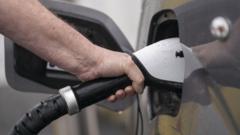
Only if your grid isn't powered by the very fuel you’re trying to avoid. In many island contexts, the electricity is generated by burning heavy fuel oil or diesel. Buying an EV in that scenario is just changing which nozzle the fossil fuel goes into. You’re still paying the "significant" price rise; it’s just hidden in your electric bill instead of the petrol pump.
The Brutal Truth About Energy Independence
True energy independence for a small economy is painful. It requires telling the local utility monopoly that their guaranteed rate of return is over. It requires telling the public that they need to consume 40% less energy through efficiency, not just "hoping" for a cheaper price.
I’ve watched boards of directors sit in air-conditioned rooms and vote for price hikes that will force thousands of families to choose between heating and eating. They do it because they can. They do it because they know the "global market" narrative provides them with perfect cover.
The "significant" rises are not a force of nature. They are a failure of long-term planning, a failure of regulatory teeth, and a failure to challenge the monopoly structures that benefit from high prices. Every time you see a headline about "inescapable" costs, remember that someone is profiting from your lack of options.
Stop accepting the apology for the price hike. Demand to see the hedging contracts. Demand to see the efficiency audits. Demand to know why the "market" only seems to move in one direction for the consumer.
The fuel isn't just expensive. The system is broken.
Stop paying for their mistakes.