The coffee freezes against the rim of the cup if you leave it too long on the metal rail of a cutter deck.
Out here, the breath plumes instantly into hard white crystal, sticking to the wool of a scarf like hoarfrost on a spruce bough. For centuries, the men who sailed these freezing troughs did not talk about geopolitics. They talked about cod, about the sudden grey mountains of water that rise out of nowhere to break a rudder, about the way the sun disappears for weeks until the horizon looks like a line of spilled ink on cheap parchment. They did not care about capitals. They cared about the next wave.
Yet down in the warm, mahogany-paneled rooms of Washington, Copenhagen, and Nuuk, maps were unrolled with trembling fingers.
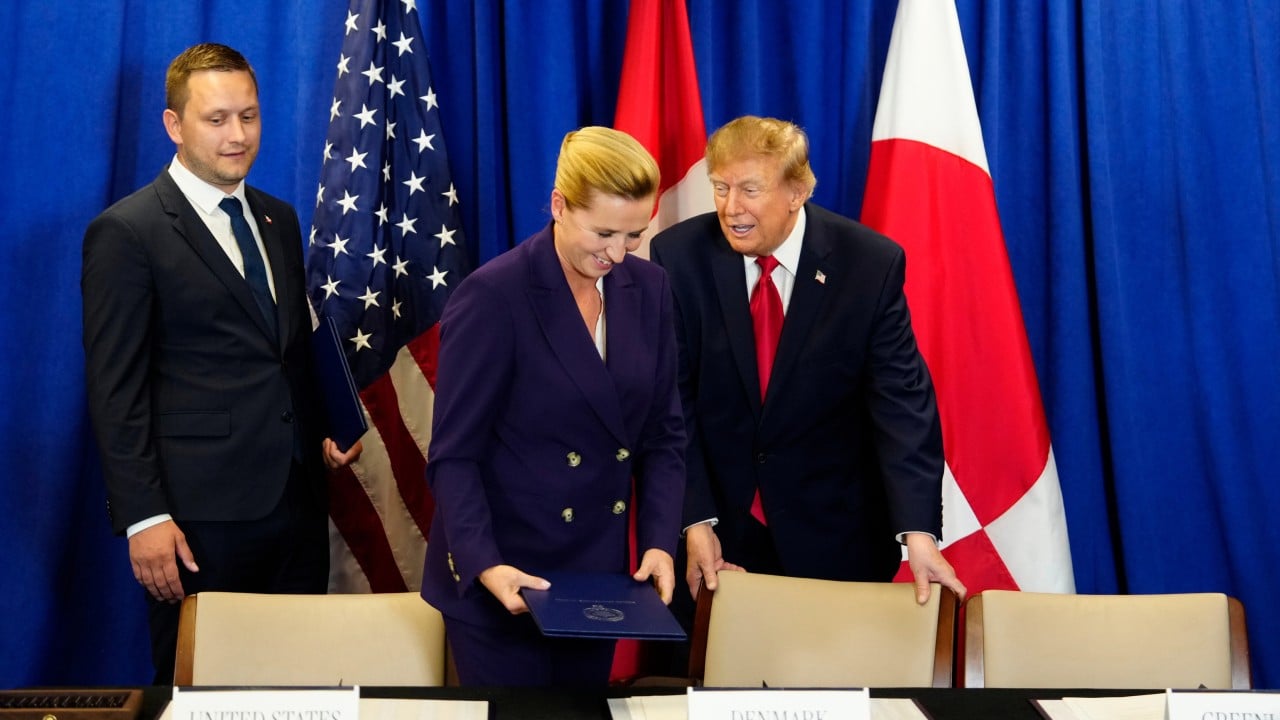
A treaty was signed. Ink dried on parchment. Hands were shaken across polished tables while outside, the great white expanse of the Arctic continued its ancient, indifferent grinding against the stone.
To understand why an agreement involving Donald Trump, Greenland, and Denmark matters, you have to throw away the standard vocabulary of modern diplomacy. Forget terms like strategic alignment or bilateral frameworks. Look instead at a lone fisherman in Tasiilaq looking out over a fjord choked with multi-year ice that is suddenly, terrifyingly, thinning at the edges.
Ice is retreating. And as it retreats, it leaves behind a vacuum.
For decades, the Arctic was nature's ultimate moat. It was a hostile, frozen fortress that protected nations from one another, a vast white desert where no navy could sail and no missile could easily find a stable trajectory. But the climate is writing a new geography. Waters that were impassable since the last ice age are opening up into summer highways. Beneath the seabed lie vast, untouched caches of rare earth minerals, oil, and natural gas—the very fuel of the next century's technological economy.
When politicians in Washington first started murmuring about purchasing Greenland a few years ago, the polite society of European diplomacy laughed behind its collective hand. It sounded like an absurd real estate transaction, the whim of a billionaire president who looked at a massive glacial island the size of a continent and saw a trophy to pin on a wall.
The laughter missed the point entirely.
It was never about real estate. It was about positioning on the board.
Consider what happens when a superpower stares across the pole and realizes that its rivals—specifically China and Russia—are quietly building deep-water ports, reopening Soviet-era military installations, and mapping the seabed with scientific vessels that carry dual-use hardware. The Arctic is no longer a frozen periphery. It is the shortest, most dangerous highway between the old world and the new.
Denmark, a small and prosperous nation that has quietly shouldered the administrative weight of Greenland for centuries, found itself caught in an impossible squeeze. Copenhagen is bound by history, law, and a genuine post-colonial affection for the Greenlandic people, who have steadily marched toward self-governance. But Denmark simply lacks the naval tonnage, the surveillance satellites, and the defense budget to police a million-plus square miles of melting wilderness against superpowers with infinite appetites.
Enter the art of the deal, translated into the harsh dialect of polar survival.
The agreement signed by these three entities is not a transfer of ownership. It is something much more modern and fragile: a mutual defense and economic compact born of shared anxiety. It is an acknowledgment that the United States cannot secure its northern flank without Greenlandic cooperation, that Greenland cannot build a modern sovereign economy without massive foreign capital, and that Denmark cannot afford to stand in the way of a storm it cannot control.
Imagine standing on the shoreline of Nuuk today.
The air smells of salt, old snow, and diesel exhaust from the harbor cranes. The city is changing faster than any place on Earth. Traditional hunting cabins sit within sight of newly paved roads meant to service mining exploratory teams. The young people speak Kalaallisut at home, Danish at school, and fluent English on TikTok. They are navigating a dizzying transition from an ancient subsistence culture directly into the crosshairs of twenty-first-century geopolitical competition.
They do not want to trade one master for another.
That is the hidden friction beneath every clause of this new agreement. Greenlandic leaders have made it clear that their island is open for business, but not for occupation. They want economic independence. They want the wealth generated by their rare earth deposits—the neodymium and dysprosium needed for electric vehicle motors and wind turbines—to stay on the island, funding hospitals, schools, and a future where their children do not have to leave for Copenhagen to find a profession.
The United States, meanwhile, secures its radar sites, its early-warning missile tracking systems at Thule Air Base, and a vital diplomatic anchor that keeps adversaries from planting flags in America's backyard.
It is a delicate, high-stakes dance executed on thin ice.
History is littered with treaties signed by men in warm rooms who fundamentally misunderstood the terrain they were dividing. Think of the pencil lines drawn across the deserts of the Middle East a century ago, lines that still bleed today. The Arctic is different because the terrain itself is moving. You cannot draw permanent borders on a shifting crust of pack ice.
Every summer, the melt arrives earlier. Every winter, the freeze comes later. The physical reality of the North is rebelling against human legal frameworks, demanding constant adaptation.
When the news cycle moves on—as it always does, chasing the next political crisis or market tremor—the people of the high north will still wake up to the dark winter mornings and the howling gales off the Denmark Strait. They will still look out at the icebergs rolling lazily past like ancient cathedrals of glass.
Only now, the shadows lengthening across those bergs are longer, darker, and cast by foreign towers. The stand-off in the Arctic has not ended; it has simply entered its next, more complicated phase. The treaty is signed, the handshakes are photographed, but the wind off the ice sheet remains as cold and honest as ever, whispering that no piece of paper can ever truly tame the pole.