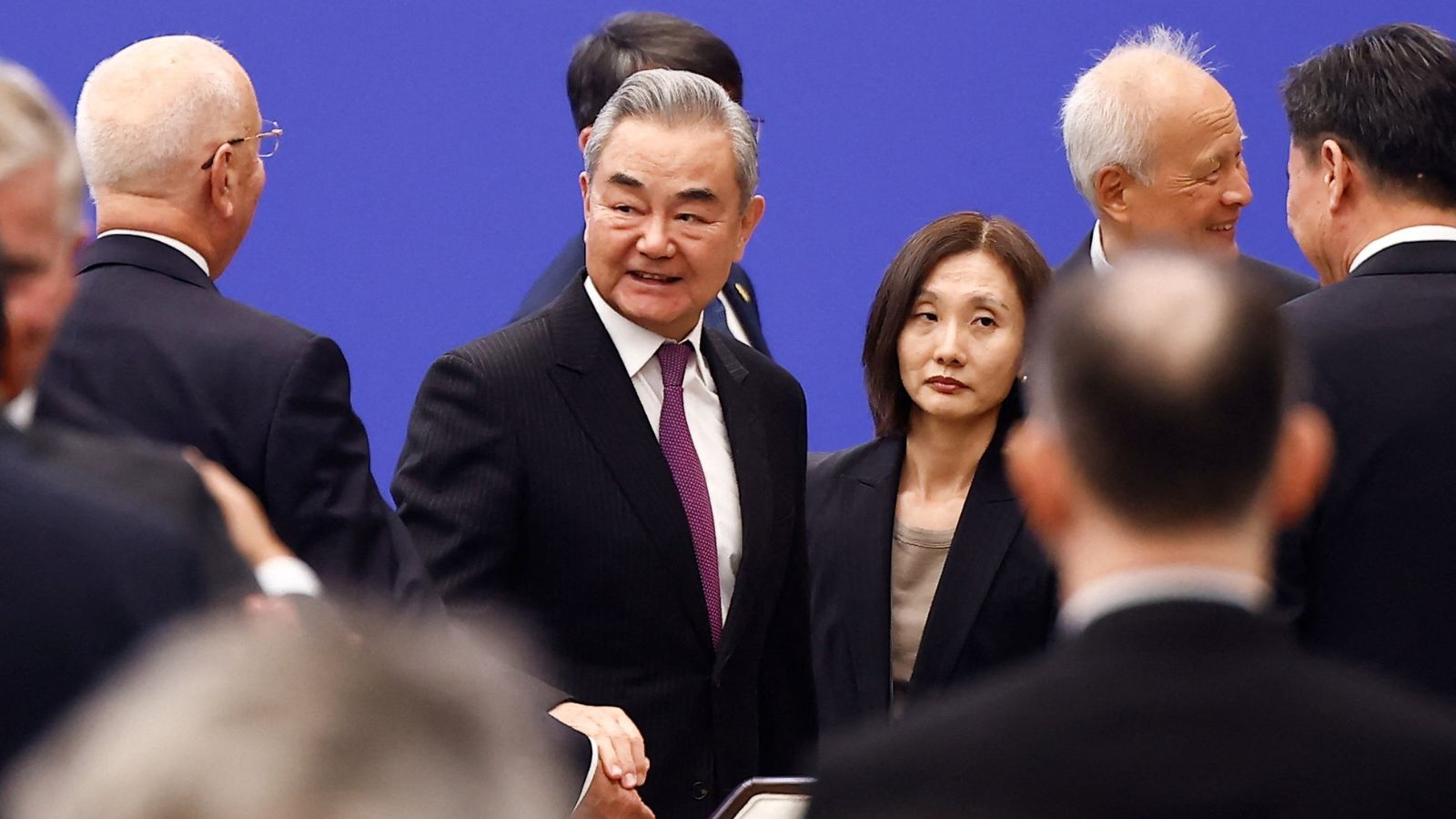
Diplomatic calls for stronger multilateral governance over the deep sea and outer space treat two physically distinct frontiers as a single moral debate, masking a hard contest over scarce orbital shells, seabed minerals, and rule-making authority. When Beijing pushes for stronger governance across the deep sea, polar regions, and outer space at its Global Governance Forum, the surface message centers on multilateralism, peaceful use, and greater representation for developing states. Standard wire coverage stops at that diplomatic framing. A sharper analysis looks past the headline call for cooperation and examines the physical constraints, legal frictions, and institutional incentives that turn ungoverned or under-regulated domains into strategic leverage points.
Standard news summaries treat diplomatic rhetoric as the main event rather than a signal of underlying structural pressure. That framing misses three causal links that drive frontier politics. First, physical congestion and resource extraction create externalities that existing treaties cannot price or police cleanly. Second, rules written when only a handful of governments operated in a domain fail when commercial operators and dozens of national programs enter at once. Third, whichever coalition shapes standards, registries, and dispute-settlement norms early gains durable influence over access and compliance.
The Structural Anatomy of Frontier Governance
To evaluate why calls for stronger deep-sea and orbital governance keep recurring, it helps to separate the problem into four structural layers:
- Physical Excludability and Congestion: Low-Earth orbit faces physical crowding and collision risk from expanding satellite constellations and debris, while deep-sea vents and polymetallic nodule zones involve high-pressure environments where acoustic and sediment disturbances affect surrounding ecosystems.
- Property and Access Rules: Outer space governance rests on the 1967 Outer Space Treaty, which bars national appropriation while leaving commercial resource rights and operational deconfliction heavily contested. Deep-sea areas beyond national jurisdiction fall under the United Nations Convention on the Law of the Sea and the International Seabed Authority framework, where environmental standards, revenue sharing, and exploitation rules remain contentious.
- Verification and Enforcement Capacity: Neither the deep ocean floor nor orbital trajectories allow easy, low-cost inspection by neutral third parties. States can declare peaceful intentions while deploying dual-use technologies—such as rendezvous and proximity-operations spacecraft or autonomous underwater vehicles—that serve civilian science and strategic surveillance alike.
- Institutional Legitimacy: Developing nations often lack the capital and technical fleets required to participate on equal terms in deep-sea mining or orbital launches, giving diplomatic appeals for "common heritage" and fairer representation real bargaining weight in multilateral forums.
Distinguishing between known facts and educated hypotheses keeps the analysis grounded. It is a documented fact that senior Chinese officials have used high-profile diplomatic venues—including the Global Governance Forum—to call for stronger governance of the deep sea, polar regions, and outer space alongside broader UN-centered multilateralism and Global South representation. It is an educated hypothesis, rather than a proven fact, that Beijing's push is calibrated primarily to constrain rival bilateral alignment frameworks and position itself as a standard-setter for late-entering states. Both readings can be true in part without collapsing into conspiracy or naive acceptance of official communiques.
Why Standard Coverage Misses the Cause-and-Effect Chain
Wire reports often frame a call for "stronger governance" as a binary choice between cooperation and rivalry. In practice, governance debates follow a sharper cause-and-effect sequence.
Rapid cost reductions in launch vehicles and autonomous marine robotics lower the barrier to entry. Lower entry costs increase the number of active operators, which raises the frequency of near-misses, signal interference, and ecological disruption. Once operational friction rises, incumbent and rising powers both face incentives to write rules—not necessarily out of altruism, but to lock in favorable operating norms, protect high-value assets, and prevent unilateral actions by competitors from creating irreversible facts on the ground.
Consider a hypothetical operator deploying a swarm of small satellites for Earth observation and communications. Even without hostile intent, orbital shell crowding, radio-frequency coordination, and end-of-life deorbiting create shared costs across every operator in that altitude band. A similar dynamic plays out on the seabed: deep-water mining trials or subsea cable maintenance in remote waters raise questions about plume dispersion, cable security, and regulatory jurisdiction long before commercial extraction reaches maturity.
People searching for clarity on this topic usually want to know four practical things: why the deep sea and outer space are grouped together, how current international law falls short, what role developing countries play in these negotiations, and whether treaties alone can stop friction.
- Why group deep sea and outer space together? Both sit largely outside routine national territorial control, demand high upfront capital and specialized engineering, and carry dual-use security implications alongside commercial and scientific value.
- Why do existing rules feel stretched? Legacy frameworks were drafted for slower operational tempos and fewer non-state actors, leaving gaps around debris remediation, commercial resource extraction, and real-time collision avoidance.
- Why does Global South representation matter? Broad coalitions shape voting majorities and moral authority in UN bodies, meaning major powers compete for diplomatic alignment with emerging economies that control votes, regional geography, or future supply chains.
- Can rules alone prevent conflict? Legal text helps only when paired with verifiable telemetry, transparent reporting, and mutual cost penalties for non-compliance.
Operational Trade-Offs and Strategic Limits
Anyone advising a government agency, defense planner, or commercial enterprise on frontier strategy has to account for three operational bottlenecks.
The first bottleneck is the dual-use dilemma. A robotic arm that services a commercial satellite can also grapple an adversary's spacecraft; a deep-sea survey vessel mapping mineral deposits can also map undersea cables or acoustic corridors. Because technical capabilities overlap, diplomats cannot separate "peaceful governance" from strategic competition through declarations alone.
The second bottleneck is enforcement asymmetry. Binding rules without verification favor actors willing to bend norms at the margin, while overly rigid rules without enforcement can penalize transparent operators who comply in good faith. Negotiators often trade specificity for consensus, producing broad principles that sound aligned on paper while leaving key terms open to rival interpretations.
The third bottleneck is institutional speed. Multilateral rule-making moves by consensus or slow diplomatic cycles, whereas hardware deployment, constellation launches, and subsea infrastructure upgrades move on engineering schedules. Waiting solely for grand treaties leaves operational gaps open year after year.
A rigorous approach treats governance proposals as strategic moves with measurable consequences rather than settling for surface-level summaries. Track three concrete indicators over the coming quarters: draft legal text and technical standards submitted to UN bodies, binding rules on debris mitigation and deep-sea environmental thresholds, and bilateral or minilateral technical agreements that set de facto operating habits.
The immediate strategic play for policymakers and enterprise leaders is to pair diplomatic engagement with verifiable technical baselines—such as open orbital conjunction data, transparent environmental impact metrics, and clear liability rules—rather than treating multilateral communiques as either a cure-all or pure theater.