The traditional promise of moving to America is losing its grip on the European imagination, and it’s happening right at the top of government.
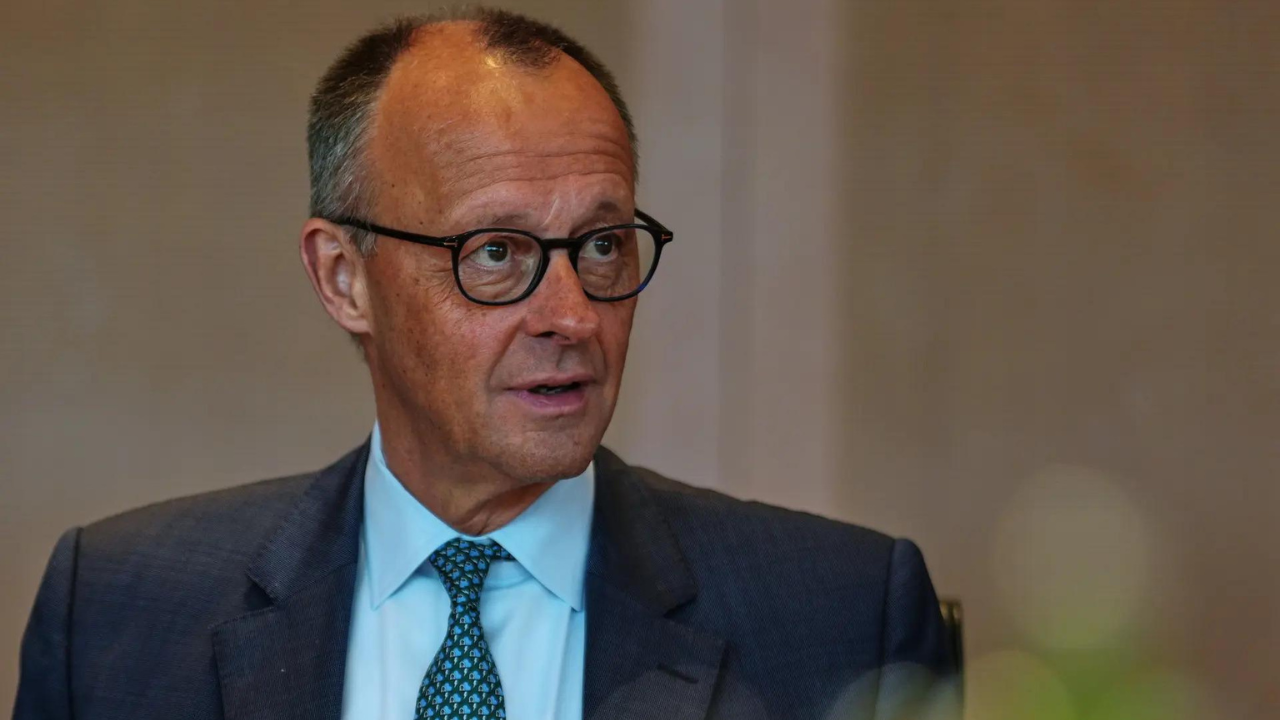
German Chancellor Friedrich Merz just made that shift incredibly blunt. Speaking to a young audience at a Catholic convention in Wuerzburg, Germany, the 70-year-old father of three dropped a rhetorical bomb that reflects a massive chill in transatlantic relations. He told the crowd that he wouldn't advise his own kids to live, study, or work in the United States right now.
Think about that. This isn't a radical left-wing activist talking. Merz is a staunch establishment conservative, a millionaire corporate lawyer, and a lifelong, card-carrying transatlanticist who has spent decades championing Western alliances. When a leader like him tells the next generation to stay away from America, something fundamental has broken in the relationship between Washington and Berlin.
The Economic and Social Breakdown
Merz didn’t just throw shade at the American lifestyle for the sake of it. He pointed directly to a deteriorating social climate and a harsh reality that many young professionals are facing on the ground.
Up until recently, the common wisdom was that a top-tier university degree in the US was a golden ticket to a high-paying career. Merz explicitly challenged that assumption. He noted that the question of what well-educated young people can achieve in America is answered very differently today than it was even a year ago. Today, the highly educated in America are facing major difficulties finding jobs.
He’s pointing to a shift that many economists have been tracking. Between massive corporate tech layoffs, the aggressive adoption of automation, and an increasingly volatile economic environment, the entry-level market for high-skilled workers in the US has tightened significantly. Combine that with skyrocketing tuition costs and the lack of a social safety net, and the risk-to-reward ratio of moving across the Atlantic looks terrible compared to what's available at home.
Beyond the job market, Merz targeted the toxic domestic environment. He cited a rapidly changing, hostile social climate under President Donald Trump. The ongoing culture wars, deep political polarization, and protectionist economic policies have made America look less like a land of boundless opportunity and more like a destabilized society trying to manage its own internal chaos.
Tensions Boiling Over Behind Closed Doors
To understand why Merz is being this direct, you have to look at the brutal geopolitical boxing match happening behind the scenes between his chancellery and the White House. This isn't just friendly advice for students; it’s a direct reflection of a massive diplomatic rift.
The relationship between Merz and Trump has been spiraling for months, driven by major disagreements over global security and trade:
- The Iran Disconnected: Merz openly criticized the Trump administration’s execution of the war in Iran, publicly stating that the US was being "humiliated" by the Iranian leadership due to a total lack of exit strategy.
- Troop Reductions: That "humiliation" comment infuriated Trump, leading Washington to announce a partial military withdrawal, pulling 5,000 American troops out of Germany.
- The NATO Friction: During the Munich Security Conference, Merz warned that the US isn't powerful enough to "go it alone" in an era of great power rivalry, taking a swipe at the administration's isolationist rhetoric.
Trump fired back on social media, telling Merz to spend less time interfering with US foreign policy and more time fixing Germany's own issues with energy and immigration. By telling young Germans to avoid the US, Merz is hit back where it hurts—America's soft power reputation as the world's premier talent magnet.
Pitching Germany as the Better Alternative
Merz’s speech wasn't just a critique of American decline; it was a calculated pitch for German national pride. He argued that Germans are too prone to living in a constant "disaster mode" and urged the younger generation to look at their own country with more optimism.
"I firmly believe that there are few countries in the world that offer such great opportunities, especially for young people, as Germany," Merz told the crowd.
He's trying to flip the script. While the US offers hyper-competitive markets, high risk, and a fractured social fabric, Germany offers a robust public education system, strong labor protections, and an economy that, despite its current energy and industrial challenges, doesn't force people to gamble their healthcare or financial stability just to get an education.
Reassessing Your Next International Move
If you're a student, researcher, or young professional planning your next global move, this high-level political spat offers some serious practical takeaways. You can't rely on twenty-year-old assumptions about where the best opportunities lie.
First, diversify your educational and career targets. Don't look at the US as the automatic default for career growth. Look hard at European hubs where tuition is subsidized, visa paths for skilled professionals are becoming more streamlined, and the local social climate is vastly more stable.
Second, if you do choose to pursue a path in the US, maximize your leverage. Focus exclusively on specialized fields that are resilient against shifting economic climates, and secure ironclad corporate sponsorship before making major financial commitments. The international talent market is shifting fast, and the smart move right now is to prioritize stability and long-term security over old-school prestige.
To see the direct coverage of the Chancellor's remarks and hear the specific language he used regarding American professional opportunities, check out this report on Merz tells 'own children' not to work or study in the US. This quick breakdown illustrates the exact tone Merz used to address the changing social dynamics across the Atlantic.