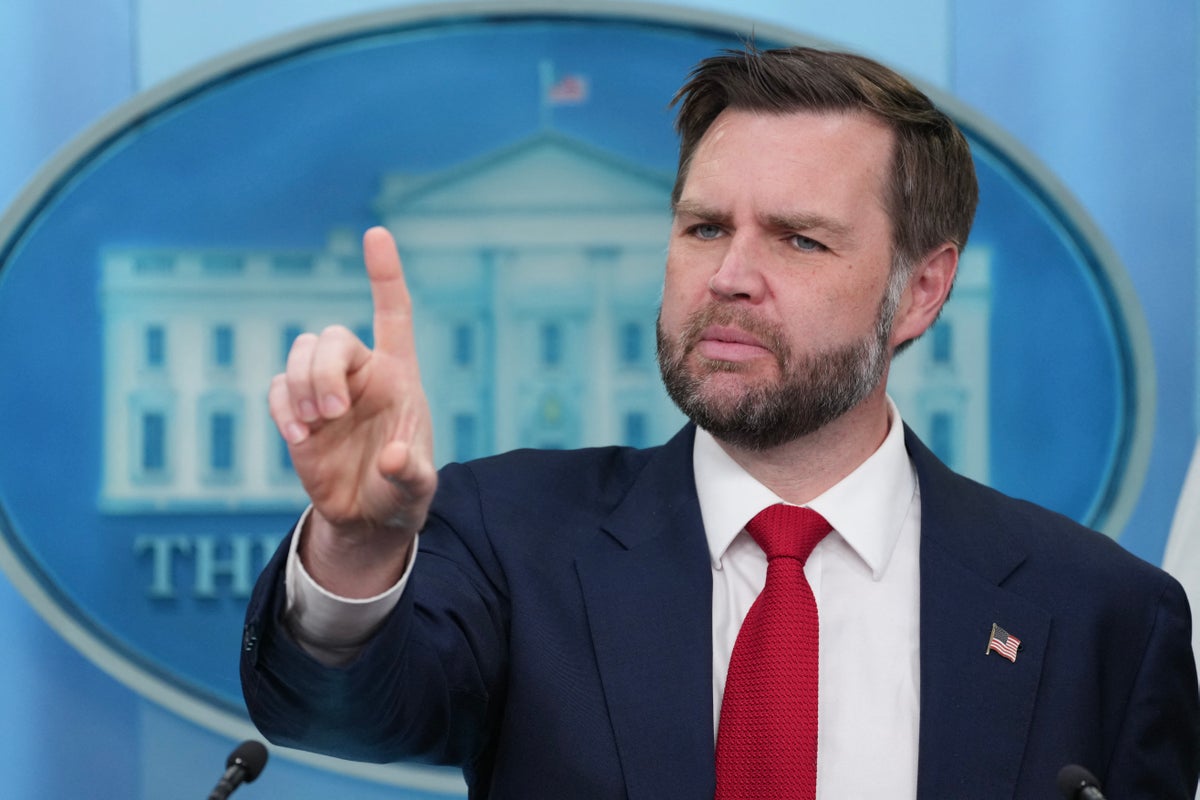
The strategic rift between Washington and Jerusalem regarding the newly signed US-Iran Memorandum of Understanding (MOU) exposes a fundamental miscalculation in contemporary geopolitical leverage. By issuing an explicit warning to the Israeli cabinet to cease public condemnation of the deal, US Vice President JD Vance brought into sharp focus the structural asymmetric dependency that underpins the alliance. The confrontation reveals that the primary constraint on state behavior in the Middle East is no longer ideological alignment, but the raw physics of defense supply chains and macroeconomic architecture.
Evaluating the agreement requires analyzing the specific mechanics of the MOU, the leverage asymmetry between the US and Israel, and the regional equilibrium the Trump administration is attempting to establish.
The Strategic Architecture of the MOU
The US-Iran agreement operates via two primary mechanisms designed to decelerate conflict through economic re-engagement and verifiable arms containment. The political rhetoric surrounding the deal often mischaracterizes these parameters, but an objective breakdown of the bilateral commitments reveals a clear transactional framework.
The Iranian Concession Vector
- Uranium Stockpile Eradication: Iran commits to the verified destruction of its highly enriched uranium stockpile, executed under the direct supervision of the International Atomic Energy Agency (IAEA) and the United States.
- Logistical De-escalation: Tehran agrees to cease active maritime restrictions in the Strait of Hormuz, restoring predictable transit dynamics to global energy corridors.
- Proxy Containment: The text mandates a cessation of regional missile strikes, specifically targeting the cross-border escalation dynamics operating in Southern Lebanon.
The Western Incentive Vector
- Sanctions Modernization: The US enters a 60-day negotiation window aimed at the phased relaxation of crude oil export sanctions.
- Capital Liquidation: While Iranian sources claim an immediate transfer of $24 billion in frozen assets, the functional structure of the deal ties capital access to verifiable verification milestones.
- The Rehabilitation Fund: The long-term architecture envisions a prospective $300 billion infrastructure and rehabilitation fund dedicated to Iranian economic development, contingent on compliance with the non-proliferation parameters.
Quantifying the Dependency Function
The core of the diplomatic friction stems from an asymmetric dependency function that limits Israel's operational autonomy. Vance's public reminder that "two-thirds of the defensive weapons that have protected Israel have been built by American hands and paid for by American tax dollars" highlights a mathematical reality that standard sovereign defense models frequently obscure.
Dependency Index = (Imported Munitions Volume / Total Consumed Munitions) × (Annual Foreign Military Financing / Total Defense Budget)
When this index approaches critical thresholds, the client state loses the capacity to project long-term military power independent of the patron's logistical cycle. The current model shows that Israel consumes precision-guided munitions and air defense interceptors at a rate that outpaces domestic manufacturing capacity. This creates a hard logistical ceiling.
A sudden interruption or slowdown in the American defense supply chain introduces an existential vulnerabilities vector. Air defense systems like the Iron Dome, David's Sling, and Arrow matrices rely on a steady influx of components funded by the standard $4 billion annual US military assistance allocation, alongside supplemental emergency appropriations. By linking these defense supplies to political alignment regarding the Iran deal, the US administration has converted an assumed defense guarantee into an explicit instrument of compliance.
The Divergence of Threat Horizons
The friction between Washington and Jerusalem is driven by a fundamental divergence in how each state defines its threat horizons and calculates its utility functions.
US Utility Function = Maximization of Global Trade Stability + Minimization of Kinetic Commitments + Energy Corridor Security
Israeli Utility Function = Absolute Eradication of Proximate Kinetic Threats + Zero-Tolerance for Regional Nuclear Capacity
For the United States, the war involving Iran has reached a point of diminishing returns. The closure of the Strait of Hormuz and the persistence of regional missile warfare act as tax on global supply chains, driving inflationary pressures and disrupting maritime logistics. The MOU represents an effort to offload tactical management of the region in favor of a stable, macroscopic balance of power. Washington views the re-integration of Iran into the global energy market as a necessary trade-off to secure the maritime commons and reduce its own military footprint.
Israel operates under a completely different risk calculation. From Jerusalem's perspective, any agreement that leaves Iran’s underlying centrifugal infrastructure intact is a structural failure. The core Israeli critique rests on the "Capital Fungibility Paradox": economic relief intended for civic infrastructure invariably frees up domestic revenue for the Islamic Revolutionary Guard Corps (IRGC) and its proxy network. Even if the MOU successfully limits immediate nuclear enrichment, the accompanying economic revitalization creates a more resilient adversary over a ten-year horizon.
The Middle East Equilibrium Model
The Trump administration’s strategic framework relies on a distinct hypothesis: regional stability can be achieved by aligning the security interests of the Gulf Cooperation Council (GCC) with American economic pragmatism. Vance noted that unlike the 2015 Joint Comprehensive Plan of Action (JCPOA)—which faced intense resistance from Gulf states—the current MOU has been received differently by regional capitals.
This shift reflects a changing economic calculus. The Abraham Accords framework transformed the regional security architecture by creating deep commercial and technological ties between Israel and the Gulf states. However, the Gulf monarchies also view containment through economic integration as a more predictable strategy than sustained kinetic warfare. A normalized Iran, bound by Western economic incentives and trade agreements, presents a lower systemic risk to local capital markets and megaprojects than an isolated Iran with nothing to lose.
The administration’s long-term play is to construct a regional matrix where Israel is granted a structural "seat at the table" within a broader economic framework, but at the cost of its absolute veto over US-Middle East policy.
Strategic Action Plan for Israeli Defense Planning
Jerusalem’s current public opposition strategy has run into a wall of asymmetric leverage. To preserve its strategic autonomy without triggering a catastrophic supply-chain disruption, the Israeli defense establishment must shift from vocal political resistance to structured defense rebalancing.
- Accelerate the Munitions Autarky Initiative: Israel must rapidly expand its domestic production capacity for critical components, specifically iron-cast artillery, unguided munitions, and base-level air defense interceptors. While high-end platforms like F-35 variants will remain tied to US manufacturing, reducing the dependency ratio on high-volume consumables is essential to building strategic flexibility.
- Pivot to Asymmetric Counter-Proxy Mechanics: If the US enforces restrictions on conventional cross-border campaigns in Lebanon, Israel must reallocate defense resources toward cyber, electronic warfare, and targeted economic interdiction tools designed to disrupt proxy logistics without triggering overt regional escalations.
- Formalize Direct Redline Verification Protocols: Rather than trying to dismantle the MOU entirely, Israeli intelligence must work to establish direct, independent verification parameters with the IAEA. By standardizing unambiguous, quantifiable metrics for what constitutes an Iranian breach, Jerusalem can build a legally defensible foundation for unilateral kinetic intervention if the agreement fails.