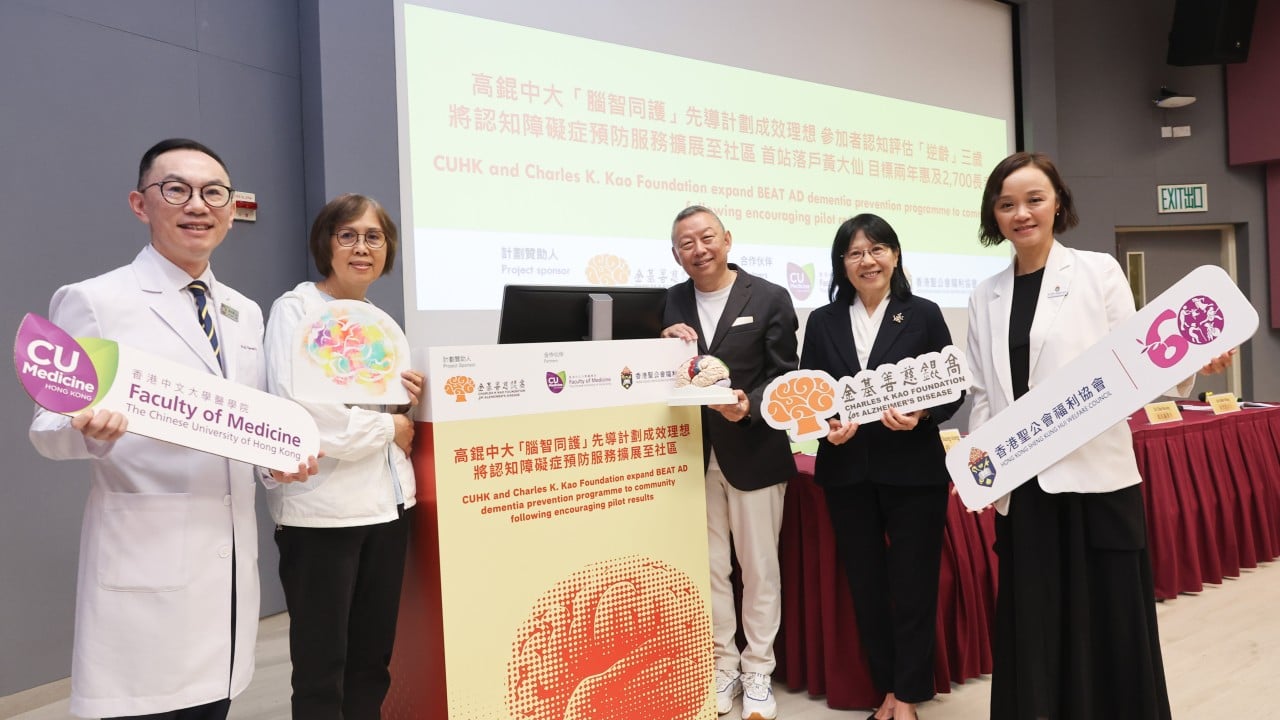
Every tech journalist in Asia is clapping like seals over the Chinese University of Hong Kong offering free AI dementia screenings to 2,700 seniors.
They see a heartwarming press release. A prestigious university, an aging population, a shiny new algorithm scanning retinas or analyzing speech patterns, and a promise to catch cognitive decline before it ruins lives. It reads like an easy win. Who could possibly argue against free healthcare for the elderly?
Anyone who actually understands biostatistics, clinical neurology, and what happens when you unleash predictive algorithms on a massive, low-prevalence population.
I have watched health-tech startups burn through tens of millions of dollars chasing this exact fantasy. They build a dazzling diagnostic tool in a pristine lab, roll it out to the general public with zero friction, and accidentally manufacture a public health crisis out of thin air. When you take an AI model trained on curated clinical datasets and point it at 2,700 regular people walking down the street in Hong Kong, you do not just find hidden disease. You generate an avalanche of false positives, overwhelm already strained neurology clinics, and hand healthy seventy-year-olds a psychological death sentence.
The Math Problem Nobody Wants to Put in the Press Release
The lazy consensus in medical journalism treats screening as an unqualified good. Catch it early, fix it early. That logic works brilliantly for high blood pressure or localized skin cancer. It falls apart completely when applied to neurodegenerative diseases with low baseline prevalence in the general community.
Let us look at the actual mechanics of diagnostic testing. Every screening tool lives and dies by two metrics: sensitivity (catching the people who actually have the disease) and specificity (clearing the people who do not).
Suppose CUHK's new AI tool is an absolute triumph of engineering. Let us give it 90% sensitivity and 90% specificity. In a lab setting, those numbers get you published in Nature and earn you standing ovations at conferences.
Now, take that exact same 90/90 algorithm and run it on 2,700 community-dwelling seniors. In a general senior population—not a specialized memory clinic where people already have symptoms—the true prevalence of early-stage, actionable dementia might sit around 5%.
Here is what happens to those 2,700 people:
- 135 seniors actually have early dementia. The AI catches 90% of them, flagging 122 true positives and missing 13.
- 2,565 seniors do not have dementia. Because the test has 90% specificity, it still gets 10% of them wrong. That means 257 completely healthy people get flagged as high-risk.
Look at the scoreboard. Out of 379 seniors who walk out of that screening center terrified that their minds are slipping away, 257 of them are completely fine. The positive predictive value—the actual probability that a positive result means you have the disease—is roughly 32%.
You might as well flip a weighted coin. Yet the headlines frame this as a triumph of precision medicine.
Screening Is Not Diagnosis, Yet Patients Treat Them Identically
Clinicians love to hide behind technical definitions. When pressed on false positives, the standard defense is always the same: "This is just a preliminary risk stratification tool, not a formal diagnosis. Positive cases are referred for confirmatory testing."
That distinction exists only in the minds of researchers. It does not exist in the living room of a 74-year-old retired teacher who just got a printout saying an artificial intelligence detected biomarkers of Alzheimer's in the back of her eye.
Once that seed is planted, every normal lapse of human memory transforms into evidence of decay. Forgetting where you put your keys is no longer an annoyance; it is the beginning of the end. Misplacing a name becomes a source of cold sweat. The psychological toll of a false positive in cognitive screening is brutal, measurable, and completely ignored by the engineers who measure success strictly by area-under-the-curve metrics.
And what happens next? Those 257 false positives clog up the exact specialist memory clinics that the 122 true positives desperately need to get into. Confirmatory testing for dementia is not a quick blood draw. It requires multi-hour neuropsychological batteries, expensive structural MRI scans, amyloid PET imaging, or invasive lumbar punctures to check cerebrospinal fluid.
Hong Kong’s public healthcare system—the Hospital Authority—already faces notorious wait times for specialist outpatient clinics, often stretching well over a year for non-urgent neurology referrals. Dumping hundreds of algorithm-generated anxiety cases onto an overloaded specialist pipeline does not save the healthcare system money. It paralyzes it.
The Uncomfortable Truth About "Early Detection"
Let us dismantle the biggest myth driving this entire wave of AI screening: the idea that catching dementia two or three years earlier dramatically alters the patient's trajectory.
If we had a cheap, safe, widely available cure that stopped Alzheimer's dead in its tracks, screening every adult over sixty would be a moral imperative. We do not have that.
We have monoclonal antibodies like lecanemab and donanemab. Let us be brutally honest about what these drugs actually do, stripping away the pharmaceutical marketing gloss. In clinical trials, they modestly slow the rate of cognitive decline by roughly 25% to 35% over 18 months. They do not restore lost memory. They do not halt the disease. They buy a few months of stability at a staggering financial cost, while carrying serious risks of ARIA—amyloid-related imaging abnormalities, which is medical shorthand for brain swelling and microhemorrhages.
To even qualify for these therapies, a patient has to undergo extensive genetic testing (for the APOE4 gene) and repeated MRI monitoring. The vast majority of seniors screened in a community program in Hong Kong will never qualify for, afford, or tolerate these infusions.
So, what are we actually offering the 122 true positives identified by the AI?
Lifestyle advice. Exercise more. Eat a Mediterranean diet. Control your blood pressure. Stay socially engaged. Do crossword puzzles.
Think about the absurdity of that equation. We are deploying machine learning models, retinal cameras, and massive university grants just to tell seniors to eat their vegetables and go for a brisk walk—advice that is completely free, carries zero risk of false-positive trauma, and works just as well if you start doing it without a terrifying AI risk score hanging over your head.
What Everyone Gets Wrong About AI Biomarkers
The tech press loves the novelty of how these tools work. Whether CUHK is using retinal vessel imaging (a field where their ophthalmology department has done genuinely impressive foundational work) or vocal biomarker analysis, the pitch is always seductive: Your eyes are a window to your brain!
Scientifically, that is true. The retina is an extension of the central nervous system. Microvascular changes in the eye often mirror microvascular changes in the cerebral cortex.
Here is the nuance the press releases leave out: microvascular changes are notoriously non-specific.
A retinal scan showing narrowed arterioles or altered vessel density does not just point to Alzheimer's disease. It points to chronic hypertension. It points to poorly controlled Type 2 diabetes. It points to systemic atherosclerosis, kidney disease, or simply the normal wear and tear of living for eight decades.
When an AI model is trained to separate "confirmed Alzheimer's patients" from "healthy controls," it often cheats. In machine learning, we call this shortcut learning. The algorithm notices that the dementia group has slightly worse vascular health, higher rates of diabetes, or subtle differences in how they hold their head in front of the camera. It learns to detect frailty and vascular aging, slaps a "Dementia Risk" label on the output, and fools researchers into thinking it found a magic neurological signature.
Imagine a scenario where a 78-year-old man with borderline high blood pressure and mild cataracts sits down for this free AI screening. The camera snaps his retina. The algorithm spots vascular stiffness caused by his blood pressure, cross-references his age, and flags him as high-risk for cognitive decline. He does not have dementia. He has untreated hypertension. Yet he gets funneled into a cognitive care pathway instead of a standard primary care clinic.
The Questions People Are Actually Asking (And Why They Are Asking the Wrong Ones)
When news like this breaks, search engines light up with predictable anxieties. Let us cut through the noise and answer what people are really wondering, without the sanitized PR spin.
"How accurate is AI at detecting dementia early?"
In controlled studies where half the participants already have diagnosed dementia and the other half are squeaky-clean healthy volunteers, AI models routinely hit 85% to 92% accuracy. In the real world, where people have messy overlapping conditions like depression, sleep apnea, vitamin B12 deficiencies, and medication side effects, real-world accuracy drops off a cliff. Never confuse laboratory validation with clinical utility.
"Should my aging parents get a free AI dementia screening?"
If your parents are having zero memory issues and functioning independently, no. Routine screening of asymptomatic older adults is explicitly not recommended by major medical bodies like the U.S. Preventive Services Task Force (USPSTF) for a reason: there is insufficient evidence that the benefits outweigh the harms of labeling, anxiety, and unnecessary downstream testing. If you are noticing real changes—repeating stories, getting lost in familiar places, struggling to pay bills—skip the AI screening booth entirely and take them straight to a neurologist or geriatrician for a real clinical workup.
"Can AI replace a real doctor for memory loss?"
Not even close. Dementia is a clinical diagnosis of exclusion. A sharp geriatrician spends half their time ruling out reversible mimics of dementia—things like normal pressure hydrocephalus, thyroid dysfunction, severe depression (pseudodementia), or polypharmacy interactions where three different prescriptions are making an older adult foggy. An AI looking at a retinal photo or listening to a 30-second voice clip cannot look at a medication list or test reflexes.
Where the Money Should Actually Go
I am not arguing against AI in neurology. Used correctly, machine learning is phenomenal at automating tedious radiology reads, tracking disease progression in clinical trials, and helping primary care doctors triage complex cases when symptoms are already present.
I am arguing against mass community screening disguised as public health charity.
If a university or government wants to spend millions improving the lives of 2,700 seniors, taking retinal photos to predict an incurable condition is near the bottom of the list of high-impact interventions. Look at the 2024 Lancet Commission on dementia prevention, intervention, and care. Their data shows that nearly 45% of all dementia cases worldwide could theoretically be prevented or delayed by addressing 14 modifiable risk factors across the lifespan.
Notice what is on that list:
- Untreated hearing loss in midlife and late life.
- High LDL cholesterol and hypertension.
- Social isolation and depression.
- Physical inactivity and untreated vision loss.
If CUHK wanted to genuinely slash dementia rates among those 2,700 Hong Kong seniors, they would not put them in front of a predictive AI camera. They would use that funding to hand out free, properly fitted hearing aids to every senior with mild-to-moderate hearing loss.
We already have randomized controlled trial data—specifically the landmark ACHIEVE study published in The Lancet—showing that hearing intervention significantly slows cognitive decline in older adults at increased risk. Hearing aids carry zero risk of false-positive psychological trauma. They immediately improve quality of life, reduce social isolation, and keep the auditory cortex stimulated.
Yet hearing aids do not generate breathless tech headlines. An algorithm does.
Admitting the Flaw in My Own Argument
To be entirely fair to the researchers in Hong Kong, there is one undeniable upside to these massive community screening drives: data acquisition and public awareness.
You cannot build better diagnostic models without large, diverse, real-world datasets. Most existing AI models in neurology are heavily biased toward Western, white cohorts. Building a longitudinal dataset of 2,700 Southern Chinese seniors gives researchers invaluable baseline data that could, ten years from now, yield genuine breakthroughs when paired with better therapeutics. Furthermore, setting up screening booths in community centers forces families to talk openly about cognitive health, chipping away at the deep cultural stigma surrounding dementia in Chinese societies.
Those are legitimate academic and sociological wins.
They are just not clinical wins for the individual senior sitting in the chair today. When universities pitch research data collection as a "free health service," they blur the line between enrolling subjects in an experiment and providing proven medical care. Patients deserve to know which side of that line they are standing on before they look into the camera.
Stop celebrating the ability to predict a storm when you still refuse to hand out umbrellas.