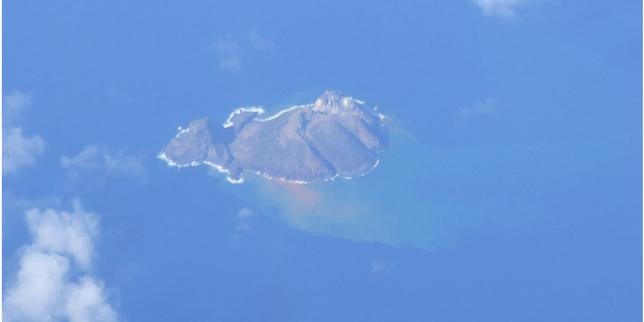
Paris just reaffirmed its sovereignty over Matthew and Hunter islands, and the geopolitical commentariat is losing its collective mind over colonial overreach. They want you to believe this is about nineteenth-century flag-planting, resource grabbing, and stubborn French refusal to let go of the map. They are wrong. Every single editorial shouting about French imperialism in the South Pacific misses the brutal, pragmatic reality of what is actually happening at the edge of the EEZ.
Paris does not care about the guano, the scrap metal, or the nesting seabirds on these two uninhabited volcanic stumps lying east of New Caledonia and southeast of Vanuatu. This is not about territory. This is about legal real estate, baseline mapping, and the quiet, high-stakes poker game of maritime jurisdiction.
Let us look past the lazy consensus of post-colonial grievance and examine why France is willing to spend diplomatic capital on a pair of rocks where nobody lives and nothing grows.
The Lazy Consensus Of Neo-Colonial Outrage
The standard narrative served up by regional desks in Canberra, Suva, and Port Vila is painfully predictable. France is clinging to the remnants of an empire. Vanuatu claims traditional ties and sovereignty based on proximity and the decolonization mandates of the United Nations. When the matter heads to the International Court of Justice, journalists trot out the same tired tropes about French hubris versus indigenous rights.
It is a comfortable framework because it requires zero thought. It fits neatly into the historical box of European powers refusing to exit the room.
I have spent enough time tracking maritime boundary disputes to know that sentimentality never dictates state behavior at sea. States fight over water, not dirt. Matthew and Hunter islands are barely specks of land, but under the United Nations Convention on the Law of the Sea, every square meter of land you own generates a massive acoustic and maritime exclusion radius around it.
France is not defending two piles of ash because it loves French Polynesia or New Caledonia too much to let go. France is defending the hundreds of thousands of square kilometers of exclusive economic zone attached to those islands. Surrender Matthew and Hunter, and you do not just lose two rocks. You push your maritime border back hundreds of miles, surrendering billions of dollars in seabed minerals, pelagic fisheries, and continental shelf rights to a rival jurisdiction.
Port Vila knows this. Paris knows this. And pretending this is a simple human rights dispute over customary land is either breathtakingly naive or deliberately dishonest.
The Legal Fiction Of Archipelagic Baselines
To understand why this ICJ docket matters, you have to look at how international maritime law actually functions, stripped of the moralizing rhetoric.
Vanuatu argues that Matthew and Hunter lie within its natural archipelagic waters. The argument relies on proximity and historical association. The geographic logic feels intuitive if you look at a standard flat map. Vanuatu is right there; France is thousands of miles away in Europe.
Maps lie. Law operates on geometry and precedent, not cartographic aesthetics.
France annexed these islands in the nineteenth century—Matthew in 1888, Hunter in 1882—and incorporated them administratively into New Caledonia. For over a century, successive French governments maintained a continuous administrative presence through charting, scientific expeditions, and occasional patrols. Under classical international law, effective occupation and continuous administration trump geographic proximity every single day of the week.
When Vanuatu gained independence in 1980 as the New Hebrides, the boundaries inherited from the Anglo-French condominium were a mess of colonial cartography. The independence settlement left ambiguities. Vanuatu claims the islands were historically known as Merigi and Alina and featured in local navigation lore. That might be true, but navigation lore does not create an Exclusive Economic Zone under modern treaty law.
If the International Court of Justice decides cases based on who sailed past a rock first three hundred years ago, half the borders on the globe dissolve by Tuesday afternoon. The court looks at title, continuity, and formal acts of sovereignty. On paper, France has an uncomfortably robust paper trail for two places nobody would visit on vacation.
Why The Pacific Pivot Changes The Math
Why bring this to the ICJ now? Because the geopolitical temperature in Oceania has radically shifted.
China is quietly writing infrastructure checks across the South Pacific, securing port access, and courting island nations with loans that come with invisible strings. In this environment, a fragmented Pacific is a vulnerable Pacific. Vanuatu is not operating in a vacuum. Its legal challenge is backed by regional solidarity frameworks within the Melanesian Spearhead Group and broader Pacific Islands Forum dynamics, where traditional leaders are increasingly willing to use international tribunals to box out traditional Western powers.
France sees the writing on the wall. If Paris yields on Matthew and Hunter under diplomatic pressure from Port Vila, the precedent collapses the entire French Indo-Pacific strategy.
Think about it from the Quai d'Orsay’s perspective. France is a resident power in the Indo-Pacific. It has millions of citizens living in New Caledonia, Wallis and Futuna, and French Polynesia. It maintains a permanent military deployment across the region precisely to act as a sovereign counterweight in a theater dominated by a US-China bi-polar chokehold.
If France rolls over on Matthew and Hunter, it sends a clear signal to Noumea and Papeete: Paris is folding its tent. That triggers an immediate acceleration of independence momentum in New Caledonia, where the Kanak independence movement has already weaponized international law against French control.
This dispute is not a local boundary squabble between a small island nation and a fading European giant. It is a stress test for the entire security architecture of the Western Pacific.
The Unspoken Cost Of Losing The Rocks
Let us play out the counter-factual. Imagine a scenario where France loses at the ICJ or decides to hand over Matthew and Hunter to Vanuatu as a gesture of post-colonial reconciliation.
What happens the next day?
First, the maritime boundary of New Caledonia shrinks inward. The overlapping claims disappear, and Vanuatu inherits full sovereign rights over the surrounding pelagic fisheries. For a nation like Vanuatu, whose economy relies heavily on tuna exports and licensing fees paid to foreign distant-water fishing fleets, expanding that EEZ is a massive fiscal windfall.
Second, the strategic geography of the Coral Sea shifts. Every submarine chokepoint, every fiber-optic cable route, and every transit corridor passing through that sector falls under a different regulatory regime.
Third, and most critically for Paris, the domestic political dam breaks. If New Caledonia loses territory through French diplomatic concession, the loyalist population feels betrayed, the independence movement smells blood in the water, and the fragile peace accords holding New Caledonia together face an existential crisis.
This is why French authorities reacted with immediate, unyielding firmness when Vanuatu formally moved forward with its ICJ application. Sovereignty in the modern era is indivisible. You cannot compromise on a rock without signaling that your entire perimeter is negotiable.
What Everyone Gets Wrong About Decolonization In The Pacific
The critical flaw in the standard commentary is the assumption that decolonization is a single event with a clear expiration date. People look at map lines drawn in the nineteenth century and assume they are inherently illegitimate simply because they were drawn by white men in pith helmets.
History is messy. Indigenous populations in the Pacific have legitimate grievances regarding French nuclear testing history, economic disenfranchisement, and political representation in New Caledonia. Conflating those legitimate domestic grievances with the legal status of two uninhabited volcanic vents, however, is intellectually lazy.
Vanuatu’s legal team knows that international law is conservative. It favors states that act like states—those that chart, patrol, legislate, and defend their borders consistently over decades. Vanuatu’s claim rests heavily on anti-colonial equity principles. But equity does not automatically override established state title without a major rewrite of international jurisprudence.
The ICJ will not rule based on who feels more indigenous to the region. It will rule based on treaty interpretation, historical administration, and the messy jurisprudence of maritime delimitation. And on those grounds, France’s legal armor is far thicker than the critics want to admit.
The Real Game Being Played At The Hague
The case before the International Court of Justice is not about saving seabirds or honoring ancient canoe routes. It is a proxy conflict over the future architecture of Indo-Pacific governance.
Vanuatu is using the court to force a major European power into a defensive posture, testing the limits of Western resolve in a region where Washington is distracted and Canberra is anxious. France is using the court to signal that its borders in the southern hemisphere are hard, fast, and non-negotiable.
When the verdict eventually drops, the losers will not just be the legal teams on the losing side. It will be everyone who mistook a high-stakes maritime boundary dispute for a sentimental history lesson.
The rocks are irrelevant. The water is everything. And France is not giving up a single drop.