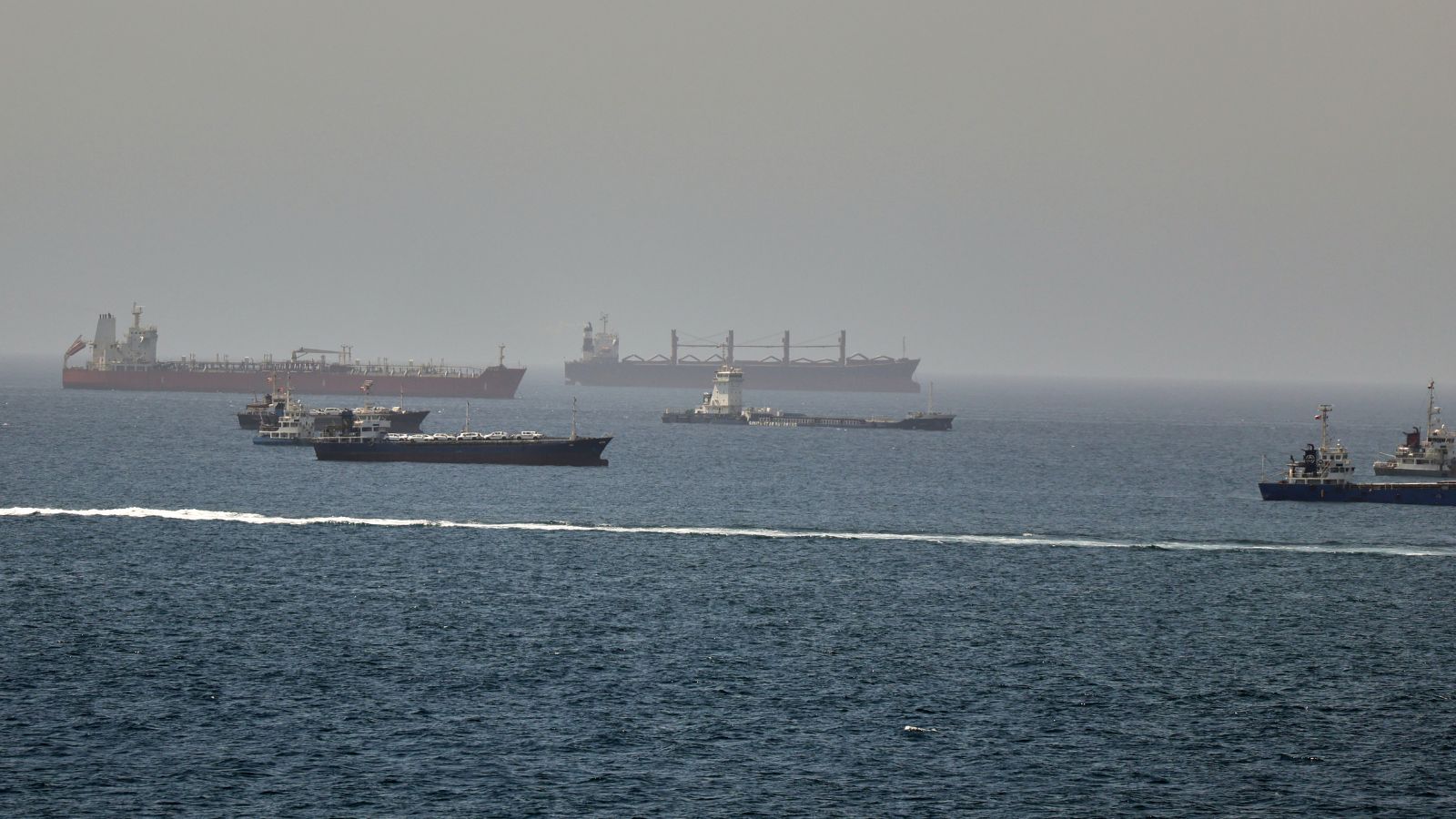
The tea in the galley of the Maran Centaurus was still hot when the deck beneath Captain Nikos Vassilakis shuddered.
It was not the deep, rhythmic thrum of a diesel engine fighting a heavy swell. This was a sharp, metallic crack that vibrated through the soles of his boots and rang in his teeth. A sound that does not belong on a merchant vessel. Two miles away, the jagged coastline of the Musandam Peninsula sat bathed in the harsh, white light of a mid-morning Persian Gulf sun. On paper, the waters of the Strait of Hormuz were supposed to be safer than they had been in a decade. Three days prior, diplomacy had done the unthinkable. The ink on the United States–Iran normalization treaty was barely dry. Stock markets were rallying. Global energy analysts were breathing a sigh of relief.
Then the drone hit.
We tend to look at geopolitics through the lens of maps, signed documents, and press conferences in well-carpeted rooms. We watch talking heads analyze "choke points" and "strategic corridors" as if they are lines on a risk board. But peace is not a document. Peace is a state of mind held by twenty-four tired crew members on a three-hundred-meter oil tanker, praying that the radar screen stays clear until they hit the open waters of the Arabian Sea.
The strike on the Maran Centaurus, a Greek-owned crude carrier, shattered more than just a hull plate. It exposed the terrifying reality of modern asymmetric warfare: signatures on a page cannot ground a ghost.
The Mathematics of a Choke Point
To understand why a single, low-cost drone can threaten a historic peace agreement, you have to look at the geometry of the strait.
Imagine a highway where one-fifth of the world’s petroleum passes through a lane so narrow that outbound and inbound ships are separated by only a few miles of open water. The Strait of Hormuz is twenty-one miles wide at its narrowest point, but the actual shipping lanes are just two miles wide in either direction. It is a geographical funnel. If you control the funnel, you squeeze the throat of the global economy.
For decades, the threat was conventional. Navies worried about sea mines, fast attack craft, or anti-ship cruise missiles fired from coastal batteries. Those threats require infrastructure. They require state backing, visible supply lines, and recognizable launch signatures.
The weapon that struck the Maran Centaurus required none of that.
According to preliminary maritime intelligence reports, the vessel was hit by a one-way attack unmanned aerial vehicle (UAV)—popularly known as a kamikaze drone. It carried a payload of roughly forty kilograms of high explosives. It flew low, skipping just above the crests of the waves to evade standard commercial radar systems. It did not sink the ship; tankers are massive, double-hulled fortresses designed to survive immense structural trauma. Instead, the drone targeted the superstructure near the bridge, blowing out communication arrays and wounding two crew members.
The cost of the drone? Likely less than thirty thousand dollars. The cost of the damage, increased insurance premiums, and the sudden spike in global oil futures? Hundreds of millions.
This is the agonizing asymmetry of modern maritime security. A sophisticated navy can spend billions on destroyer escorts and Aegis missile defense systems, but a non-state actor operating from a hidden cove with a laptop and a fiberglass drone can still force the entire apparatus to a grinding halt.
The Ghosts in the Machine
The immediate political fallout was entirely predictable. Finger-pointing began before the smoke had cleared from the Maran Centaurus’s upper deck.
In Washington, hawks demanded an immediate suspension of the newly minted treaty, pointing to the drone’s design as definitive proof of Iranian duplicity. In Tehran, officials vehemently denied involvement, suggesting the strike was a false-flag operation designed by hardliners within their own country—or external regional rivals—to sabotage the normalization process.
The truth is likely far more complicated, and far more chilling.
When a state spends decades building, funding, and training a network of proxy militias across a region, it creates a monster that cannot simply be turned off with a switch. Groups like the Houthis in Yemen, various paramilitary factions in Iraq, and localized smuggling networks have acquired the technical expertise to manufacture, assemble, and launch these drones independently. They have their own agendas, their own grievances, and their own survival instincts.
Consider the perspective of a local commander in a rogue faction. For years, your relevance, your funding, and your power have depended on a state of perpetual friction between major powers. A peace deal between Washington and Tehran does not bring you into the fold; it makes you obsolete. It turns you from a strategic asset into a liability to be cleaned up.
A single drone strike changes that equation instantly. It reasserts your power. It proves that despite what the diplomats say in Geneva or New York, you still hold the remote control to global stability.
The terrifying conclusion we must draw from the burning hull of the Maran Centaurus is that we have entered an era of decentralized veto power. Peace is no longer a top-down directive. It can be dismantled from the bottom up by anyone with an internet connection and a workshop.
The View from the Bridge
It is easy to get lost in the macroeconomics of shipping rates and the grand strategy of international relations. But the true weight of this new reality is carried by the people on the water.
Commercial seafarers are not soldiers. They are civilians. They are engineering graduates from Manila, captains from Odessa, and cooks from Mumbai. They spend months away from their families, living in steel boxes, moving the raw materials that keep the lights on in cities they will never visit.
When you speak to these sailors, they do not talk about the grand bargain of US-Iran relations. They talk about the sound of small engines in the night.
"You look at the fishing boats," a veteran first mate recently told me, speaking on the condition of anonymity. "Before, you worried if they were pirates trying to board. Now, you look at every small wooden dhow, every skiff on the horizon, and you wonder if they are launching something into the air. You cannot fight what you cannot see until it is too late."
The psychological toll is immense. The international maritime industry was already struggling with a recruitment crisis, driven by the grueling isolation of the pandemic era and the rising dangers of regional conflicts. Incidents like the one in the Strait of Hormuz turn routine commercial voyages into high-stakes gambles. When the shipping lanes become war zones, the global supply chain begins to fray at its weakest links: the human beings who operate it.
Beyond the Ink
The coming weeks will test the resilience of the US-Iran peace agreement. If both leaderships are genuinely committed to the treaty, they will have to acknowledge an uncomfortable truth: signing the paper was the easy part. The real work lies in policing the fringes.
It will require unprecedented intelligence sharing between traditional adversaries. It will force Tehran to actively dismantle or rein in the very networks it spent a generation constructing. It will demand that Washington resist the urge to pull out of agreements every time a rogue actor attempts a provocation.
If they fail, the alternative is a slide back into a familiar, exhausting rhythm of escalation. Insurance companies will raise war-risk premiums. Shipping companies will reroute vessels around the Cape of Good Hope, adding weeks to transit times and billions to consumer costs. Navies will deploy more warships, increasing the statistical likelihood of an accidental confrontation that triggers a wider war.
The Maran Centaurus has since anchored safely off the coast of the United Arab Emirates, its wounded crew members stabilized, its black, scorched superstructure a stark scar against the blue of the Gulf. The ship will be repaired. The cargo will eventually reach its destination.
But as the sun sets over the rugged cliffs of Hormuz, the waters look different now. The illusion of a quick, clean peace has vanished, replaced by the sober understanding that the shadow of war is no longer cast by giant armies, but by small, plastic wings humming quietly in the dark.