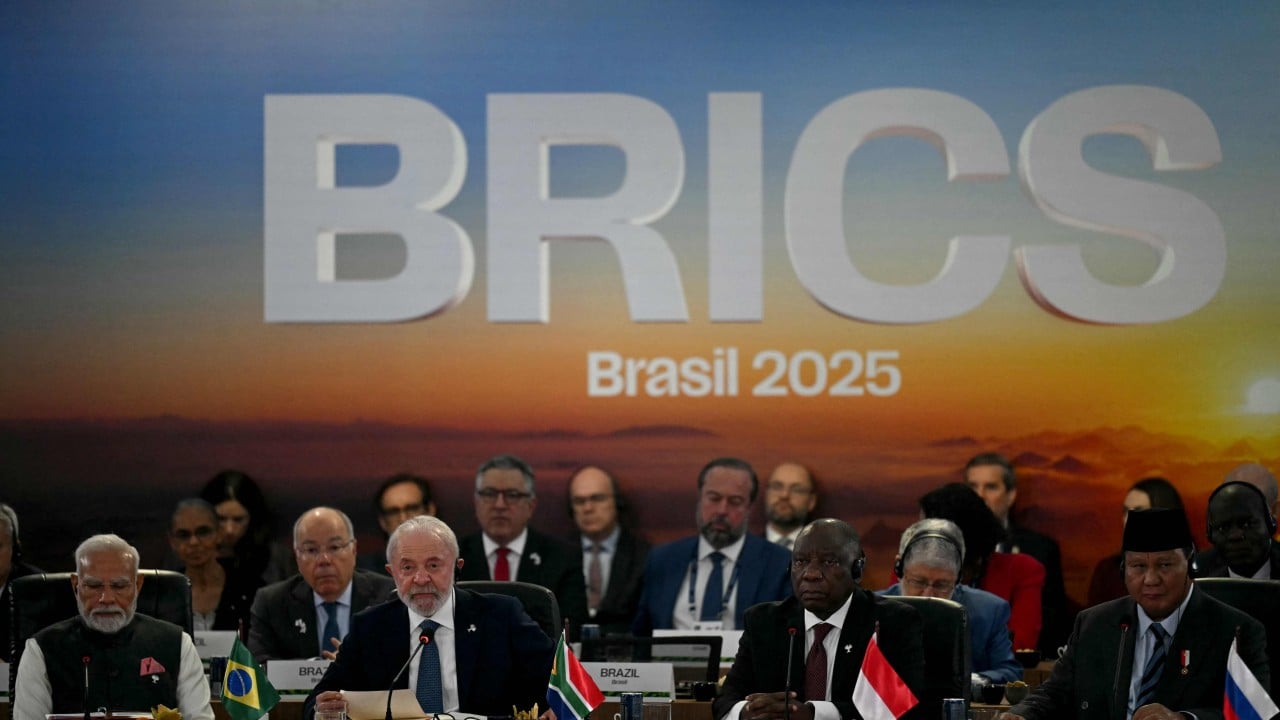
The air inside the New Delhi conference hall carried the sharp, clean scent of expensive air conditioning, but the atmosphere was suffocating. It was May 2026. Outside, the heat of the Indian summer was building. Inside, the diplomatic climate was altogether more volatile.
A high-ranking diplomat sat at a polished mahogany table, staring at a blank sheet of paper that was supposed to be a joint communiqué. For two grueling days, the expanded coalition of BRICS+ nations had attempted to draft a unified response to the devastating war tearing through Iran. Instead, the room had dissolved into a microcosm of the very conflict they claimed they could prevent.
When the news of Operation Epic Fury broke in late February—shattering Tehran, taking out the Supreme Leader, and plunging the Strait of Hormuz into a chaotic naval blockade—the Western financial press immediately warned of a systemic shift. This, we were told, would be the moment the Global South, under the banner of BRICS+, would coalesce into a definitive counterweight to Western hegemony. They had the oil. They had the population. They had the alternative payment systems.
But sitting in that room in New Delhi, looking at the raw anger between delegates, the grand narrative of a unified multipolar alliance evaporated. The blank paper wasn't a temporary failure of phrasing. It was the sudden, undeniable exposure of a foundational flaw.
The Mirage of Shared Grievance
To understand how we got this so completely backward, consider a hypothetical merchant sailor named Tariq, stuck aboard an oil tanker anchored just outside the Persian Gulf. Tariq does not care about high-level multipolar theory. He cares about the fact that three commercial vessels were just struck by missiles in the Strait of Hormuz, that the tentative June ceasefire has collapsed, and that the water around him has become a shooting gallery.
The architects of BRICS+ built their grand house on a single premise: shared opposition to American unilateralism and the dominance of the US dollar. It is a powerful sentiment. It attracted old giants like Russia and China, rising powers like India and Brazil, and new entrants like Iran, Egypt, and the United Arab Emirates.
But opposition is an emotion, not a strategic framework.
When the war arrived, Iran demanded that BRICS+ transform into a shield. They wanted a full-throated, collective condemnation of the US-Israeli strikes. They expected their fellow members to treat an attack on one as an attack on the collective.
Instead, they found a room full of sovereign ledger books.
The United Arab Emirates, also a newly minted BRICS+ member, found itself in the impossible position of being struck by Iranian retaliatory drones while being accused by Tehran of facilitating Western military logistics. The UAE demanded its sovereignty be respected. Iran demanded absolute ideological loyalty.
Shared grievance, it turns out, is a thin glue. When the stakes are merely rhetorical, anyone can sign a treaty. When the missiles fly, everyone looks to their own borders.
The Calculator and the Sword
The real friction within this supposed alliance isn't ideological; it is deeply practical. It is the clash between nations that want to burn the existing global system down and nations that simply want a better seat at the table.
Consider India’s predicament. For New Delhi, BRICS is an economic balancing mechanism. It is a way to ensure the Global South isn't ignored by Washington or Brussels. But India also maintains deep, critical strategic partnerships with the United States, Israel, and the Gulf states. Prime Minister Narendra Modi found himself publicly praising the UAE’s restraint in the face of Iranian strikes, even while his diplomats sat across from Iranian representatives in Delhi.
The numbers simply do not add up to a cohesive alliance. India’s monthly fuel spending skyrocketed past $6 billion due to the wartime oil crunch, a direct consequence of the blockade in the Hormuz. The war wasn't an abstract geopolitical opportunity; it was a localized economic tax.
+------------------+------------------------------------+------------------------------------+
| Member State     | Primary Objective in BRICS+        | Stance on Western System           |
+------------------+------------------------------------+------------------------------------+
| Russia / Iran    | Total Systemic Disruption          | Active Conflict / De-dollarization |
| India / Brazil   | Institutional Reform               | Strategic Autonomy / Reformist     |
| UAE / Saudi      | Economic Diversification / Hedging | Western Aligned Security / Hedging |
+------------------+------------------------------------+------------------------------------+
This table reveals the fundamental paralysis. You cannot build a mutual defense pact, or even a functional diplomatic bloc, when one member views the global financial network as a weapon to be dismantled, and another views it as a utility that needs minor upgrades.
The Ledger of Invisible Stakes
We often talk about these shifts in cold, macroeconomic terms: de-dollarization, alternative payment rails, local currency swaps. But look closer at what happens when the system is actually tested.
Behind the scenes, projects like BRICS Pay—an interbank messaging system designed to bypass the global SWIFT network—continue to grind forward. It works beautifully for buying Russian wheat or transiting fertilizer. It functions perfectly well in low-stakes, peacetime environments where the primary goal is avoiding a transaction fee or dodging a minor compliance hurdle.
But software cannot clear a naval blockade. An alternative ledger cannot intercept a Tomahawk missile.
The illusion of BRICS+ as a cohesive geopolitical entity died because its members have fundamentally different vulnerabilities. When Donald Trump declared the interim ceasefire over in July 2026 after renewed strikes in the strait, the ripple effects did not hit every member equally. Russia, deeply entangled in its own long-term friction with the West, signed a twenty-year strategic treaty with Tehran, viewing the chaos as a useful distraction. Brazil and South Africa, thousands of miles away, urged moderation, desperate to keep their export markets stable.
The bloc is not a monolith. It is a loose, fragile coordination forum. It is a signaling mechanism.
The Final Chord
The New Delhi meeting wrapped up without a joint statement, replaced instead by a lukewarm "Chair’s Statement" that carefully scrubbed away any mention of collective blame. It called for diplomacy. It protected civilian lives. It said everything and nothing at all.
The true legacy of the Iran war is not that it accelerated the birth of a new, multipolar world order led by an alternative bloc. It is that it exposed the emptiness of the promise.
As the sun set over the capital, the diplomats left the air-conditioned hall, leaving behind the unsigned drafts and the heavy silence of a fractured room. The old liberal international order is undeniably fraying, unspooling a little more with every passing week. But whatever rises from its ashes will not be a grand, harmonious coalition of the global East and South.
Instead, the world is fracturing into a hyper-transactional reality. Every nation for itself. Every ledger balanced in secret. The grand illusion of a unified alternative has dissolved, leaving behind a landscape of solitary actors, each steering through the dark on their own terms.