The air in the briefing room always carries a specific, heavy silence right before a major announcement. It is the smell of expensive wool suits, stale coffee, and the collective intake of breath from journalists who know that a single sentence can shift global markets, move naval fleets, and alter the fates of millions of people half a world away.
When the announcement came down that the United States had agreed to Iran’s request to keep diplomatic channels open, a brief flicker of optimism rippled through the room. But it was instantly snuffed out by the second half of the statement.
The ceasefire is over.
To understand what this means, we have to look past the sterile language of international diplomacy. We have to look at the machinery of conflict itself. Imagine a house on fire, where the two owners are standing on the front lawn, shouting at each other about the mortgage while the living room collapses into ash. That is the surreal reality of modern geopolitics. The communication lines remain plugged in, the diplomatic red phones are still off the hook, but the safety catches on the weapons have been flicked to "off."
The Anatomy of a Broken Pause
A ceasefire is a fragile, artificial thing. It is not peace; it is merely the temporary absence of violence. It is a deep breath taken by two exhausted combatants before they swing at each other again. For a few weeks, perhaps a few months, the skies over contested borders grow quiet. Families look upward without the constant, gnawing dread of an incoming strike. Merchants open their shops. Life tries, with a desperate sort of stubbornness, to pretend it is normal.
But a pause without progress is just a countdown.
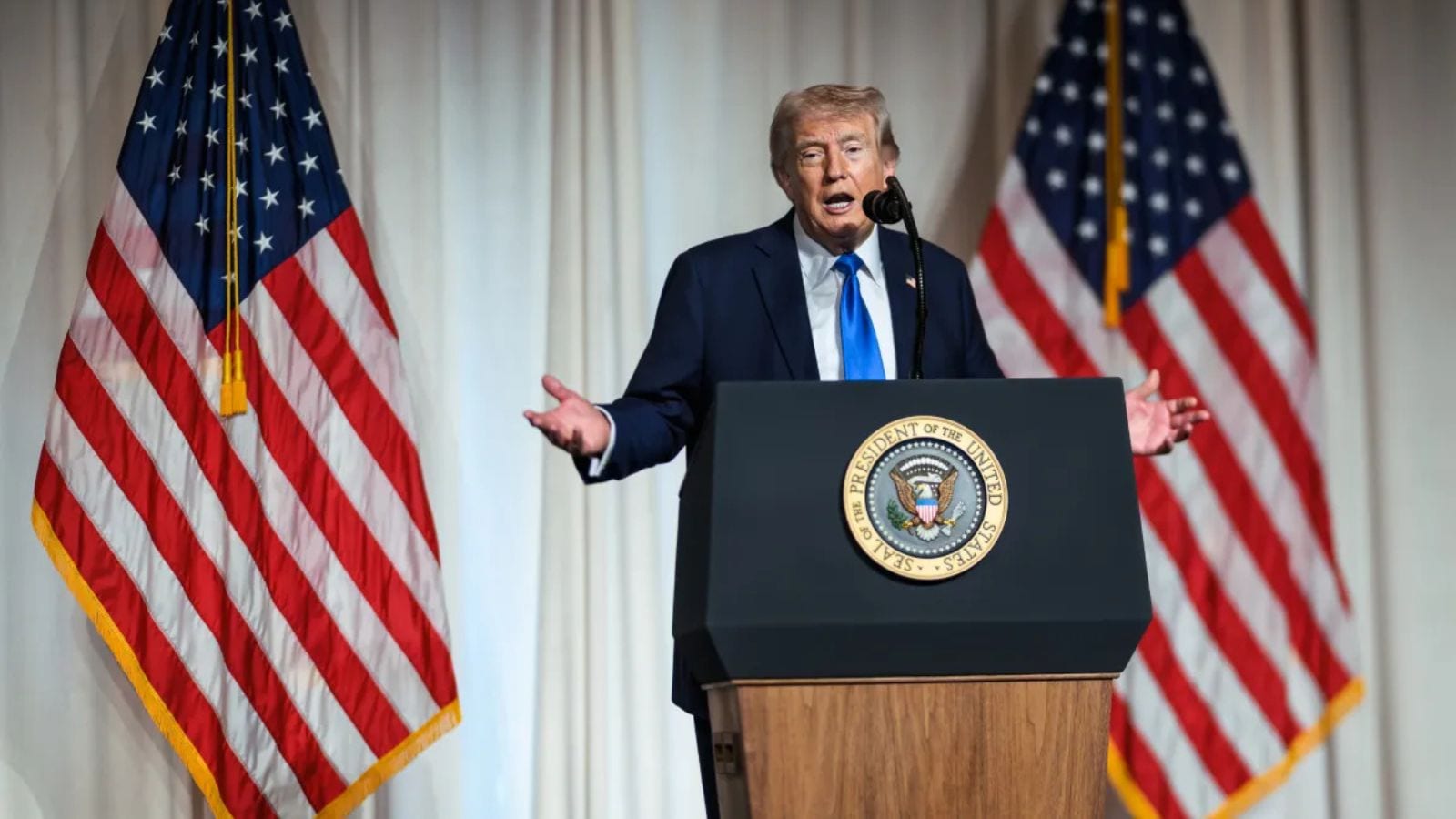
When Donald Trump confirmed that Washington would grant Tehran’s request to continue high-level discussions, he highlighted a bizarre double standard that defines 21st-century statecraft. The willingness to talk is often used as a shield, a way for nations to signal to the international community that they are acting in good faith, even as their military command structures are entering coordinates into targeting computers.
Consider a hypothetical mid-level diplomat sitting in a neutral European city—let us call him Marcus. Marcus has spent the last six months drinking lukewarm sparkling water in wood-paneled conference rooms, debating the precise placement of commas in a non-binding memorandum. He has a wife, a bad back, and a stack of briefing papers that grow thicker by the hour. Marcus knows that as long as he is talking, people are living. His Iranian counterpart across the table, an older man with tired eyes who remembers the devastation of regional conflicts from decades past, knows the same thing. They exchange formal pleasantries. They argue over economic sanctions and enrichment percentages.
Then, Marcus receives a text message on his encrypted phone. The truce has dissolved. The diplomatic track is still active, but the skies back home are about to light up again.
The tragic irony is that talking while fighting is not a new strategy. It is an old, cynical playbook. During the Vietnam War, negotiators spent months arguing over the literal shape of the peace talks table in Paris while thousands of soldiers died in the jungles. The process becomes decoupled from the reality on the ground. The words spoken in air-conditioned rooms lose their weight when punctuated by the distant thud of artillery.
The Mirage of the Negotiating Table
Why would a state ask to keep talking if they are ready to resume hostilities?
The answer lies in the nature of leverage. In negotiations, weakness is fatal. If a nation walks away from the table entirely, they close off an exit ramp. By asking to maintain the dialogue, Iran signals that it is not looking for total, uncontainable escalation, even as it resumes tactical operations. By accepting the request, the United States projects a posture of strength—willing to listen, but entirely unafraid of the consequences of a hot conflict.
It is a high-stakes poker game played with human lives.
The problem with this approach is that it miscalculates human psychology. It treats war like a chess game where every piece moves with perfect, cold logic. But war is chaotic, emotional, and driven by fear. When a ceasefire ends, the margin for error shrinks to zero. A single misidentified radar blip, an overzealous drone operator, or a misunderstood command can trigger a chain reaction that no amount of diplomatic dialogue can pull back.
We often view these geopolitical standoffs through the lens of political personalities and grand strategy. We dissect the statements of presidents and prime ministers. We look at map overlays showing troop movements and naval deployments.
But the true cost of a dissolved ceasefire is always paid in the currency of ordinary life.
It is paid by the civilian who has to decide whether it is safe to walk to the market. It is paid by the young sailor on a destroyer in the Persian Gulf, staring at a green monitor screen in the dark, wondering if the next blip is a flock of birds or an incoming anti-ship missile. It is paid by the families who realize that the brief window of quiet they enjoyed was not the beginning of a new dawn, but merely the eye of a storm.
When Words Lose Their Power
There is a distinct vulnerability in admitting that our international systems are failing. We want to believe that if intelligent people sit in a room long enough, they can resolve any dispute. We want to believe that language is stronger than steel.
But language only works when there is a shared baseline of trust, or at least a shared fear of the alternative. When a ceasefire ends while talks continue, it means that both sides have decided that violence is more persuasive than vocabulary. They are using the talks not to find a solution, but to manage the optics of the conflict.
It is a dangerous game of chicken played at supersonic speeds.
The United States finds itself in a complex position. Agreeing to talk keeps the intelligence channels open and prevents total diplomatic blindness. It allows Washington to gauge the adversary’s internal pressures and red lines. Yet, by acknowledging that the ceasefire is over, the administration acknowledges that the deterrents used so far have reached their expiration date.
The diplomatic track becomes a parallel reality. In one room, men in suits discuss treaties. In another room, men in uniforms plan strikes. The two realities exist simultaneously, separated by a thin wall of political convenience.
What happens when that wall collapses?
If the history of asymmetrical conflict has taught us anything, it is that once the shooting starts again, the momentum of violence tends to swallow the momentum of diplomacy. It is incredibly difficult to negotiate a compromise with an adversary who just launched a strike against your assets, or whose assets you just destroyed. The political will required to make concessions evaporates. Public pressure demands retaliation, not diplomacy. Leaders become hostages to their own rhetoric.
The decision to continue talks despite the end of the ceasefire is an attempt to defy this historical gravity. It is an gamble that a thin thread of communication can hold a crumbling relationship together while the winds of war blow at full force.
But threads snap.
As the news cycle moves on to the next crisis, the reality of this decision will unfold in real-time across a volatile region. The meetings will continue in quiet European capitals. The diplomats will still sit across from one another, exchanging stiff nods and reading from prepared scripts. But outside the windows of those conference rooms, the world has become a significantly more dangerous place. The pause is over. The clock has restarted. And the true test of whether words can survive the noise of gunfire is about to begin.
The ink on the diplomatic cables is dry, but the trajectory of what comes next remains unwritten, balanced precariously on a knife's edge between a reluctant dialogue and an eager trigger finger.