Intelligence assessments do not usually leak unless someone inside the apparatus wants a firebreak. When reports emerged from Pakistan's premier spy agencies warning the military establishment against imposing emergency rule in Khyber Pakhtunkhwa, it was not an administrative disagreement. It was an alarm bell regarding institutional overreach.
Governance in Pakistan's northwest has long operated under a volatile calculus. Khyber Pakhtunkhwa shares a porous, fiercely guarded border with Afghanistan, houses millions of displaced populations, and functions as the ideological and physical stronghold of the Pakistan Tehreek-e-Insaf party led by imprisoned former prime minister Imran Khan.
To understand why civilian administrators and military planners are locking horns over a potential state of emergency, one must look past the sanitized press briefings. The central government in Islamabad faces an acute crisis of legitimacy in the province.
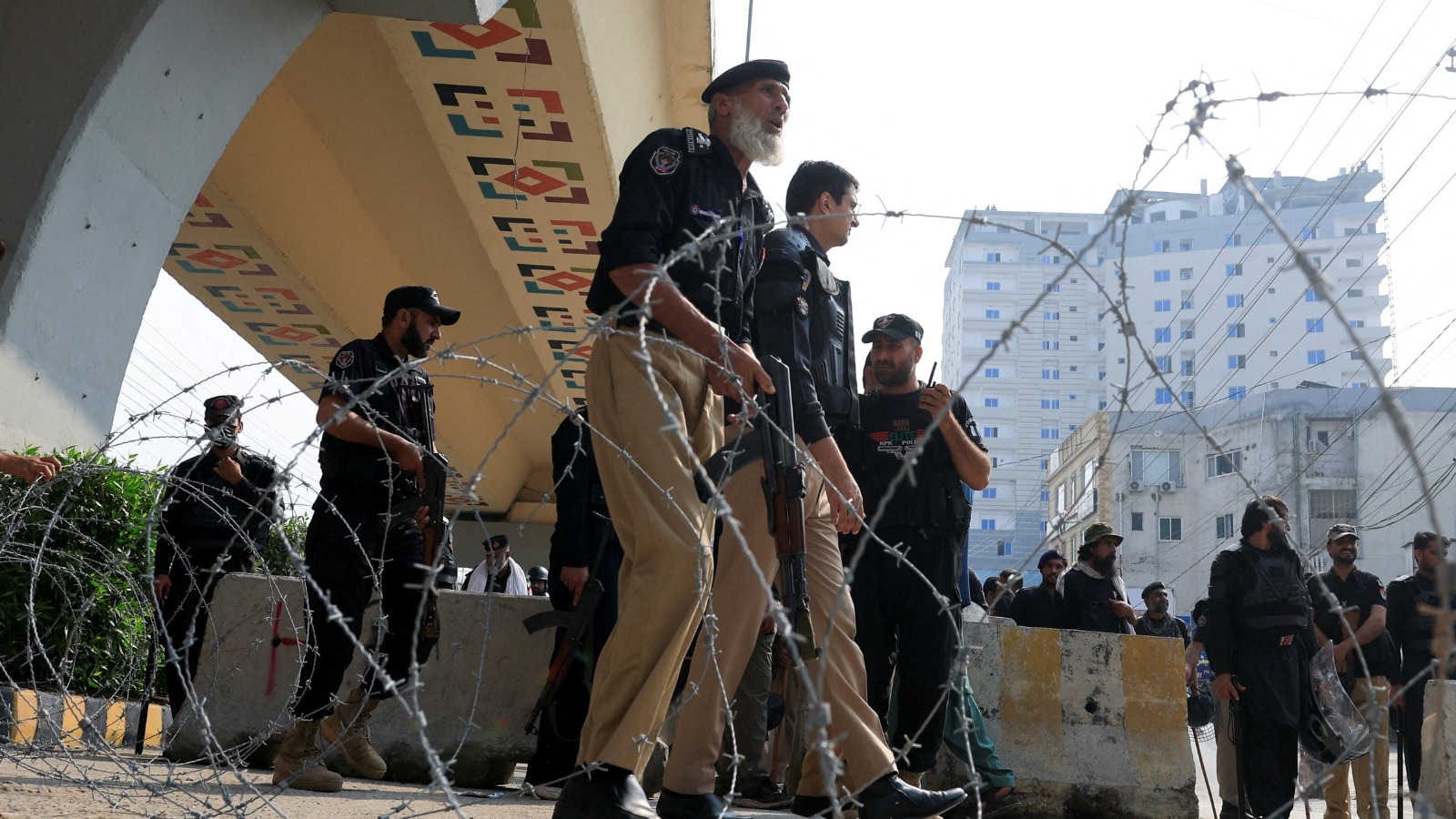
When regional stability breaks down, the reflex in the capital is often coercive centralization. Suspending provincial autonomy, sidelining local legislative bodies, and handing administrative control to federal appointees or military governors might look decisive on paper. On the ground in Peshawar, Bannu, and Waziristan, that move acts as an accelerant.
The Anatomy of Institutional Friction
Friction between the military establishment and civilian political forces in Khyber Pakhtunkhwa has intensified since the contested general elections. The provincial government, controlled by Khan's party, operates in direct ideological opposition to the federal coalition. Every policy disagreement between Islamabad and Peshawar carries the weight of a constitutional stress test.
Intelligence evaluations delivered to military headquarters pointed to a stark reality. Imposing martial law or severe emergency measures under the guise of counter-terrorism would strip away the remaining veneer of civilian representation. Local populations already viewing federal institutions with suspicion would perceive the decree as an occupying maneuver.
Militancy thrives in the vacuum of legitimate political grievance. When peaceful avenues for expressing dissent or exercising electoral mandates are choked off, armed insurgencies find fertile recruiting ground. Tehreek-e-Taliban Pakistan has spent years exploiting the governance deficit in the tribal districts. Handing them a unifying grievance against a centralized emergency administration would likely consolidate fragmented militant factions rather than suppress them.
Economic Fragility and the Cost of Control
Pakistan's macroeconomic vulnerabilities leave zero margin for domestic instability. International financial institutions monitor political friction points with ruthless pragmatism. A province-wide emergency freeze, commercial shutdowns, and prolonged street agitation would choke regional trade routes and sever critical supply chains feeding into Central Asia.
State coffers cannot sustain a prolonged internal security lockdown in a territory home to millions. Every military deployment requires logistical financing that the national budget lacks. Diverting scarce resources toward internal pacification compromises border security along the Durand Line, compounding regional threat vectors.
The Fiscal Trap
External creditors look for institutional predictability. When the state resorts to emergency rule to manage internal political dissent, it signals structural fragility to foreign investors.
- Capital flight accelerates when the rule of law is superseded by executive decrees.
- Regional commerce grinds to a halt during extended curfews and security crackdowns.
- Infrastructure projects stall as foreign contractors evacuate personnel due to security alerts.
The Limits of Coercive Governance
Force can suppress a symptom, but it cannot manufacture consent. Decades of counter-insurgency operations in the borderlands demonstrate that administrative fiat fails without local political ownership.
Civilian bureaucracies cannot govern a restive populace at gunpoint indefinitely. If federal planners choose to bypass the provincial assembly and rule by decree, they risk severing the thin connective tissue holding the federation together. The warning from the intelligence agencies was clear. Pushing Khyber Pakhtunkhwa into an engineered state of emergency crosses a threshold from which political recovery becomes nearly impossible, turning a governance crisis into an uncontainable fracture.