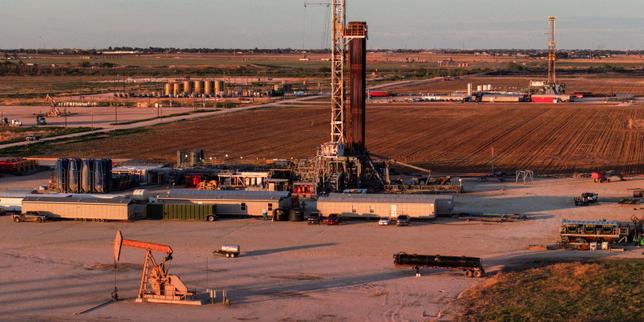
The financial press loves a simple narrative. Whenever a Texas rig moves, the headlines scream about an American production boom. Mainstream media looks at the raw volume of crude flowing out of West Texas and declares a permanent victory for US energy independence.
They are misreading the map.
The standard view assumes that drilling new wells is a sign of industrial health and aggressive expansion. It looks like growth. It looks like dominance.
It is actually a desperate treadmill.
What the market misses is the brutal geology of unconventional shale. US majors are not drilling new wells because they want to overflow the world with cheap oil. They are drilling new wells because their old ones are dying at an unprecedented rate. The massive capital expenditure deployed by major operators is not an offensive charge. It is a rearguard action to hide a structural decline.
The Myth of the Infinite Inventory
The standard narrative rests on a flawed premise: that the Permian Basin is an endless, homogeneous sponge of hydrocarbons waiting to be tapped by increasingly clever engineers.
It is not. The premium acreage—the "Tier 1" sweet spots where the rock is thickest and the pressure is highest—is finite, and it is being depleted fast.
I have watched operators burn through their best inventory over the last decade, high-grading their acreage to keep Wall Street happy with quick returns. Now, the bill is coming due. To maintain the same level of aggregate output, companies must drill more wells just to offset the staggering decline curves of existing production.
A typical shale well behaves entirely differently than a conventional deepwater or carbonate well. A conventional well might experience a gentle single-digit annual decline. A Permian shale well, however, routinely sees its production plunge by 60% to 80% within the first twelve months of operation.
Imagine running a business where your primary asset loses three-quarters of its productivity every single year. You cannot stop investing. You cannot pause to catch your breath. The moment you stop drilling, your production curve drops off a cliff. The flurry of new well completions is not an indicator of a thriving industry; it is the frantic running of a hamster on a wheel.
Tier 2 Rock and the Parent-Child Trap
To understand why this strategy is hitting a wall, you have to look at the physical spacing of these new wells. As the absolute prime real estate vanishes, majors are forced to do two things: move to Tier 2 acreage, or pack wells closer together in existing fields. Both choices carry severe economic penalties.
When operators crowd a proven lease with new wells—referred to in the patch as "child wells" drilled next to the original "parent well"—the results are consistently underwhelming. The child wells frequently rob pressure from the parent, damaging the total ultimate recovery of the entire block. Instead of doubling production, you end up splitting a smaller pie while doubling your capital costs.
Furthermore, Tier 2 rock requires more lateral length, higher volumes of proppant, and more hydraulic horsepower to fracture effectively. You are spending more money to extract less-productive hydrocarbons.
The major oil companies boast about their efficiency gains, citing longer lateral holes that stretch for three miles underground. But length does not automatically equal profitability. The friction inside a three-mile lateral degrades pressure delivery at the furthest reaches of the wellbore. The industry is hitting the outer limits of physics, trying to substitute brute force for high-quality rock.
The Capital Discipline Lie
For years, exploration and production companies promised Wall Street a new era of "capital discipline." The mantra was clear: free cash flow over production volume. Dividends and share buybacks over reckless growth.
The current rush to open new wells exposes that promise as a temporary truce, not a permanent strategy.
When oil prices hover in a profitable band, the temptation to chase volume returns because the corporate structure demands scale to survive. The major oil companies acquired independent shale operators over the past few years in massive multi-billion-dollar consolidation waves. They did not buy those companies for their corporate culture; they bought them because they desperately needed their Tier 1 inventory.
Now that these mega-mergers are complete, the combined entities must justify their premium valuations. They cannot sit on the acreage. They have to drill it to show immediate production volume to investors who judge performance on quarterly metrics.
The downside to this approach is obvious to anyone who looks past the next two quarters. By accelerating the development of these newly acquired assets to maintain a flat or slightly growing production profile, majors are shortening the lifespan of their own portfolios. They are converting long-term asset value into short-term cash flow to satisfy algorithmic trading models.
The Crude Quality Problem
Not all barrels of oil are created equal. This is the technical reality that the simple volume aggregators ignore.
The increase in US production consists primarily of super-light crude and lease condensate. This is highly volatile, gas-rich liquid. It is not the medium, sour crude that the massive refining complexes along the US Gulf Coast were engineered to process.
As a result, the domestic market cannot absorb this specific type of oil efficiently. The US must export this light, sweet shale oil to international markets while continuing to import heavier crudes from abroad to keep its own refineries running at peak efficiency.
This creates a structural mismatch. The new wells are producing a product that requires extensive blending, long-distance transport, and complex logistics to find a home. This eats into margins. The headline volume looks impressive, but the net economic value per barrel extracted is shrinking when adjusted for the infrastructure required to move it.
Stop Counting Rigs, Start Measuring Pressure
If you want to understand where the global energy market is actually heading, stop looking at the weekly baker hughes rig count. It is a lagging indicator of past investment decisions, not a predictor of future supply stability.
Instead, look at the gas-to-oil ratios in older shale plays. When a shale reservoir begins to deplete, the pressure drops, and the ratio of natural gas to crude oil rises sharply. The well starts "gassing out." This is happening right now across mature sectors of the Eagle Ford and parts of the Midland Basin. The wells are still producing volumes, but the mix is shifting from highly valuable oil to cheap, abundant natural gas.
The narrative of an unstoppable American oil machine is a comforting illusion for politicians and casual market observers. The reality is far more fragile. Every new well drilled today is a confession that the previous generation of wells is fading fast. The industry is burning through its best assets at a frantic pace to maintain a illusion of growth.
Turn off the television pundits celebrating the production records. Look at the declining productivity per lateral foot. Look at the parent-child well interference. Look at the rising gas-to-oil ratios. The great American shale bonanza is not entering a new era of expansion; it is executing its final, capital-intensive burn.