Silence.
That is the first thing you notice in a briefing room when a clock starts ticking faster than a new press secretary can find her rhythm. Fourteen minutes. Not an hour. Not a sprawling, combative back-and-forth that spills onto the evening cables and gives writers three days of raw material. Fourteen minutes from the opening greeting to the crisp, practiced turn away from the microphone.
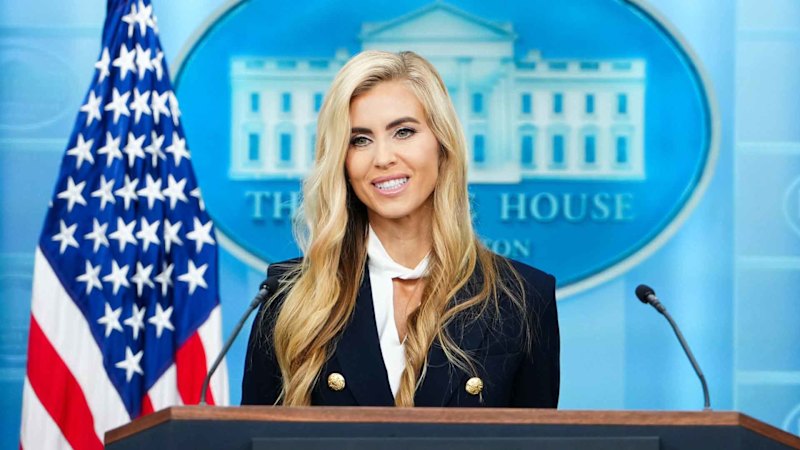
When Katie Zacharia steps up to the podium as Donald Trump’s new press secretary and wraps her debut briefing in fourteen minutes, the headline looks almost clinical on a screen. A short briefing. A fast exit. Another chapter in a White House press corps that has spent years learning how to read every pause, every throat-clear, every sidestep as a signal of power.
I have sat in rooms where tension smells like hot coffee, wool coats, and static electricity. You can hear the low hum of television cameras before a single word is spoken. You watch reporters shift their weight on scuffed leather shoes, notebooks open, pens poised like instruments in a surgical theater. Everyone is waiting for the slip—the unguarded phrase, the hesitation that reveals whether the person behind the lectern is reading from a tightly locked script or steering the room by sheer nerve.
Fourteen minutes changes the geometry of that room. A long briefing is a negotiation, even a hostile one. A short briefing is a gate slamming shut.
To understand what fourteen minutes really costs—and what it really buys—we have to look past the stopwatch. A briefing is never just a list of talking points read aloud. It is a daily stress test between the executive branch, the press, and the millions of people trying to figure out what decisions made behind closed doors mean for their paychecks, their communities, and their sense of stability.
Why Fourteen Minutes Feels Like a Trapdoor
Walk through the doors of a press room on a high-stakes morning. The air is tight. Phones buzz in coat pockets with breaking alerts from Capitol Hill, agencies, and overseas cables. Every correspondent in the rows has an editor back at a desk asking the same sharp question: Did you get an answer, or did you get a brush-off?
In a traditional briefing, time works like a slow leak. If a press secretary stands at the microphone for forty-five or sixty minutes, pressure builds inevitably. A reporter asks a follow-up. Then another presses the same point from a slightly different angle. Fatigue sets in on both sides. Eventually, someone says something slightly sharper than intended, or offers a detail that wasn't meant to be public yet.
A fourteen-minute briefing starves that process of oxygen.
Before the room can even settle into its rhythm, the exit is already in sight. Questions come fast, answers stay tight, and by the time the tenth or twelfth query lands, the clock is already whispering that time is up. For a new press secretary—especially one stepping into a role defined by intense scrutiny around Donald Trump’s orbit—brevity can look like discipline. It can also look like evasion.
Here is a metaphor to make that tension concrete: picture a high-wire walker crossing a canyon with a heavy pack, except the rope is pulled taut only for fourteen seconds at a time before dropping into fog. You move quickly. You keep your eyes on the next step. You don't linger to admire the view or debate the wind. It looks graceful from a distance, yet anyone watching closely knows speed isn't the same thing as safety.
I am being candid here because, frankly, watching modern political briefings can leave even seasoned observers confused about what counts as a "good" performance anymore. One camp measures success by how tightly the message stays on track. Another measures it by how much daylight gets let into the room. When a debut lasts fourteen minutes, both sides can claim victory—and both can walk away feeling cheated.
The Invisible Stakes Behind the Podium
It is easy to treat press room theater as a sport for insiders. Reporters spar. Officials pivot. Cable panels dissect body language frame by frame.
Yet the stakes of those fourteen minutes reach far past the press rows.
Consider a hypothetical scenario—a composite of households I have spoken with over the years—to see how distance forms between a podium and a kitchen table. Imagine Hannah, a high school history teacher in Ohio whose husband works in light manufacturing, and Marcus, a small-business owner in North Carolina trying to price inventory six months ahead. Neither of them watches every minute of a daily briefing. Both of them feel the ripple effects of federal policy, trade shifts, and executive priorities in very real ways: utility bills, supply costs, local school funding, and the general mood of the country.
When a new press secretary takes the podium for the first time, people like Hannah and Marcus aren't looking for clever zingers. They are looking for clues about direction and temperament. Is this voice steady? Does it sound like someone who commands the details, or someone reciting a narrow set of lines while dodging the harder realities?
A short briefing compresses that judgment into a tiny window. If you blink, you miss the whole act.
Historians of the modern presidency have long noted that the press briefing evolved into a ritual of accountability precisely because the government grew too large and complex for citizens to track on their own. For decades, administrations wrestled with the tension between message control and public transparency. Sometimes briefings stretched long and meandering; sometimes they grew brisk and guarded. Each era shaped how the public judged whether leaders were leveling with them or managing them.
When Katie Zacharia steps into that lineage with a fourteen-minute debut, she isn't starting on a blank canvas. She is stepping into an ongoing argument about trust.
What Reporters Are Actually Hunting For
If you have ever watched a veteran correspondent ask a question at a White House briefing, you know they rarely ask just to hear themselves talk. Every question is a test of three things: factual grounding, policy clarity, and whether the speaker actually has authority in the room.
A press secretary’s hardest job isn't memorizing numbers. It is knowing which doors are locked by the president and which ones can be cracked open without causing a mess.
In a first briefing, the stakes are doubled. Everyone in the room is grading the debut:
- Command of the brief: Can she pivot smoothly from domestic policy to foreign affairs without losing the thread?
- Tone under pressure: Does she meet sharp pushback with calm precision, or does the room turn prickly?
- Access to the center: Does she sound like someone who speaks with real weight inside Donald Trump’s inner circle, or merely reads what was handed to her ten minutes earlier?
Fourteen minutes tests all three under compressed heat. There is no time for long wind-ups or wandering anecdotes. Every sentence has to carry weight. If an answer is vague, there may not be time for a second bite at the apple.
Yet brevity cuts both ways. A sharp, concise answer can strip away fluff and leave the core position unmistakable. A brisk exit, by contrast, can leave reporters standing in the aisle comparing notes and wondering what wasn't asked—or what was shut down before it could be asked.
The Rhythm of Control Versus Candor
Watch what happens when control becomes the sole measure of a briefing.
At first, everything feels neat. No stray remarks. No awkward pauses. No viral clips of a press secretary caught off guard. The communication team exhales because nothing broke.
Consider what happens next: over days and weeks, a pattern of ultra-short or tightly rationed briefings can create a strange vacuum. When official answers are brief and guarded, speculation rushes in to fill the quiet. Reporters work harder to source stories through side channels, leaks, and unnamed officials. Instead of taming the narrative, extreme tightness sometimes makes the narrative harder to predict.
Let's use another analogy—purely illustrative—to see why that happens. Think of a pressure cooker with the steam valve clamped shut. The outside looks calm and orderly. Inside, heat and pressure keep building. A smart operator lets a steady, controlled stream escape so the pot never blows its lid.
In politics, the "steam" isn't chaos; it's public curiosity and journalistic scrutiny. Pretending those forces don't exist doesn't make them go away. It just changes where they show up.
At the same time, fairness demands acknowledging the other side of the ledger. A brand-new press secretary walking into her very first briefing faces an environment where every word can be sliced into a five-second clip and weaponized within minutes. Caution isn't always cowardice. Sometimes, on day one, keeping things tight is basic self-preservation while you learn the terrain, build rapport with colleagues, and figure out how the room moves.
I don't pretend to have a neat formula that solves that tension overnight. Anyone who claims political communications is simple hasn't watched a live briefing go sideways over a single poorly chosen adjective.
Reading the Clock After the Cameras Cut
What lingers after a fourteen-minute briefing ends?
Usually, it isn't a single dramatic line. It is an impression. People remember the pace. They remember whether the person at the lectern looked hurried or composed, distant or direct. They remember how quickly the door closed behind her.
For Katie Zacharia, a fourteen-minute first briefing is neither a triumph nor a verdict. It is an opening note—a brief, sharp chord struck at the start of a much longer piece of music. Whether that note sounds like brisk competence or deliberate distance will depend on what comes next: the second briefing, the tenth, the moments when news breaks unexpectedly and there is no script ready in advance.
In the end, the stopwatch only measures seconds. It cannot measure trust. That takes longer than fourteen minutes—and it is earned or lost one exchange at a time, long after the lights at the podium go dim.