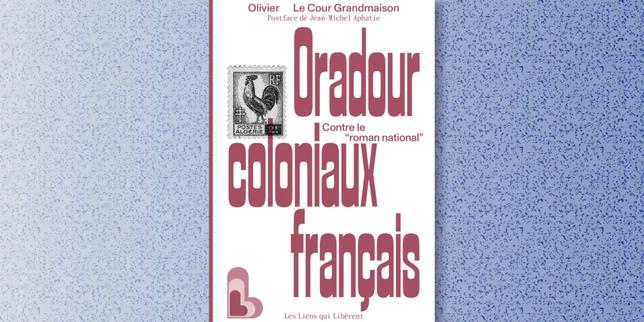
The shadow cast by Oradour-sur-Glane—the French village liquidated by the Waffen-SS in 1944—is long and dark in the European consciousness. Yet, as political scientist Olivier Le Cour Grandmaison argues with chilling precision, the French state has spent decades obscuring its own "colonial Oradours" perpetrated across Algeria. This isn’t merely a debate over historical footnotes; it is an investigation into a systemic mechanism of state-sanctioned extermination that predates and, in some ways, mirrors the horrors of the Second World War. To understand the bloody birth of modern Algeria, one must confront the reality that the "civilizing mission" was frequently executed through the total destruction of entire communities.
The Logic of Total War in the Maghreb
Historians often treat the Algerian War of Independence (1954-1962) as a standalone explosion of violence. This is a mistake. The roots of these massacres reach back to the 1840s, during the initial conquest led by General Thomas-Robert Bugeaud. It was here that the enfumades (suffocation by smoke) became a standard operational procedure. When the Ouled Riah tribe sought refuge in the caves of Dahra in 1845, French forces under Colonel Pélissier didn't engage in a siege. They built massive fires at the cave entrances.
More than a thousand men, women, and children were asphyxiated. This wasn't a rogue operation. It was a calculated strategy designed to break the will of a population through absolute terror. Bugeaud himself defended the practice, arguing that "the end justifies the means." This established a precedent where the colonial subject was stripped of the protections afforded by the laws of war. They were categorized as "insurgents" or "savages," making their total elimination a matter of administrative efficiency rather than a moral crisis.
May 8 1945 The Great Betrayal
While Europe celebrated the defeat of Nazi Germany, the streets of Sétif, Guelma, and Kherrata were running with blood. The irony is staggering. Algerian veterans, who had just fought to liberate France from the yoke of fascism, marched to demand the same liberty for their own land. The French response was a masterclass in disproportionate retribution.
Official French tallies initially claimed a few hundred deaths. More objective historical assessments, bolstered by Algerian accounts and subsequent research, suggest the toll reached into the thousands—potentially as high as 45,000 according to some estimates. In Guelma, the sub-prefect André Achiary organized civilian militias. These were not soldiers; they were settlers armed by the state to hunt down their neighbors. They used lime kilns to incinerate the bodies, a desperate attempt to erase the evidence of a massacre that mirrored the very atrocities France had just endured under German occupation.
The Legalized Exception
One cannot analyze these events without looking at the Code de l'Indigénat. This was the legal scaffolding that made the Oradours of Algeria possible. It created a two-tiered humanity. On one side stood the French citizen; on the other, the "indigène" (native), who was subject to a different set of rules, harsher punishments, and zero political recourse.
When violence erupted, the French military didn't just target combatants. They targeted the geography of the people. Collective responsibility—the idea that an entire village must pay for the actions of a few—became the guiding principle. This is the exact DNA of the Oradour-sur-Glane massacre. In Europe, it was recognized as a war crime. In Algeria, it was described as "pacification." This linguistic sleight of hand allowed the French Republic to maintain its self-image as the cradle of human rights while operating a brutal military machine that disregarded those very rights just across the Mediterranean.
The Silence of the Archives
For decades, the French state maintained a policy of organized amnesia. The "events in Algeria" were not even legally recognized as a "war" until 1999. This semantic evasion served a specific purpose: it prevented the application of international laws regarding war crimes and crimes against humanity. If there was no war, there could be no war crimes.
Olivier Le Cour Grandmaison’s work is essential because it dismantles the "republican myth." He forces a confrontation with the fact that the Republic didn't just commit errors; it built a colonial system that required massacres to function. The archives, though gradually opening, still hide the full scale of the psychological warfare and the "regroupment camps" where millions of Algerians were forcibly displaced, creating a humanitarian catastrophe that many historians liken to concentration camps in everything but name.
The Myth of the Positive Impact
In recent years, a revisionist movement in French politics has attempted to highlight the "positive role" of colonization. They point to bridges, hospitals, and schools. But a bridge built to transport troops more efficiently to a massacre site is not a gift of civilization. The infrastructure of colonialism was designed for extraction and control, not for the elevation of the Algerian people.
To suggest that the material gains of the colonial era compensate for the systematic slaughter of civilians is a moral failure. It ignores the fundamental reality that colonial rule was maintained through the constant threat—and frequent application—of lethal force against non-combatants.
The Ghost of Oradour in Modern Policy
The refusal to fully acknowledge these "colonial Oradours" isn't just about the past. It poisons the present. It affects how France views its own citizens of North African descent and how it conducts its foreign policy in its former spheres of influence. When a state refuses to excise the rot of its history, that rot persists in its institutions.
The police violence seen in the Paris suburbs today, the discriminatory laws, and the persistent "othering" of Muslim populations are the direct descendants of the Code de l'Indigénat. The state continues to treat certain populations as subjects to be managed rather than citizens to be protected. Until the massacres of Sétif, Guelma, and the Dahra caves are given the same weight in the national narrative as the tragedies on French soil, the Republic remains a hollow promise.
The weight of the dead does not vanish simply because a government chooses not to count them. The families of the disappeared in Algeria don't need a "balanced view" of history. They need the truth. They need an admission that the men who burned their ancestors in caves or tossed them into lime kilns were acting in the name of the French flag. The architecture of the colonial massacre was not an accident; it was the blueprint.
The demand for a full accounting is not about "repentance," a word often used by French politicians to deflect responsibility. It is about historical justice. It is about recognizing that the "civilizing mission" was, in many instances, a campaign of state-sponsored terror. The Oradours of Algeria are not a different category of horror; they are the same horror, committed by the side that usually claims the moral high ground. The ledger remains open, and the ink is still red.


