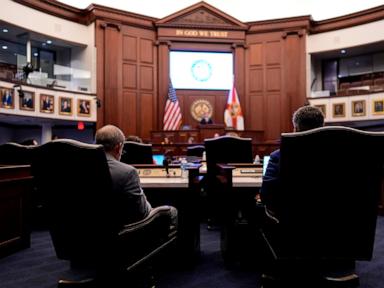
The Florida Supreme Court is currently weighing a case that could dismantle the remaining safeguards against partisan gerrymandering in the American South. At the heart of the dispute is a congressional map pushed through by Governor Ron DeSantis in 2022, a map that effectively erased a district designed to allow Black voters in North Florida to elect a candidate of their choice. While lower courts have wrestled with whether this constitutes a violation of Florida’s Fair Districts Amendment, the high court’s involvement signals a broader shift. This is not just a localized legal skirmish. It is a fundamental test of whether state-level constitutional protections can survive a direct collision with raw executive power.
The DeSantis Intervention and the North Florida Wipeout
Redistricting is usually a legislative grind, a messy process of horse-trading and map-drawing behind closed doors. In 2022, the Florida Legislature attempted to follow a somewhat conventional path, proposing maps that maintained a version of the 5th Congressional District. This district stretched across the top of the state, connecting Black communities from Jacksonville to Gadsden County. It was a configuration born out of previous legal battles, intended to satisfy the non-diminishment standard of the state constitution.
Governor DeSantis broke the tradition of executive deference in these matters. He didn't just suggest changes; he vetoed the legislature’s work and forced his own map onto the floor. His legal team argued that the 5th District was an unconstitutional "racial gerrymander" under the U.S. Constitution’s Equal Protection Clause. By dismantling it, the Governor's map shifted the balance of power, turning a seat held by a Black Democrat into a reliably white Republican stronghold.
The immediate result was a 20-8 Republican advantage in Florida’s congressional delegation. The long-term result was a direct challenge to the Fair Districts Amendment, which Florida voters passed in 2010 to stop politicians from drawing lines that favor one party or incumbent.
The Legal Friction Between State and Federal Standards
The core of the legal argument rests on a perceived conflict between two layers of law. On one side, Florida’s constitution explicitly forbids drawing maps that diminish the ability of minority groups to elect representatives. This "non-diminishment" clause is a heavy anchor. It requires that once a minority-opportunity district exists, it cannot be deleted unless there is a compelling reason that aligns with federal law.
On the other side, the Governor’s legal architects point to recent U.S. Supreme Court skepticism toward race-conscious mapmaking. They argue that Florida’s own constitution forces the state into "racial gerrymandering" by prioritizing the 5th District's boundaries based on the skin color of voters. It is a calculated gamble. By framing the protection of Black voting power as a violation of the 14th Amendment, the state is asking the Florida Supreme Court to ignore its own constitutional mandates in favor of a specific, aggressive interpretation of federal law.
The Shadow of the Voting Rights Act
To understand why this matters, you have to look at the crumbling infrastructure of the federal Voting Rights Act (VRA). For decades, Section 5 of the VRA acted as a shield, requiring states with a history of discrimination to get federal approval before changing their maps. When the U.S. Supreme Court gutted that requirement in 2013, the burden of proof shifted. Now, plaintiffs must sue after the fact, often waiting years for a resolution while elections are held under contested lines.
Florida’s Fair Districts Amendment was supposed to be the backup generator. It was designed to provide the protections that the federal government was no longer willing or able to enforce. If the Florida Supreme Court rules that the Governor’s map is legal, it essentially renders the Fair Districts Amendment toothless. It creates a blueprint for other states to follow: simply claim that any protection of minority voting blocs is "unconstitutional race-consciousness" and use that as a justification to maximize partisan gains.
Power vs Process
The technicalities of the case often obscure the brute force of the politics involved. In investigative circles, we look at the paper trail. The maps produced by the Governor’s office weren't just about "compactness" or "logical boundaries." They were precision-engineered to produce a specific partisan outcome. Under the previous map, Florida was a purple state with a slight Republican lean. Under the current map, it is a fortress.
Critics and voting rights advocates argue that the Governor used the redistricting process to audition for a national audience, proving he could out-maneuver both the courts and his own legislature. The casualty in this performance was the 5th District. For the voters in that region, the shift wasn't just a change in representation; it was the total removal of their political voice in Washington. When a district is wiped off the map, the institutional memory and the specific advocacy for that community vanish with it.
The Bench and the Political Identity of the Court
The Florida Supreme Court has changed significantly over the last six years. It is now widely considered one of the most conservative high courts in the country. This shift is crucial because the "Fair Districts" rules are not self-executing. They require judges who are willing to check the power of the executive branch.
During oral arguments, the questioning often centered on whether the 5th District was "compact" enough. Compactness is a favorite tool for those looking to dismantle minority districts. If you can define "compact" narrowly enough, any district that follows the dispersal of a specific community can be labeled an "ugly" or "unnatural" shape. This ignores the reality of why these districts exist in the first place—to counter decades of housing segregation and economic displacement that didn't happen in neat squares and circles.
Financial and Social Costs of Perpetual Litigation
Taxpayers are footed the bill for this ideological tug-of-war. The state has spent millions in legal fees defending maps that lower courts initially found problematic. But the social cost is higher. When voters believe the lines are rigged before the first ballot is cast, engagement drops. In North Florida, the feeling of being "drawn out" of the system is palpable.
There is also the issue of stability. Redistricting is supposed to happen once every ten years. Florida has now spent nearly four years in a state of flux, with maps being challenged, stayed, and re-challenged. This creates a vacuum of accountability. Representatives don't know who their constituents will be in two years, and voters don't know who to hold responsible for federal policy.
The Mechanics of the Gerrymander
Modern gerrymandering isn't done with a pen and a napkin. It’s done with sophisticated software that uses consumer data, voting history, and census tracts to predict outcomes with terrifying accuracy. In the Florida case, the "how" is just as important as the "why." By splitting Jacksonville—a city with a large Black population—into multiple districts, the map-makers ensured that the Black vote would be diluted by a sea of white, rural voters in surrounding counties. This is the classic "cracking" technique.
The state defends this by saying they were simply trying to make the districts more "logical." They argue that a district spanning several counties is inherently suspicious. However, this logic is applied selectively. Republican-leaning districts that cover vast, disparate areas are rarely scrutinized for their "compactness." The focus is almost exclusively on the districts where minority voters have found a way to coalesce.
Historical Precedent and the Long Memory of the Law
Florida has been here before. In the 1990s and early 2000s, the state was a primary theater for the redistricting wars. Each time, the courts were the final arbiters. The difference now is the erosion of the consensus that minority representation is a net positive for democracy. There is a growing legal movement that views any race-based consideration—even those intended to remedy past discrimination—as a form of discrimination itself.
This "colorblind" legal theory is the primary weapon being used against the Fair Districts Amendment. If the court adopts this view, it won't just affect Florida. It will provide the legal ammunition for every state legislature in the country to ignore their own constitutional limits on partisan mapmaking. They will simply argue that the federal constitution requires them to be "blind" to the very communities they are disenfranchising.
The Immediate Stakes for 2026 and Beyond
The timing of the court's decision is critical. With another election cycle approaching, the state needs a settled map. If the court rules in favor of the Governor, the current 20-8 map becomes the permanent reality for the rest of the decade. If they rule against him, the state will be plunged into a chaotic, mid-decade redrawing process that will likely end up back in the same court.
The reality of the situation is that the "neutral map" is a myth. Every line drawn on a map is a political act. The question is whether those lines are drawn according to a set of rules approved by the voters, or whether they are drawn to satisfy the ambitions of a single officeholder. Florida’s Fair Districts Amendment was an attempt to choose the former. The state's highest court is now deciding if that choice still belongs to the people.
Impact on National House Control
Florida is too large to ignore in the national context. The two or three seats "flipped" by this map represent a significant chunk of the narrow margin currently holding the U.S. House of Representatives together. When one state executive can unilaterally shift the national balance of power by overriding his own legislature and state constitution, the implications reach far beyond the Florida border. It suggests that the national map is only as stable as the most aggressive governor's willingness to ignore the rules.
The case also highlights the weakness of state-level reforms. If a constitutional amendment can be bypassed by framing it as a conflict with federal law, then no state-level voting protection is safe. This creates a race to the bottom, where partisan actors are incentivized to be as aggressive as possible, knowing that the courts are increasingly likely to defer to executive power.
Accountability and the Ballot Box
The final irony of the redistricting fight is that the very process being contested is the one that determines who gets to make the rules next time. By the time this case is fully resolved, the 2024 elections will be a memory, and the 2026 cycle will be in full swing. The voters who were disenfranchised in North Florida have no immediate recourse. They cannot vote out the people who drew them out of existence because their vote has already been neutralized.
This is the circular logic of the modern gerrymander. You use your power to draw a map that ensures you keep your power, and then you use that kept power to defend the map in court. The only break in that circle is an independent judiciary. If the Florida Supreme Court chooses to act as a rubber stamp for the executive branch, the circle closes, and the Fair Districts Amendment becomes a historical footnote.
Florida’s experiment with non-partisan redistricting is on life support. The outcome won't just define the state's political geography for the next several years; it will tell us whether the concept of a fair map is still a viable goal in American politics or if we have entered an era where the lines are simply spoils of war.
Governments and political parties are watching Florida. They aren't looking for a lesson in civics; they are looking for a green light. If the DeSantis map stands, the era of the "neutral map" is officially over, replaced by a system where the most ruthless map-maker wins, and the state constitution is merely a suggestion.
The Florida Supreme Court has the opportunity to reassert the primacy of the state constitution and the will of the voters who passed the Fair Districts Amendment. If they decline, they aren't just upholding a map. They are dismantling a decade of progress toward making Florida’s elections reflect the actual will of its people. The stakes are a permanent shift in how power is seized and maintained in the third-largest state in the union.