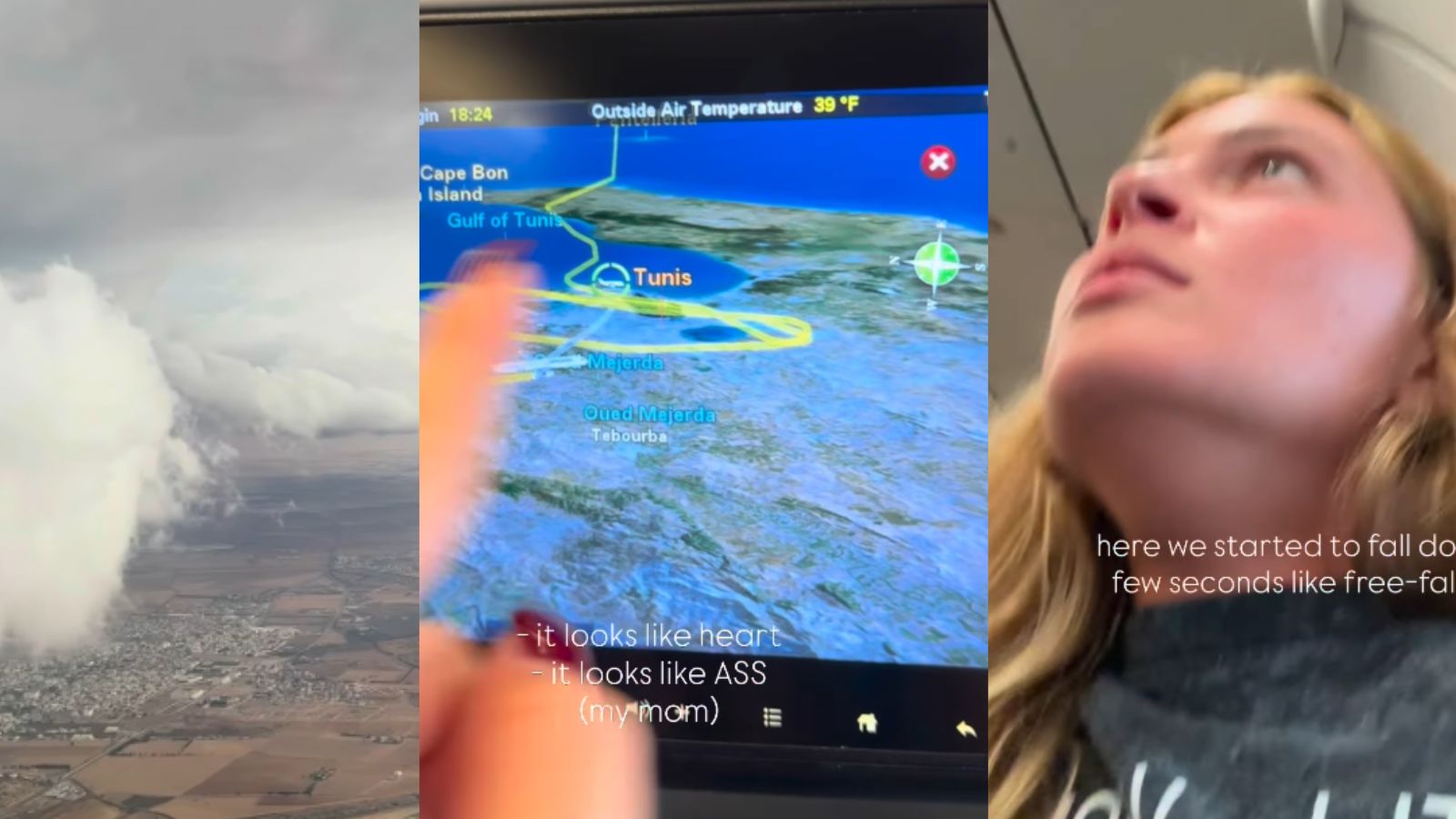
When an aircraft encounters severe convective activity accompanied by sudden vertical displacement, the resulting physiological and psychological reactions among passengers follow predictable behavioral models. The incident involving a Turkish Airlines flight encountering severe turbulence and a rapid altitude drop over Tunisia provides a case study for analyzing operational safety margins, structural load factors, and crowd panic dynamics under acute operational stress.
The Aerodynamic Mechanics of Severe Turbulence and Altitude Loss
Commercial transport category aircraft operate within a rigorously defined envelope of aerodynamic parameters. When an aircraft encounters severe turbulence or a microburst associated with convective weather systems, it can experience abrupt vertical accelerations, commonly referred to as G-forces.
Vertical Load Factors and Structural Limits
Airframe structures are certified to withstand structural load factors significantly higher than standard operational limits, typically ranging from positive 2.5G to negative 1.0G in a clean configuration, and up to 2.0G with high-lift devices extended. When a downdraft or severe wind shear induces a sudden loss of lift or forces the aircraft downward, the rapid change in vertical velocity creates a sensation of weightlessness or negative loading.
- Updraft and Downdraft Transitions: Rapid transitions between vertical air currents subject the fuselage to alternating shear stresses.
- Flight Deck Response: Flight crews rely on automated flight management systems and manual attitude control to maintain pitch stability, prioritizing airspeed preservation over strict altitude adherence to prevent aerodynamic stall.
- Passenger Disorientation: The vestibular system registers rapid vertical acceleration as freefall, triggering an involuntary autonomic panic response regardless of the actual structural integrity of the aircraft.
Behavioral Psychology of Aviation Panic Cascades
Panic in confined public spaces, particularly airborne cabins, operates on contagion principles. When an unexpected physical jolt occurs, the lack of real-time technical information from the flight deck creates an informational vacuum. Passengers immediately fill this vacuum with catastrophic hypotheses.
The Information Asymmetry Gap
The primary driver of cabin panic during severe weather events is the delta between passenger perception and operational reality.
- Sensory Overload: Sudden drops produce auditory cues (engine spooling changes, wind noise) and somatic cues (floating sensations, loose items becoming airborne) that are universally associated with catastrophic failure.
- Absence of Calibrated Communication: In the immediate seconds following an altitude deviation, flight crews are occupied with aviate and navigate priorities. This mandatory delay in communication exacerbates panic escalation.
- Social Proof and Contagion: Vocalized expressions of distress by a small subset of passengers rapidly amplify cortisol levels across adjacent seating rows, converting isolated fright into collective panic.
Operational Safety Protocols and Mitigation Strategies
Aviation safety engineering relies on redundancy and procedural discipline to mitigate both mechanical risks and human factors during severe weather encounters.
Cabin Interventions and Restraint Compliance
The primary injury vector during mid-air turbulence is not structural failure of the airframe, but rather unbelted occupants impacting cabin interiors, overhead bins, or galley equipment.
- The Seatbelt Imperative: Regulatory bodies mandate seatbelt usage during all phases of flight, yet compliance during cruise altitude lapses remains a persistent operational vulnerability.
- Crew Resource Management: Cabin crew training emphasizes rapid securing of galleys and immediate seating during unexpected turbulence incursions, though sudden drops often preclude prior warning.
Risk Assessment and Predictive Modeling for En-Route Weather
Meteorological forecasting models for convective activity have advanced, yet localized severe turbulence remains difficult to map with precision. Modern weather radar systems detect precipitation density and core updraft signatures, but clear-air turbulence and microbursts embedded within larger storm systems continue to challenge tactical routing.
Airline operational control centers utilize real-time satellite imagery and flight plan rerouting to circumvent active convective cells. However, when dynamic weather systems develop rapidly along a flight path, tactical deviation must be balanced against air traffic control separation standards and fuel reserve margins.
The management of passenger safety during such events depends entirely on the structural resilience of the aircraft, the adherence of occupants to restraint systems, and the subsequent debriefing and psychological support provided post-landing to address acute stress reactions.