The salt of the Gulf of Thailand smells different when the gray hulls crowd the horizon.
For months, the shorelines of Pattaya breathe a different kind of rhythm. It is a cadence dictated by afternoon monsoons, the steady clip of local motorbikes, and the quiet shuffle of retirees nursing morning coffee near Walking Street. The businesses here know their seasons. They know the European winter migration, the weekend rushes from Bangkok, the ebb and flow of currencies shifting against the baht. Building on this idea, you can find more in: Why Jalan Besar is Being Ruined by People Who Hate Jalan Besar.
Then the horizon changes.
A floating city appears. The USS Abraham Lincoln cuts through the deep water, bringing five thousand souls onto a coast built for transience. Observers at The Points Guy have also weighed in on this situation.
Look closer at the pier before they disembark. Watch a local vendor named Somchai run a thumb over his ice shaver, his eyes fixed on the gray leviathan anchored miles out. He has seen this script before. Every few years, a supercarrier drops anchor, and the coastal geography shifts beneath everyone's feet. Five thousand sailors do not merely visit a city; they occupy its sensory space. They bring cash, exhaustion, curiosity, and an unyielding appetite for solid ground after months of steel and salt water.
Pattaya is no stranger to dramatic arrivals. The city carries a complicated ledger in the global imagination. Long before the aircraft carriers turned toward its shores, long before the Russian tourist waves reshaped the storefront signage into Cyrillic alphabets, this was a quiet fishing village that a war accidentally transformed. In the late nineteen-sixties, American servicemen on rest and recreation leave found these shores. They traded the mud of Vietnam for the warm sands of a sleepy Thai beach. The footprints left behind never really washed away. They paved the roads, built the bars, and laid down the economic architecture that still beats inside the city's neon heart today.
History does not just repeat itself here; it loops with the precision of a metronome.
Consider what happens inside the city limits the moment the liberty call sounds.
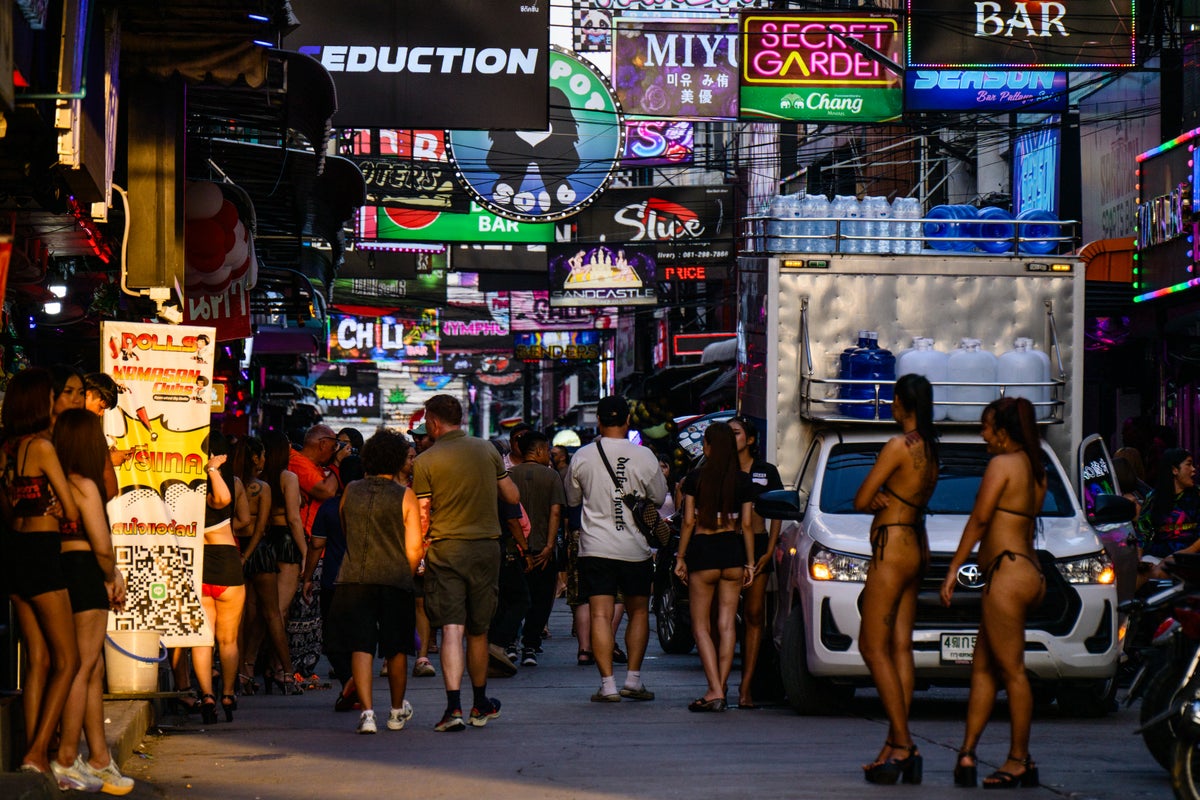
Buses line up along the piers. Gangways drop with heavy metallic clangs. Young men and women in white and blue uniforms step off the water taxis, blinking against the brutal equatorial sun. For a nineteen-year-old machinist’s mate from Ohio, stepping onto Walking Street for the first time is a sensory explosion. The air thickens with the scent of grilled squid, exhaust fumes, damp concrete, and ozone. Neon signs blink in frantic succession. Touts call out from open-air beer bars. The sheer velocity of it is staggering.
You have to understand the psychology of the deployment. For months, these sailors live in a world of strict angles, gray bulkheads, the endless hum of nuclear reactors, and the claustrophobic intimacy of berthing compartments where personal space is measured in inches. They sleep three high in racks that shake with the thunder of catapult launches overhead. They eat institutional food and track the days by the color of the sky on the flight deck.
When that world vanishes and is replaced by the chaotic sensory overload of Pattaya, the psychological shift is seismic.
This is where the collision happens.
Pattaya is a city of distinct neighborhoods living in uneasy proximity. Down the beachfront, luxury family resorts cater to tourists looking for quiet sunsets and parasailing. Just blocks inland, the entertainment districts pulse with an energy that has earned the city its notorious global reputation. When five thousand American sailors descend upon this ecosystem, every tension point magnifies.
Local police departments draft special operational plans weeks in advance. Command Duty Officers hand out strict liberty briefs. Curfews are set, off-limits zones are mapped out, and shore patrol teams lace up their boots. The Navy wants its people safe, and the city wants its commerce smooth. It is a delicate choreography of risk management.
Yet, beneath the operational memos and the nervous chatter of local business owners, something remarkably human takes place.
Walk down Second Road around midnight. You will find a group of sailors huddled around a street cart, pointing enthusiastically at a pan of pad thai, trying their best to pronounce the local currency rates while a vendor laughs, waving them closer. Step into an air-conditioned coffee shop and watch a petty officer FaceTime his wife back home, holding up the phone to show her the chaotic street traffic outside while the tropical rain hammers against the glass.
They are tourists in uniform, carrying the immense weight of geopolitical deterrence on their shoulders, desperate for a bowl of noodles, a cold drink, and a few days where no one sounds an alarm.
The city absorbs them. It always does.
Pattaya has worn many faces over the decades. It welcomed the American GIs of the Vietnam era, weathered the shifts of global tourism, adapted to the massive influx of Russian travelers transforming entire neighborhoods into beachfront enclaves, and now accommodates the sudden, thunderous arrival of a Nimitz-class aircraft carrier group. Each wave leaves a deposit. A phrase learned, a bar named, a bank account filled, a memory etched into someone who watched the gray ships arrive from the balcony of a seaside cafe.
The mechanics of hosting a floating city are staggering. Tons of fresh produce must be trucked in. Millions of gallons of fresh water are pumped. Security perimeters stretch from the deep-water ports all the way to the neon-lit alleyways downtown. The local economy surges, a sharp, adrenaline-fueled injection of foreign currency that sustains taxi drivers, souvenir vendors, hotel staff, and nightclub owners through the slow months.
And then, just as quickly as they arrived, the mood shifts.
Rumors circulate through the coffee shops. The Liberty expiration dates draw near.
Stand on the pier again. Watch the small boats ferry the last batches of sailors back out to the gray giants waiting silently in the Gulf. The uniforms board the metal tenders. The bags are hoisted up. The laughter fades against the rising wind off the water.
On the shore, Somchai shuts down his ice shaver for the evening. The street vendors pull their carts back from the curb. The neon signs hum, buzzing into the quiet hours of a tropical morning. The water settles. The horizon is empty once more, waiting for the next shift in the tide, the next fleet of ships, the next chapter of a town built on the transient dreams of those who pass through its gates.


