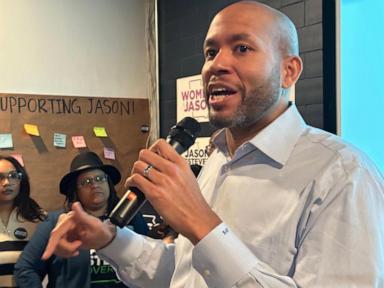
The 2026 Georgia Democratic gubernatorial primary operates under a structural deficit that threatens the party’s ability to maintain the competitive equilibrium established during the 2018–2022 cycles. While the national perception of Georgia remains that of a "purple" battleground, the internal mechanics of the current primary reveal a fractured donor base, a lack of institutional consolidation, and a strategic vacuum left by the absence of a singular, high-capital figurehead. The primary is not merely "jumbled"; it is experiencing a liquidity crisis that prevents any single candidate from achieving the "escape velocity" required to pivot toward a general election posture.
The Tripartite Barrier to Candidate Differentiation
In a high-stakes political market, candidates typically differentiate through policy innovation, identity alignment, or resource dominance. In the current Georgia field, these three levers are neutralized by specific structural constraints.
- Policy Homogeneity: The Democratic platform in Georgia has reached a point of diminishing returns regarding internal differentiation. Candidates are tethered to a standardized set of priorities—Medicaid expansion, voting rights protection, and reproductive autonomy—which creates a "commoditized" political product. When the product is identical, the consumer (voter) defaults to name recognition or proximity, neither of which has been established with enough force to consolidate the field.
- The Incumbency Shadow: For nearly a decade, the Georgia Democratic apparatus was synonymous with a single fundraising and mobilization machine. That machine’s contraction has created a decentralized ecosystem where local power brokers are hesitant to commit early. This hesitation creates a "wait-and-see" feedback loop that suppresses early-stage capital.
- Fragmented Donor Logistics: Small-dollar donor fatigue is measurable. After multiple cycles of record-breaking "emergency" fundraising, the marginal utility of a donation has decreased in the eyes of the grassroots. The "low-dollar" nature of the primary is not a choice; it is an exhaustion of the traditional digital fundraising funnel.
The Cost Function of Name Recognition
Achieving viability in Georgia requires a minimum threshold of "saturated awareness" across three distinct geographic zones: the Metro Atlanta core, the rapidly diversifying suburban ring, and the "Black Belt" rural regions. Each zone requires a different cost-per-impression (CPI) strategy.
The current field lacks the capital to run concurrent campaigns in these three markets. A candidate who spends heavily in the Atlanta media market to secure the urban base inevitably starves their ground game in the suburban counties like Gwinnett or Cobb, where the margin of victory in a general election is actually determined. This creates a strategic bottleneck. If a candidate cannot clear $5 million in the first two quarters of the cycle, they are effectively invisible to 60% of the electorate.
The mechanism of political failure here is a "death spiral of invisibility." A candidate fails to raise funds because they are low in the polls, and they remain low in the polls because they lack the funds to buy the frequency of media necessary to move the needle.
Resource Allocation and the Yield Curve of Voter Mobilization
The efficiency of a campaign is measured by the "Cost Per Vote" (CPV). In a low-dollar primary, the CPV becomes the primary metric of survival.
- Field Operations: Direct voter contact remains the most effective way to secure a primary win, but it is labor-intensive and requires high upfront costs for staff and data infrastructure.
- Digital Saturation: Low-cost, but high-noise. In a crowded field, digital ads often cancel each other out, leading to a net zero gain in voter persuasion.
- Earned Media: The current "jumbled" nature of the race makes it difficult for any one candidate to dominate the news cycle. Conflict drives coverage, but the candidates have largely avoided direct ideological confrontation to preserve party unity for the general election. This "civility" is a strategic liability in a primary that requires a breakout moment.
The second limitation is the "Primary-to-General Pivot Point." A candidate who wins a bruising, expensive primary often enters the general election bankrupt and with high negatives. Conversely, a candidate who wins a "low-dollar" primary enters the general election with a "low-energy" brand. The current field is currently tracking toward the latter, which is a significant risk when facing a Republican opponent who likely benefits from a consolidated donor class and an incumbent's structural advantages.
The Geographic and Demographic Friction
Georgia’s electorate is not a monolith. The strategy for winning the primary relies on a delicate balance of the "Three Georgia’s":
The Urban Core (The Base)
This segment demands ideological purity and high-energy rhetoric. The risk here is "over-indexing." A candidate who aligns too closely with the urban core may alienate the suburban swing voters necessary for November. However, without the urban core, a candidate cannot win the primary. This is the first contradiction of the race.
The Suburban Ring (The Margin)
This is where the 2018 and 2020 gains were made. These voters are more responsive to economic pragmatism and "competency" narratives. The lack of a clear frontrunner in the primary means no candidate is currently speaking to this demographic with the necessary scale.
The Rural South (The Floor)
Mobilizing Black voters in rural Georgia is essential for any Democrat. This requires deep, long-term investment in local organizers. The "low-dollar" nature of the current race means this investment is being deferred, which could lead to a catastrophic drop-off in turnout during the general election.
The Mechanism of Consolidation
History suggests that a jumbled primary only resolves through one of two mechanisms:
- Exogenous Shock: A single event—a major endorsement, a scandal involving a rival, or a national political shift—reorients the race around a single figure.
- The War of Attrition: Candidates drop out as their burn rate exceeds their fundraising capacity, eventually leaving one or two survivors.
In the Georgia context, the "War of Attrition" is the more likely path. However, this path is slow. It consumes time—the one resource a challenger cannot manufacture. Every week spent in a multi-way primary is a week not spent building the infrastructure to fight a general election against a well-funded Republican incumbent or nominee.
Quantitative Analysis of the "Enthusiasm Gap"
Early indicators of voter enthusiasm include turnout in off-cycle local elections and the rate of new voter registrations. Current data shows a plateau in registration rates among the Democratic-leaning 18–34 demographic. This is a direct consequence of the "jumbled" field. Without a clear leader to act as a focal point for mobilization, the movement becomes stagnant.
This stagnation creates a bottleneck for down-ballot candidates. The gubernatorial nominee serves as the "top of the ticket," driving turnout that benefits candidates for the state legislature and local offices. A weak or underfunded gubernatorial primary effectively de-funds the entire state party’s ground game for the year.
The Strategic Liability of Late-Stage Consolidation
The primary concern for Georgia Democrats should not be who wins, but when they win. A late-stage consolidation (occurring in the final weeks before the primary) leaves the winner with less than six months to repair internal fractures and pivot to a statewide general election strategy.
This creates a "structural lag." The Republican opposition is already operating with a general election mindset, building a war chest and refining their messaging. The Democratic field, by contrast, is still litigating internal distinctions that are largely irrelevant to the broader electorate.
Risk Assessment of the "Multiple Candidate" Strategy
Some strategists argue that a wide field is beneficial because it "tests" candidates and allows different demographics to feel represented. This logic ignores the "Burn Rate Reality."
- Donor Cannibalization: Candidates are fighting over the same pool of high-net-worth individuals and political action committees.
- Message Diffusion: When five different people are articulating the "Democratic Vision," the public hears noise, not a signal.
- Media Fatigue: Local news outlets have limited bandwidth. A five-person race gets 20% of the coverage per candidate, making it nearly impossible to build a "heavyweight" profile.
The current state of the Georgia primary is a case study in "market saturation without a market leader." The demand for a Democratic alternative to the current state leadership exists, but the supply of leadership is fragmented across too many nodes.
The Final Strategic Play
The path out of this deadlock is not "more outreach" or "broader coalitions." It is a cold, calculated consolidation of capital around the candidate who demonstrates the highest "Yield-on-Investment" (YOI).
Donors and institutional players must stop viewing the primary as a democratic exercise in preference and start viewing it as a logistical problem. The candidate who can prove they have the lowest CPV and the highest reach in the suburban "Margin" counties must be elevated immediately. Any further delay in consolidation is an implicit endorsement of the Republican status quo. The race is currently being lost not on the trail, but on the balance sheet. Success in Georgia requires the immediate transition from a primary of personality to a primary of infrastructure. The winner will be whoever stops trying to "win the argument" and starts trying to "own the map."



