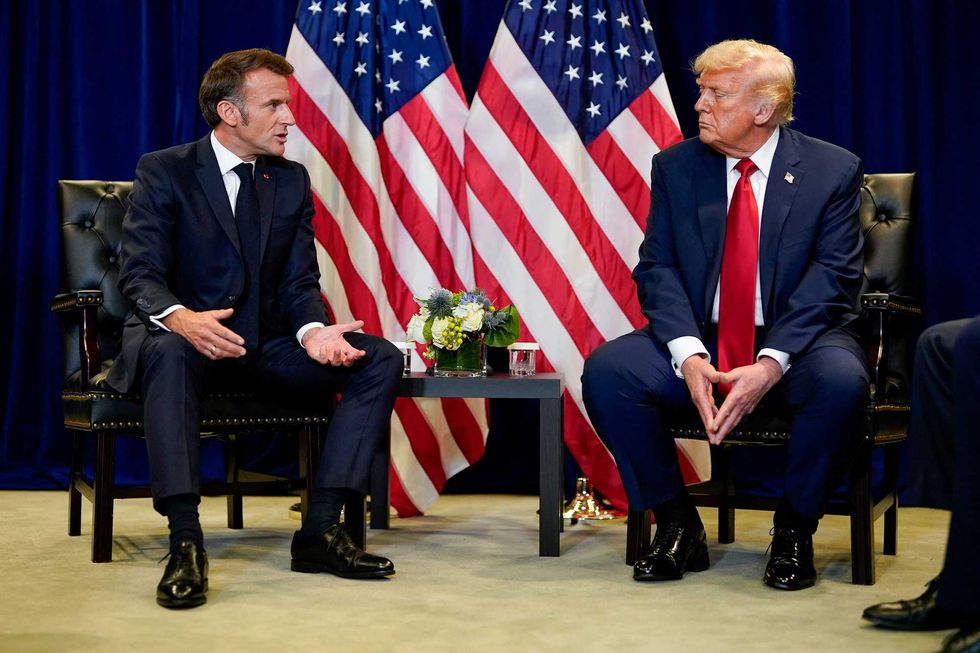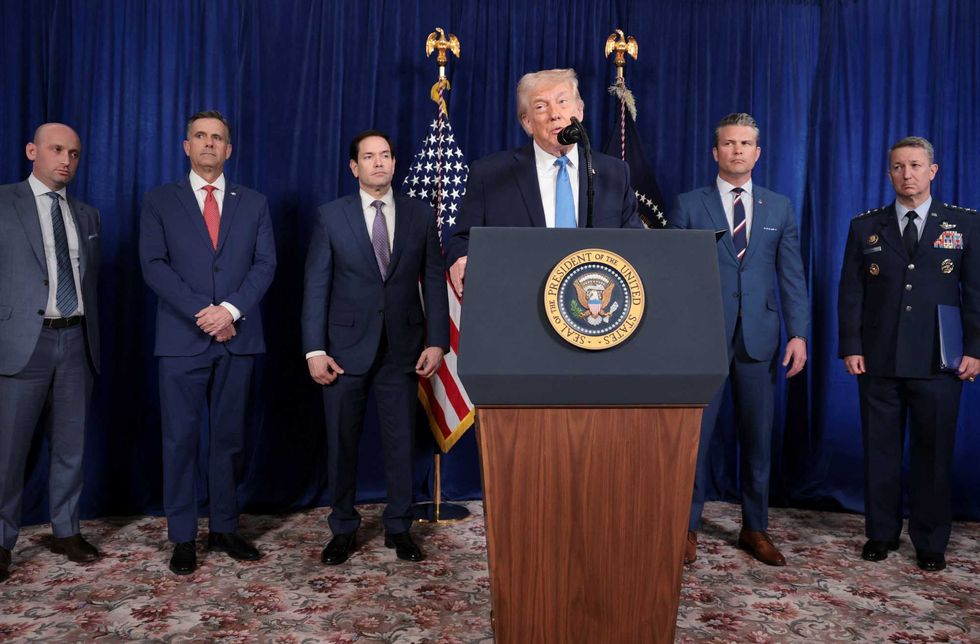
The intersection of isolationist foreign policy and an expanding federal deficit creates a structural paradox: the pursuit of reduced international entanglement frequently triggers higher domestic fiscal costs through secondary and tertiary economic effects. Analyzing the current administration's foreign policy requires moving beyond political rhetoric toward a rigorous assessment of the Foreign Policy Cost Function. This function is defined not just by direct military outlays, but by the weighted impact of tariff-induced inflationary pressure, the erosion of the petrodollar’s hegemony, and the risk premium added to U.S. Treasuries by global volatility.
The Three Pillars of Geopolitical Fiscal Strain
The current trajectory suggests that the "America First" doctrine operates on a premise of cost-reduction that fails to account for the systemic nature of global trade and security. To quantify the impact on the $34+ trillion national debt, one must categorize the fiscal drain into three distinct pillars.
1. The Tariff-Inflation Feedback Loop
Trade protectionism is marketed as a revenue generator via customs duties. However, in a debt-driven economy, tariffs function as a regressive tax that compresses consumer discretionary spending and increases the cost of industrial inputs.
- Cost Basis: When the U.S. imposes a 10% to 60% tariff on imports, the immediate fiscal "gain" is offset by the rising cost of government procurement. The Department of Defense and federal infrastructure projects are among the largest consumers of steel, aluminum, and electronics—the very commodities most sensitive to trade barriers.
- The Debt Correlation: Higher input prices necessitate larger federal appropriations to maintain the same level of service or defense readiness. This delta is funded through the issuance of new debt, effectively borrowing at interest to pay a tax the government levied on itself.
2. Strategic Vacuum and the Security Multiplier
The withdrawal or signaling of withdrawal from traditional alliances (NATO, bilateral Pacific treaties) creates a security vacuum. Proponents argue this saves the "billions" spent on foreign aid and troop deployments. This logic misses the Security Multiplier effect.
Stability is a public good that lowers the cost of global commerce. When the U.S. steps back, regional actors begin "hedging," leading to localized arms races or the closure of shipping lanes (e.g., the Red Sea or the South China Sea). The resulting spike in insurance premiums for global shipping and the disruption of "just-in-time" supply chains act as a global shadow tax. For the U.S. Treasury, the cost of re-entering a conflict from a position of weakness or responding to a global recession triggered by trade route collapse far exceeds the maintenance cost of a standing deterrent.
3. The Weaponization of the Dollar and Yield Risk
The aggressive use of sanctions and the rhetoric of decoupling have accelerated a global "de-dollarization" trend. While the U.S. Dollar remains the primary reserve currency, the marginal shift away from the greenback has direct consequences for debt servicing.
- Mechanism: If foreign central banks (China, BRICS nations) reduce their holdings of U.S. Treasuries, the Treasury Department must offer higher interest rates (yields) to attract domestic and alternative international buyers.
- Quantification: Every 100-basis-point (1%) increase in the average interest rate on the national debt adds approximately $300 billion to the annual deficit. Foreign policy that alienates major creditors directly increases the interest-expense component of the federal budget, creating a terminal debt spiral.
The Cost of Disengagement: A Structural Deconstruction
A common misconception in the current discourse is that foreign aid is a primary driver of the U.S. deficit. In reality, foreign operations and assistance typically account for less than 1% of the federal budget. The true "quagmire" is found in the Opportunity Cost of Hegemony.
The Erosion of Trade Seigniorage
The United States benefits from "seigniorage"—the difference between the cost of printing money and its value. Because the world trades in dollars, the U.S. can essentially export its inflation. An isolationist stance that encourages the world to trade in Yuan or Euros strips the U.S. of this unique fiscal cushion. As seigniorage fades, the federal government loses its ability to run high deficits without immediate, painful inflationary consequences.
Military Industrial Elasticity
The administration’s focus on domestic manufacturing often conflicts with its foreign policy of "Ending Forever Wars." The U.S. defense sector relies on a steady stream of Foreign Military Sales (FMS) to achieve economies of scale. By alienating allies or restricting sales to focus on an internal-only posture, the unit cost of every jet, tank, and missile for the U.S. military rises.
- Variable A: Domestic-only procurement creates a "monopsony" (one buyer) where the government bears the entire R&D burden.
- Variable B: Strategic alliances spread these costs across multiple national budgets.
Reducing international cooperation effectively increases the per-unit cost of national defense, forcing the government to either accept a diminished military or increase borrowing to maintain current levels.
The Logic of the Debt Trap
The "quagmire" is not just a series of stalled conflicts; it is a mathematical trap. The administration’s policies are creating a pro-cyclical fiscal crisis.
- Isolationism leads to increased geopolitical volatility.
- Volatility leads to supply chain shocks and energy price spikes.
- Inflation forces the Federal Reserve to maintain higher interest rates.
- Higher Rates increase the cost of servicing the $34 trillion debt.
- Debt Servicing eats a larger portion of the tax revenue, leaving less for the "America First" infrastructure and manufacturing goals.
This cycle suggests that the very policies designed to "save money" are the primary drivers of the next trillion dollars in debt. The U.S. is currently spending more on interest payments than on the entire defense budget. Any foreign policy that does not prioritize the stabilization of interest rates via global cooperation is, by definition, a failed fiscal policy.
The Strategic Play: Recalibrating Hegemony for Fiscal Survival
To break the debt-foreign policy feedback loop, the strategic imperative must shift from "disengagement" to "Strategic Burden Sharing." The objective is not to withdraw, but to commoditize security. This involves transitioning from a model where the U.S. provides a global security umbrella for free, to a "Franchise Model" of geopolitics. Under this framework, allies pay for the integration into the U.S. security architecture—not as a protection racket, but as a joint-venture investment in market stability.
This approach preserves the dollar’s status as the world’s "safe haven" asset, ensuring that Treasury yields remain suppressed even as debt levels rise. It also allows for the maintenance of global trade routes without the U.S. bearing the full operational cost.
The ultimate fiscal defense is not a wall or a tariff; it is the maintenance of a global system where the world's wealth remains denominated in U.S. debt. To abandon the system is to default on the primary advantage that has kept the American economy solvent despite its balance sheet. The strategy must be to lean into the global financial architecture, using it as a lever to distribute the costs of the 21st century, rather than retreating and being crushed by the resulting vacuum.