The Mediterranean is usually a theater of deep blues and predictable tourist routes. But when the sky over the coast of Libya turned a bruised, oily orange last week, it wasn't a sunset. It was the death of a "shadow."
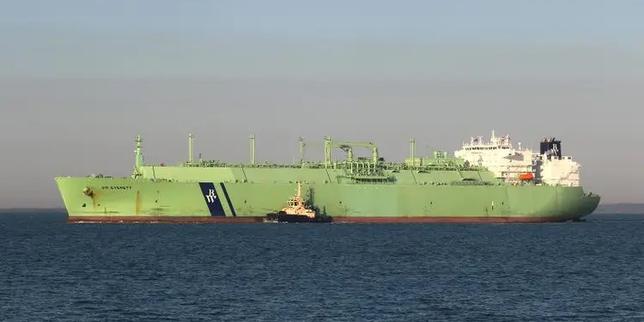
A Russian LNG carrier—a massive, specialized beast of a ship designed to haul liquefied natural gas through the world’s tightening geopolitical bottlenecks—now sits at the bottom of the sea. It didn't just sink. It was erased.
To understand why a ship burning off North Africa matters to a family in Lyon or a trader in London, you have to look past the steel and the salt. You have to look at the invisible architecture of the global energy war. This wasn't just a maritime accident. It was a puncture wound in Russia’s most desperate economic lifeline.
The Men in the Iron Hull
Think about the crew.
Picture a merchant sailor, perhaps from Vladivostok or Sevastopol, standing on a deck that is effectively a floating bomb. To keep natural gas liquid, you have to chill it to $-162$°C. The physics are unforgiving. If the containment fails, the gas expands 600 times its volume. It becomes a cloud. Then, it becomes an inferno.
These sailors aren't part of the official Russian Navy. They aren't "combatants" in the traditional sense. Yet, they are the infantry of the shadow fleet. They operate ships with obscured ownership, flying flags of convenience from countries that couldn't find Moscow on a map. They turn off their transponders. They "go dark" to bypass sanctions, weaving through international waters like ghosts.
When the hull gave way off the Libyan coast, that anonymity became a death trap. If you don't exist on a tracking map, who comes to save you when the engine room becomes a furnace?
The reports are clinical: "Vessel lost. Crew status unconfirmed." But the reality is the smell of scorched ozone and the terrifying silence of a dead radio in a vast, empty sea.
Libya as the Backdoor
Why Libya?
The geography isn't accidental. Libya is a fractured state, a place where the rule of law is often a suggestion rather than a mandate. For a Russia desperate to move its energy products to markets that are officially closed to them, the North African coast is the perfect staging ground.
It is the Wild West of the Mediterranean.
By utilizing Libyan waters, the shadow fleet can conduct "ship-to-ship" transfers. This is a high-stakes shell game. One ship pulls up alongside another in the open ocean. Hoses are connected. The "tainted" Russian gas is pumped into a "clean" vessel. On paper, the gas changes its origin. Suddenly, it’s no longer a product of a sanctioned regime; it’s just a commodity floating in the gray market.
But physics doesn't care about geopolitics.
These maneuvers are incredibly dangerous. They require precision, calm seas, and perfectly maintained equipment. When you are operating a fleet of aging vessels—ships that should have been scrapped years ago but were bought up by shell companies to keep the gas flowing—the margin for error vanishes.
The sinking off Libya suggests the margin finally hit zero.
The Cost of the Shadow
There is a technical term for what is happening to Russia's energy infrastructure: atrophy.
Modern LNG carriers are masterpieces of engineering. They require specialized parts from South Korea, precision sensors from Germany, and cooling technology that most of the world can't replicate. Sanctions haven't stopped the ships from sailing, but they have stopped the maintenance.
Russia is cannibalizing its own future to survive the present.
Consider the "Shadow Fleet" as a fleet of geriatric athletes. They are being pushed to run marathons they are no longer fit for, fueled by desperation and a lack of alternatives. The loss of a single LNG carrier isn't just a financial hit of a few hundred million dollars. It is the loss of a rare, specialized tool that Russia cannot easily replace.
Every time one of these ships sinks, the "ghost" network thins. The risk for the remaining ships rises. The insurance costs—if they even have insurance—skyrocket.
The world watches the front lines in the Donbas, but the economic war is being lost in the engine rooms of rusting tankers.
A Chemical Fragility
We often talk about "energy independence" as if it’s a political slogan. It isn't. It’s a matter of pressure and temperature.
The European energy grid was built on the assumption of cheap, steady Russian gas flowing through pipes. When the pipes were cut, the world shifted to ships. But ships are fragile. They are subject to the whims of the weather, the competence of exhausted crews, and the mechanical integrity of 20-year-old valves.
When this Russian carrier went down, it wasn't just losing its cargo. It was a demonstration of the inherent instability of the "workaround" economy. You can bypass a bank. You can bypass a trade embargo. But you cannot bypass the structural requirements of transporting volatile chemicals across an ocean.
The fire off the coast of Libya was a signal. It told the markets that the "shadow" way of doing business is reaching its breaking point.
The Silence After the Blast
There will be no grand funeral for this ship. There will be no official mourning in the Kremlin for a vessel that, on paper, belonged to a numbered company in a Caribbean tax haven.
The sea will swallow the evidence. The oil slick will eventually disperse, leaving only a greasy film on the Libyan tide.
But the families of those on board know. The traders who were waiting for that cargo to be laundered into the European system know. And the architects of the shadow fleet know that their reach is getting shorter, their tools are getting blunter, and the Mediterranean is no longer a safe place to hide.
The real tragedy of the modern era is how many people die for a ledger. Those sailors weren't fighting for a flag; they were fighting to keep a bankrupt system breathing for one more day. As the bubbles stopped rising and the hiss of cooling metal faded into the depths, the only thing left was the cold realization that some fires cannot be put out with water.
The shadow fleet is shrinking. One ship at a time. One catastrophe at a time. The cost of doing business in the dark just went up, and the price is being paid in blood and salt.
Somewhere beneath the waves, a billion dollars worth of energy and ambition is now nothing more than a reef of twisted, frozen steel.