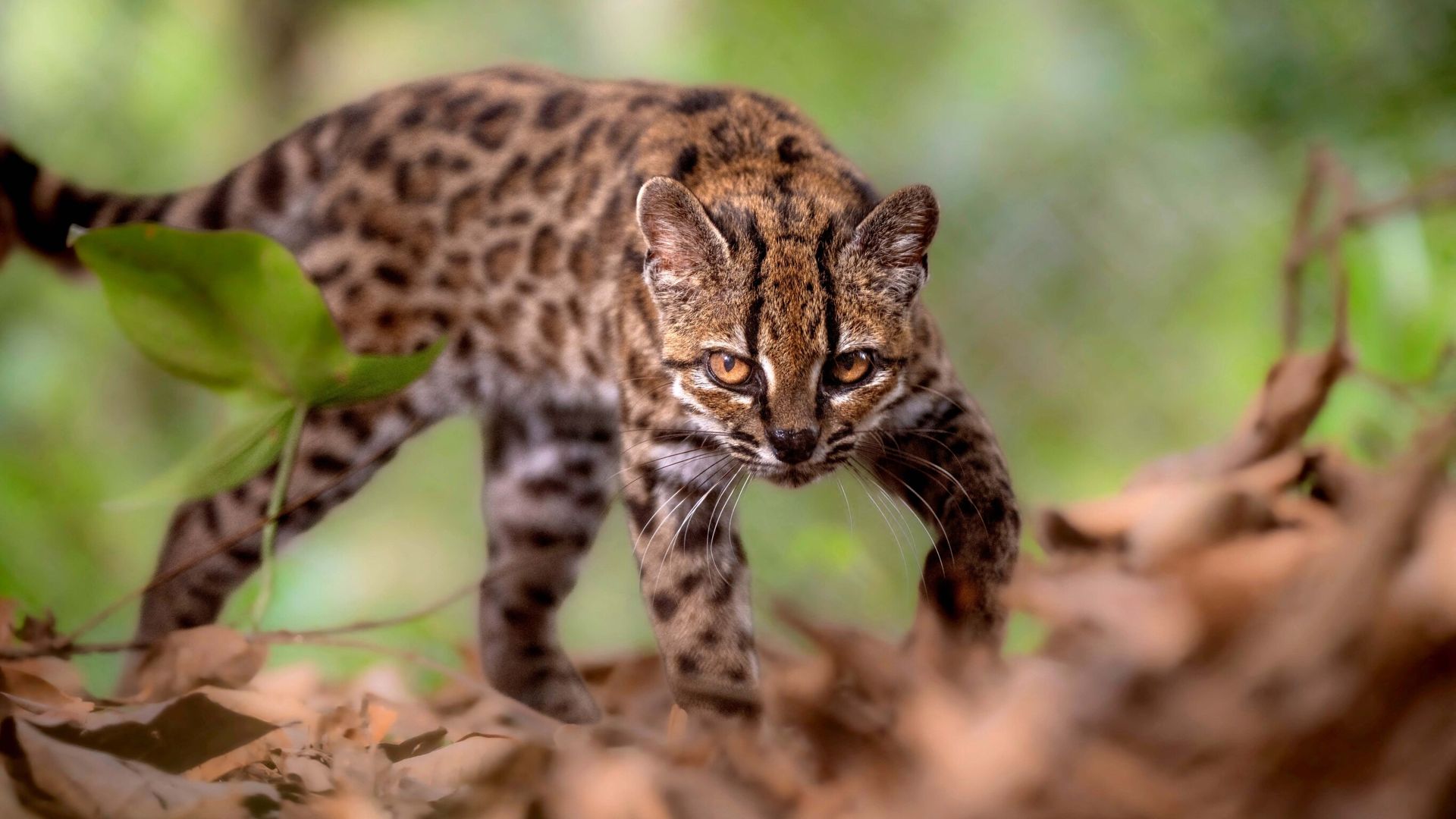
Every time researchers dig through museum archives or pull a stray tissue sample from a freezer and slap a new taxonomic name on it, the mainstream conservation press loses its collective mind. The headlines write themselves: New species of wild cat identified in South America for the first time in a century. Cue the celebratory champagne, the breathless social media threads about the hidden wonders of the Andes, and the immediate flurry of grant applications demanding millions of dollars to protect the newly anointed ghost cat of Bolivia.
It is a masterclass in feel-good journalism that completely misses the brutal mechanics of modern extinction biology.
Here is the dirty secret of modern taxonomy: we are not discovering new animals because the wilderness is suddenly overflowing with undiscovered biodiversity. We are discovering them because conservation biologists are splitting hairs at a molecular level to manufacture urgency in a funding market that has grown numb to the slow-motion collapse of entire ecosystems.
The Taxonomy Trap
For decades, field biologists operated on a straightforward biological species concept. If two populations could interbreed and produce fertile offspring, they were the same animal. Today, that old-school standard has been tossed out the back door in favor of phylogenetic and genetic species concepts.
All it takes is a handful of mitochondrial DNA samples showing a distinct lineage, or a slight variation in skull morphology, and congratulations—you have a brand-new species.
I have watched conservation organizations burn through six-figure budgets chasing genetic distinctiveness in obscure feline populations just to secure a shiny new press release. The underlying motivation is rarely pure science. It is marketing.
When an animal is lumped into a broad, widespread category like the Andean mountain cat or Geoffroy's cat, it struggles for attention. But give a geographically isolated population its own shiny binomial nomenclature? Suddenly you have a flagship species. You have a rallying cry. You have a compelling pitch for institutional donors who want to say they saved the rarest cat on Earth.
Except you did not save a single animal. You just renamed it.
The Myth of the Untouched Wilderness
The breathless narrative surrounding this Bolivian feline discovery leans heavily on the tired trope of the pristine, untouched cloud forest hiding secrets from humanity. We love the myth of the great green void where humans have never tread, where mysterious predators stalk the mist-shrouded peaks unseen for a hundred years.
It is a comforting illusion. It allows urban conservationists to romanticize a wild that hasn't existed for centuries.
The reality on the ground in the high Andes is messy, human-dominated, and profoundly threatened. These cats are not living in some mythical Eden shielded from civilization. They are eking out a marginal existence in heavily grazed pastures, fragmented shrublands, and mining concessions where local farmers view any medium-sized carnivore as a direct threat to domestic poultry.
When you spend your time debating whether a local sub-population deserves full species rank based on three toe bones and a blood sample, you are arguing about paperwork while the habitat burns.
Taxonomic inflation creates a dangerous illusion of abundance. If every time we find a genetically distinct pocket of animals we declare a new species, our official biodiversity checklists grow longer even as the total global biomass of wild mammals continues its catastrophic plunge. We are rearranging deck chairs on a sinking taxonomic ship.
The Funding Shell Game
Follow the money in conservation biology, and you will find a perverse incentive structure.
Institutional funding—from private foundations to government grants—relies on novelty and localized crisis. Donors want to be the hero who saved the rarest thing on the planet. They do not want to fund boring, unsexy landscape-level connectivity corridors or compensate indigenous farmers for livestock losses to common predators.
By hyper-focusing on newly minted species, we cannibalize resources from broad, effective conservation strategies. We take money away from protecting large, interconnected swaths of habitat that support hundreds of species simultaneously, and pour it into specialized genetic monitoring for a single cat that happens to have a unique stripe pattern or a slightly different base-pair sequence.
It is an artisanal approach to extinction. We are trying to hand-craft salvation for individual lineages while the broader life-support systems of the continent fray at the edges.
What Real Conservation Looks Like
If we want to stop playing PR games with biodiversity, we need to completely flip our diagnostic criteria for what matters.
Stop celebrating the discovery of taxonomic novelties as if they are victories. A new scientific name on a paper published in a closed-access journal does not put food in a local herder's belly, it does not stop a bulldozer, and it certainly does not reverse habitat fragmentation.
Real conservation is agonizing, unglamorous, and deeply political. It means negotiating grazing rights with cattle ranchers who hate predators. It means fighting corrupt municipal governments over illegal mining permits in watershed zones. It means accepting that a local population of cats might look slightly different from their cousins three valleys over without needing to rewrite biology textbooks to justify our existence.
The next time a headline breaks about a hidden species found lurking in the shadows of the Andes, do not cheer. Ask yourself who benefits from the discovery—the cat, or the grant writer who just secured funding for another five years of looking the other way.
Stop falling for the marketing. The wilderness is not waiting to be discovered. It is waiting to be defended.