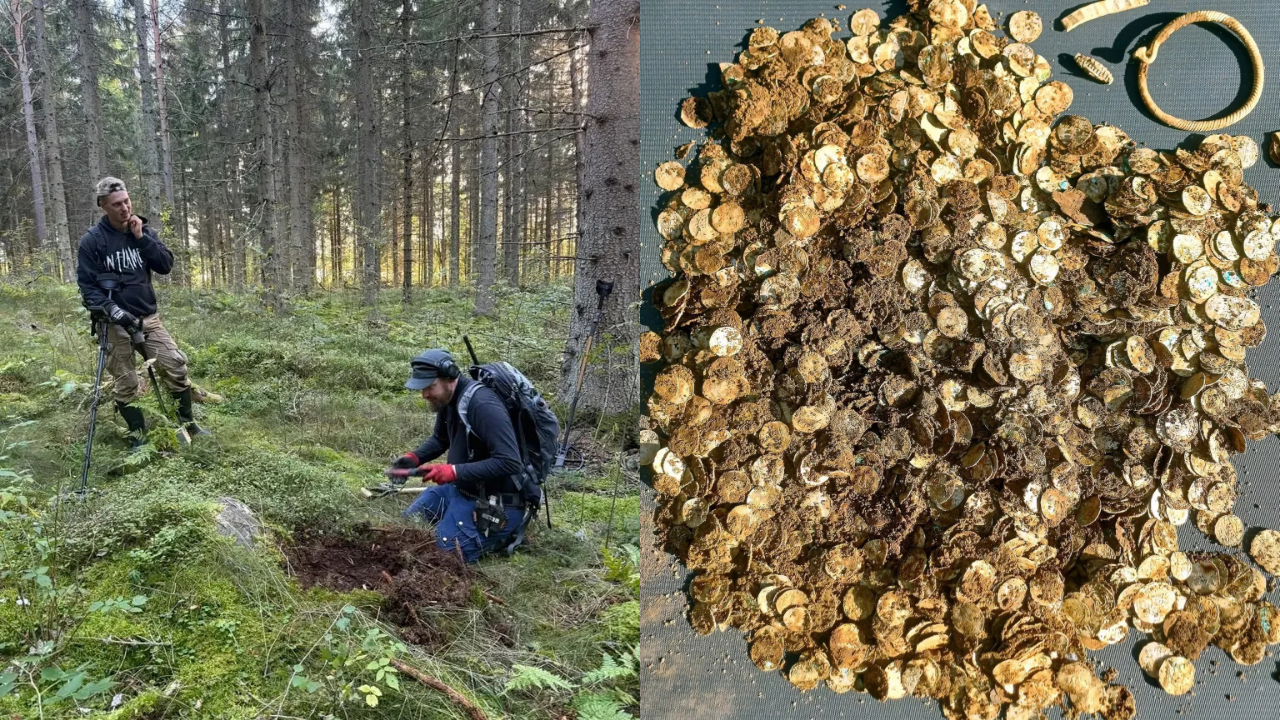
Most treasure hunting stories end with a rusty tin can and a few pennies. Not this one. When a metal detectorist in Denmark walked across a plowed field recently, he didn't unearth loose pocket change. He uncovered a hoard of more than 4,000 Viking Age silver coins spread across an unexpected expanse.
Thirty-nine feet apart.
That single detail breaks the mold of how archaeologists picture Viking hoards. For decades, the standard assumption was simple. People buried their wealth in tight, consolidated pots or pouches, hiding them beneath floorboards or right at the base of a specific landmark. They tucked valuables away as a single emergency stash to dig up later when the raiding parties passed.
Finding thousands of silver coins scattered across a wide distance shatters that neat little narrative. It forces historians to rethink how wealth moved, why it was hidden, and what panic actually looked like in Scandinavia over a thousand years ago.
The Reality of Viking Age Silver Hoards
You've probably seen images of Viking treasure. A gleaming ceramic vessel overflowing with arm rings, hacksilver, and pristine Islamic dirhams. It looks tidy. Museums love displaying hoards that way because it fits neatly behind glass.
Real life was messy.
Silver was the currency of power, trade, and violence in the Viking world. It wasn't minted into uniform national currencies like we use today. Instead, merchants and warriors weighed, clipped, and tested every piece of metal that passed through their hands. A single payment could include a fragment of an Anglo-Saxon crucifix, an Arab coin punched with testing marks, and a melted down local brooch.
When danger approached—whether from rival chieftains, internal feuds, or external raids—people buried what they couldn't carry. But a hoard isn't always a bank account left behind by someone who died. Often, it was an insurance policy. People buried wealth in increments, spread it out across land plots, or lost track of caches during sudden upheavals.
When thousands of coins turn up scattered across dozens of feet, you aren't looking at a single dropped pot. You're looking at a landscape-scale deposit. Agricultural disruption, deep plowing over centuries, or deliberate ritual scatterings all come into play. Archaeologists now have to ask whether this silver was dropped in a panic while running across a field, buried in multiple small leather bags tied to fence posts, or dragged apart by medieval farming equipment.
Why This Specific Discovery Matters
Let's look at the numbers. Recovering over 4,000 silver coins from a single site doesn't happen on a Tuesday afternoon. It represents a staggering amount of purchasing power in the tenth century. This wasn't just pocket change for a local farmer. This was elite wealth.
The geographical distribution is the real puzzle here. If coins sit thirty-nine feet apart, standard archaeological recovery methods have to expand rapidly. You can't just dig a trench around a single anomaly. You have to grid out entire hectares, track soil shifts, and analyze micro-topography.
Historians rely on numismatics—the study of coins—to trace trade routes. Viking silver hoards across Scandinavia regularly contain coins from the Abbasid Caliphate, German territories, and Anglo-Saxon England. These coins traveled thousands of miles along river networks like the Volga and the Dnieper, traded for furs, honey, amber, and enslaved people.
When a hoard of this magnitude appears, it acts like a time capsule of global economics during the Viking Age. Each coin tells a story of extraction, trade, taxation, or tribute.
The Science and Sweat Behind Modern Metal Detecting
Detecting isn't just about waving a plastic wand over grass and waiting for a beep. Serious detectorists working on significant historical finds operate under strict legal frameworks, especially in places like Denmark. You can't just unearth history and throw it on a workbench.
Responsible finds require immediate reporting, GPS mapping, and professional archaeological intervention. If you dig up a coin and pull it out of its stratigraphic context, you destroy the history attached to it. Soil chemistry, depth, proximity to organic materials—all of these data points vanish the second a shovel hits the dirt incorrectly.
The person who found these 4,000 coins handed over a treasure trove of historical data to professionals. That partnership between amateur enthusiasts and academic archaeologists is rewriting European history. Without skilled detectorists walking plowed fields on crisp mornings, most of these sub-surface anomalies would stay buried forever beneath feet of topsoil.
What the Silver Tells Us About Power Dynamics
Silver hoarding spikes during periods of extreme political instability. When you trust the banking system, you keep money in banks. When chieftains are burning longhouses down the valley and kings are consolidating power through bloodshed, you bury your assets in the dirt.
The tenth century in Scandinavia was brutal. Power centralized from regional chieftains into nascent royal dynasties. Taxation emerged. Foreign entanglements grew. Every time a new ruler demanded tribute or fought for dominance, rural populations felt the squeeze.
Burying silver wasn't just about hiding from foreign invaders. It was often a defense against local lords. If a warlord marched through your territory, your best bet was a stash hidden where only you knew the landmarks.
The fact that thousands of coins ended up abandoned suggests that whoever hid them never made it back. In the brutal calculus of the Viking Age, mortality rates were high, and stories ended abruptly. A raid gone wrong, a sudden illness, or a skirmish in the nearby forest meant secrets went to the grave.
Moving Past the Hollywood Myth
Popular culture loves horned helmets, roaring berserkers, and endless pillaging on distant shores. The reality of Viking society was agrarian, highly networked, and deeply commercial. They were traders just as much as they were raiders.
A hoard of 4,000 coins proves that wealth was localized, fluid, and heavily reliant on international trade networks. It grounds the mythology into hard economic reality. Silver bullion flowed into Scandinavia in staggering quantities, transforming local economies from simple barter systems into sophisticated monetary networks.
When you stand in a quiet field where thousands of silver pieces lay hidden for a thousand years, the distance between the modern world and the early medieval period collapses. It's just dirt, metal, and the quiet realization that people thousands of years ago worried about their wealth, their safety, and their future just like we do today.
Keep your eyes open the next time you walk a plowed field. History isn't just locked away in museums. Sometimes, it's sitting just inches beneath the surface, waiting for the right signal.