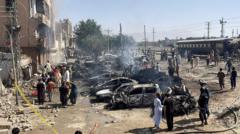
The smell of diesel and scalded tea usually defines the morning at the Quetta railway station. It is a place of heavy iron, soot, and the constant, rhythmic chatter of thousands of lives colliding as they wait for the steel veins of Pakistan to carry them across the country. On a sharp November morning, the platform was packed. Families huddled over metal trunks. Students clutched cheap plastic folders containing their degrees, heading toward federal exams. Soldiers, young men with their boots shined to a high mirror sheen, stood in small clusters, laughing about the leave they were finally taking.
Then, the world tore open.
A flash of blinding white light consumed the platform, followed by a sound so violent it shattered the windows of parked carriages hundreds of yards away. In a fraction of a second, the mundane reality of a Saturday morning commute evaporated. It was replaced by a suffocating cloud of grey smoke, the sharp, metallic tang of vaporized iron, and a terrible, sudden silence before the screaming began.
At least twenty people died where they stood. Dozens more lay broken on the concrete, their luggage scattered like confetti across a crime scene.
We often consume tragedy through the cold, sanitized lens of statistics. A headline flashes on a screen: twenty dead, forty wounded, a regional capital disrupted. We read the numbers, perhaps sigh at the state of a fractured world, and swipe to the next story. But numbers are an anesthetic. They numb us to the reality that every single digit in that death toll represents a breakfast eaten that morning, a promise made to a mother, or a dream about a new life in Peshawar.
Consider a hypothetical commuter named Asif. He is not a real person, but he represents a composite of the very real souls who stood on that platform. Asif was twenty-two, the first in his family to graduate from university. His pocket held a ticket to Rawalpindi and a crumpled resume. His mother had kissed both of his cheeks before he left the house, whispering the standard prayers for a traveler. When the bomb detonated, Asif was checking his watch, wondering if the train would be on time. He never saw the blast. He never felt the impact. His journey ended exactly where it was supposed to begin.
When we look at the geography of these events, the context matters. Quetta is the capital of Balochistan, a province vast in size but isolated by rugged terrain and deep-seated political grievances. It is a region rich in natural resources but plagued by a long-running insurgency. For decades, various separatist groups have fought a low-intensity war against the central government. The railway station isn't just a transport hub; it is a symbol of state infrastructure, a physical link connecting a remote border province to the rest of the nation.
Because of this, the platform becomes a frontline.
The immediate aftermath of an explosion is a chaotic test of human endurance. Local authorities and rescue workers rushed to the scene, their sirens wailing against the backdrop of a stunned city. The injured were loaded into the back of ambulances, private cars, and even motorized rickshaws—anything that could move fast enough to beat the ticking clock of blood loss. At the Civil Hospital in Quetta, the corridors quickly filled with the desperate cries of families searching for their loved ones. Doctors, many of them young residents who had envisioned a quiet weekend, found themselves wading through a nightmare, prioritizing patients by the severity of their trauma.
This is the grim calculus of a mass casualty event.
The Baloch Liberation Army, a banned separatist group, claimed responsibility for the attack. They stated that the target was a unit of military personnel returning from a training course. But terror is a blunt instrument. It does not discriminate between a uniform and a civilian shawl. When a suicide bomber detonates an explosive vest in a crowded public space, the blast radius makes no distinctions. The shrapnel tears through the soldier and the vendor selling hard-boiled eggs with equal, devastating force.
To understand why this keeps happening, one must look at the invisible stakes of the region. Balochistan sits at a strategic crossroads, bordering Iran and Afghanistan. It is the centerpiece of massive international infrastructure projects, including multi-billion-dollar trade corridors. Yet, many locals feel alienated from the wealth generated by their own land. This alienation creates a fertile breeding ground for radicalization. Separatist factions exploit the economic desperation of young men, turning them into weapons of asymmetric warfare.
But explaining the geopolitics does nothing to clean the blood off the platform.
The real tragedy lies in the normalization of the horror. For the people of Quetta, this is not an isolated anomaly. It is a recurring shadow that darkens their daily lives. They have watched markets blow up, mosques targeted, and schools threatened. Yet, tomorrow, the station will open again. The survivors will wash the soot from the concrete. A new crowd of travelers will line up at the ticket window, their hands shaking slightly as they hand over their rupees. They will board the trains because they have no choice. Poverty and necessity dictate that life must move forward, even when the ground beneath their feet is unstable.
The true cost of conflict is found in this forced resilience. It is the heavy burden of a population that has learned to expect the worst from a ordinary morning.
As the sun began to set over the rugged hills surrounding Quetta, the smoke finally cleared from the station. The shattered glass had been swept into neat piles. The twisted remnants of metal benches were hauled away. In the quiet that followed the chaos, a single, abandoned leather shoe sat near the edge of the tracks, overlooked by the cleanup crews. It was coated in dust, completely still, waiting for an owner who would never return to claim it.