Dignity is a fragile thing. We spend our entire lives guarding it, building it brick by careful brick through our careers, our relationships, and
The Quiet Weight of Ending Well
health, news
The hospital room smelled faintly of lemon bleach and old radiator iron. Outside, New York was bleeding into a wet autumn dusk, headlights smearing across the asphalt like spilled ink. Inside, my uncle sat upright against a stack of pillows that refused to hold their shape, his breathing a dry, rhythmic hitch that filled the corners of the space.
He was seventy-four. He had built engines with his bare hands for four decades, hands that were now translucent maps of blue veins and scarred knuckles, resting on a quilt his mother had sewn. Cancer had hollowed him out until he was mostly shadow and stubbornness.
"I am ready," he told me. His voice was no louder than dry leaves scraping against a windowpane.
He did not mean he was tired of living. He meant he was exhausted from managing the mechanics of dying. He wanted a choice. A clean edge. A quiet door he could close himself instead of waiting for the house to burn down around him.
New York has just begun to understand this ache.
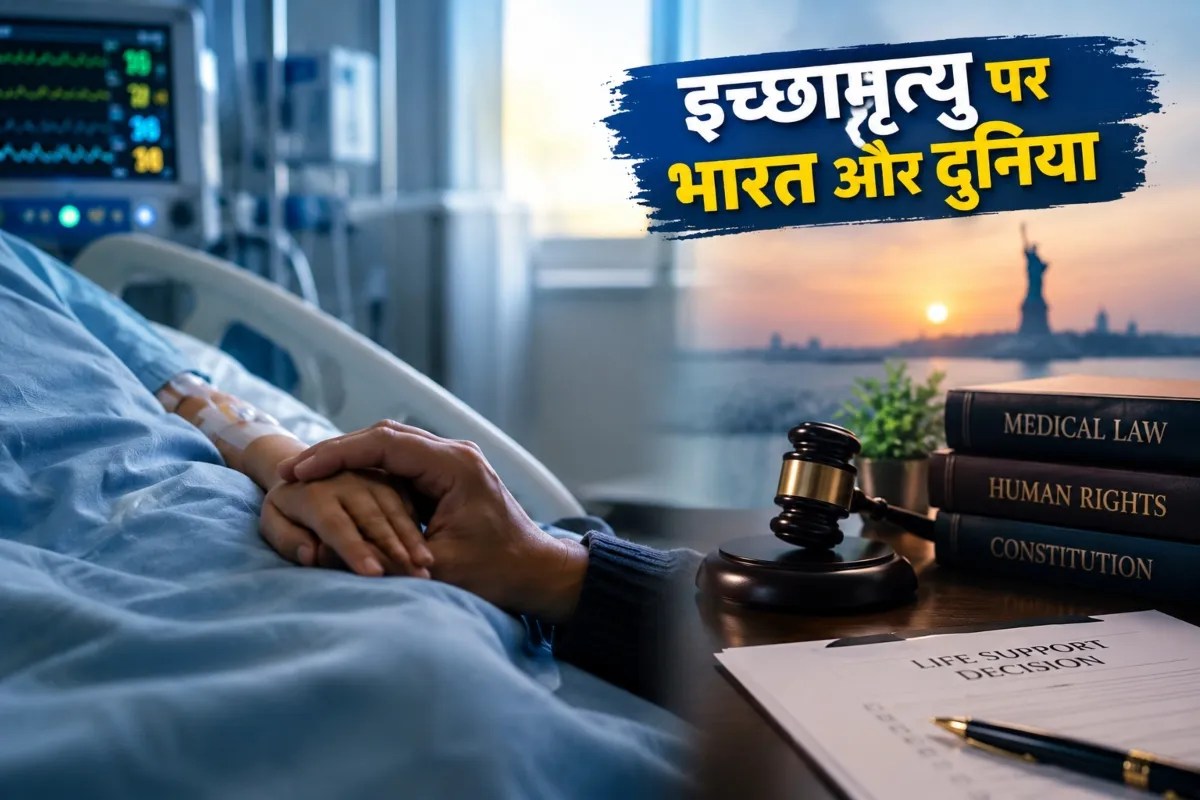
Legislative halls thousands of miles away from hospital beds like this one have finally started wrestling with what it means to die with dignity. A new proposal on medical aid in dying mirrors what several states have already codified: a legal pathway for mentally competent, terminally ill adults to ingest medication that ends their suffering on their own terms. It sounds clinical when printed in morning broadsheets. It sounds like paragraphs of statutory language, witness signatures, and waiting periods.
To the person in the bed, it sounds like permission to stop fighting a war that has already been lost.
Consider the reality behind the law. This is not a sudden impulse. It is a grueling marathon of decline. Under these frameworks, two different physicians must confirm that the patient has six months or less to live. The patient must make multiple requests, separated by mandatory cooling-off periods. They must swallow the medication themselves. Every safeguard is built to prevent coercion, to stop haste, to protect the vulnerable.
Yet, when you stand in the room, statistics turn to dust. You see only the clock. You watch pain medication lose its grip, one microgram at a time, until morphine is just a fog that obscures the mind without actually touching the fire in the bones.
Across the ocean, the contrast is stark. In India, the conversation around death wears a completely different color.
In Hindu philosophy, the body is merely a borrowed garment, and death is an open door rather than a full stop. For decades, the legal and cultural landscape offered virtually no room for active medical assistance in ending life. Suffering was often viewed through the lens of karma, an inescapable debt to be settled breath by breath. Families rallied around bedside vigils, pouring drops of holy water between cracked lips, enduring whatever nature doled out because stepping in was legally perilous and culturally fraught.
Then came the landmark Supreme Court ruling on passive euthanasia in 2018, followed by subsequent refinements that made living wills legally viable. India finally carved out a narrow path for the terminally ill or those in persistent vegetative states to refuse life-sustaining treatment.
Passive withdrawal. Turning off the ventilator. Letting nature take the steering wheel back.
It is a profound distinction. New York moves toward an active choice, a prescribed draught taken in the quiet hours of a Tuesday morning. India leans toward permission to let go, allowing the machinery to fall silent when it can no longer heal.
One is an active pen stroke. The other is a slow untying of knots.
Both emerge from the same fundamental terror. We are terrified of pain. We are terrified of losing our agency before we lose our lives.
I remember sitting across from a palliative care specialist in Manhattan years ago, trying to understand why this issue splits families down the middle. She was a woman with kind eyes and hair the color of pewter, tired in the way only healers are tired.
"People think this is about giving up," she said, sliding a pen between her fingers. "It is actually about hoarding the last bits of yourself. When the disease takes your dignity, your voice, your ability to swallow water without choking, you have nothing left. People want to keep the final chapter of their own book."
That is what New York is trying to codify. Not a culture of death, but an architecture of closure.
Critics worry about the slippery slope. They whisper about insurance companies prioritizing cost over care, about subtle family pressures weighing on elderly shoulders, about the devaluation of disabled lives. These are not trivial fears. They are heavy, legitimate anchors that keep society from drifting into dangerous waters. Every safeguard in the proposed statutes exists because those fears are real.
But talk to someone who has watched a loved one thrash against the final stages of ALS or terminal pancreatic cancer, and the theoretical debate dissolves. The slippery slope feels distant when you are standing on a sheer cliff of agony right now.
My uncle never saw New York pass its new measure. He ran out of time, as all of us eventually do, navigating the twilight zone between hospital palliative units and home hospice care. We managed his pain as best we could. We held his hands when the room grew cold.
He died in a bed that was not his own, surrounded by monitors that beeped like impatient metronomes.
He was brave. He was surrounded by love.
He also deserved a cleaner exit. He deserved the option to say goodbye while his mind was sharp and his pain was still his own to bear, rather than waiting for his organs to surrender one by one in a cacophony of clinical alarms.
Death comes for us all, an uninvited guest who cares nothing for our laws, our statutes, or our cultural divides. Whether through an active prescription in an American metropolis or a quiet withdrawal of machines in a sunlit room in Delhi, we are all just trying to figure out how to face the dark with our heads held high.
The laws will change. The debates will rage across television screens and editorial pages. Politicians will parse words, and ethicists will write papers.
None of that matters to the person staring at the ceiling tonight, listening to the rain, wondering how much longer the body can hold onto a life that has already slipped away.